
Binita Ray
Binita Ray is a content writer at Taskzin, creating insightful and practical content on task management, team collaboration, productivity, workflow optimization, and SaaS solutions. She focuses on helping businesses, teams, and professionals simplify their work processes, improve efficiency, and make better use of modern productivity tools.
10 Best Wrike Alternatives
Ten Wrike alternatives compared, covering why teams leave Wrike, what each alternative is genuinely good at and what it gives up, how to choose based on your reason for leaving, and what to check before switching.

Height vs Linear
An honest comparison of Height and Linear, covering their different approaches to reducing tool overhead, where Linear's maturity and speed win, where Height's automation genuinely helps, and how to evaluate the AI claim in two weeks.
Trello vs Notion for Team Work
An honest comparison of Trello and Notion for team work, covering Trello's fixed model against Notion's blank canvas, where each is genuinely stronger, and the build and maintenance cost that decides it for most teams.
Notion vs Confluence for Team Documentation
An honest comparison of Notion and Confluence for team documentation, covering why running Jira usually decides the choice, where each is genuinely stronger, and the documentation rot problem neither tool solves.
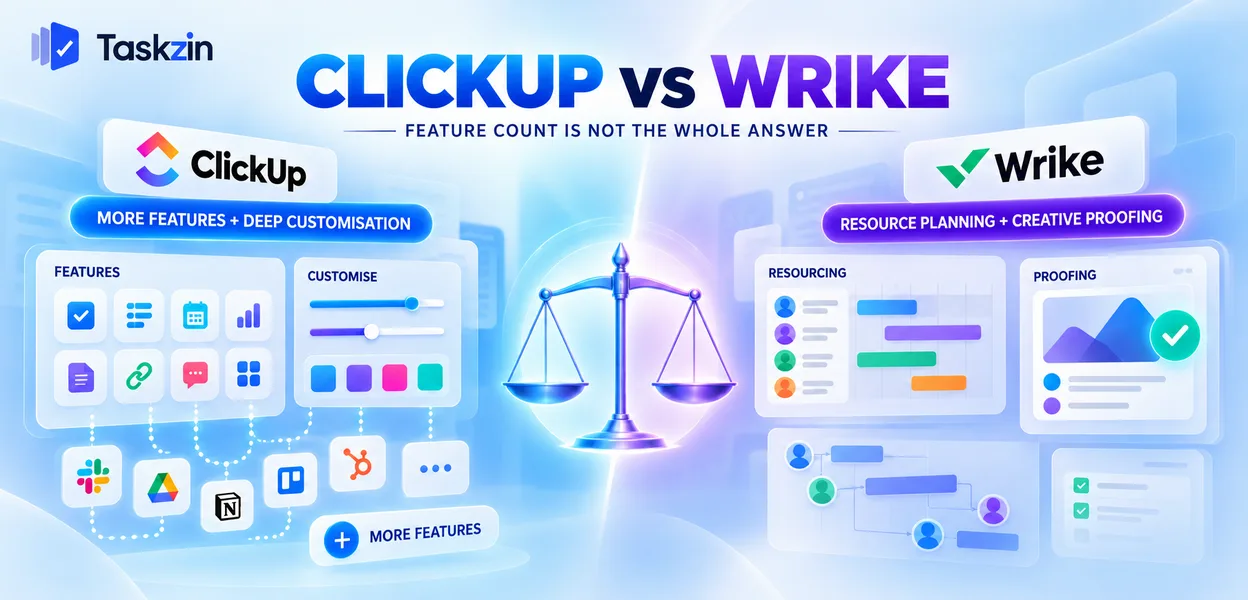
ClickUp vs Wrike
An honest comparison of ClickUp and Wrike, covering breadth versus depth in resourcing, where each is genuinely stronger, the administration both require, and how to choose by diagnosing your actual bottleneck.
Jira vs Azure DevOps
An honest comparison of Jira and Azure DevOps, covering why they are different categories of product, where Azure DevOps' integrated toolchain wins, where Jira's tracking depth and ecosystem win, and how the common hybrid works.
Jira vs Linear: Which Suits Product Teams Better?
An honest comparison of Jira and Linear for product teams, covering their opposing philosophies, where Jira's configurability and governance win, where Linear's speed and defaults win, and the questions that actually decide the choice.
Building a Team Handbook (Your Team's
A practical guide to building a team handbook, covering what it replaces, what belongs in it, what to write first, how to write entries people actually use, how to keep it current, and why comprehensive handbooks fail.
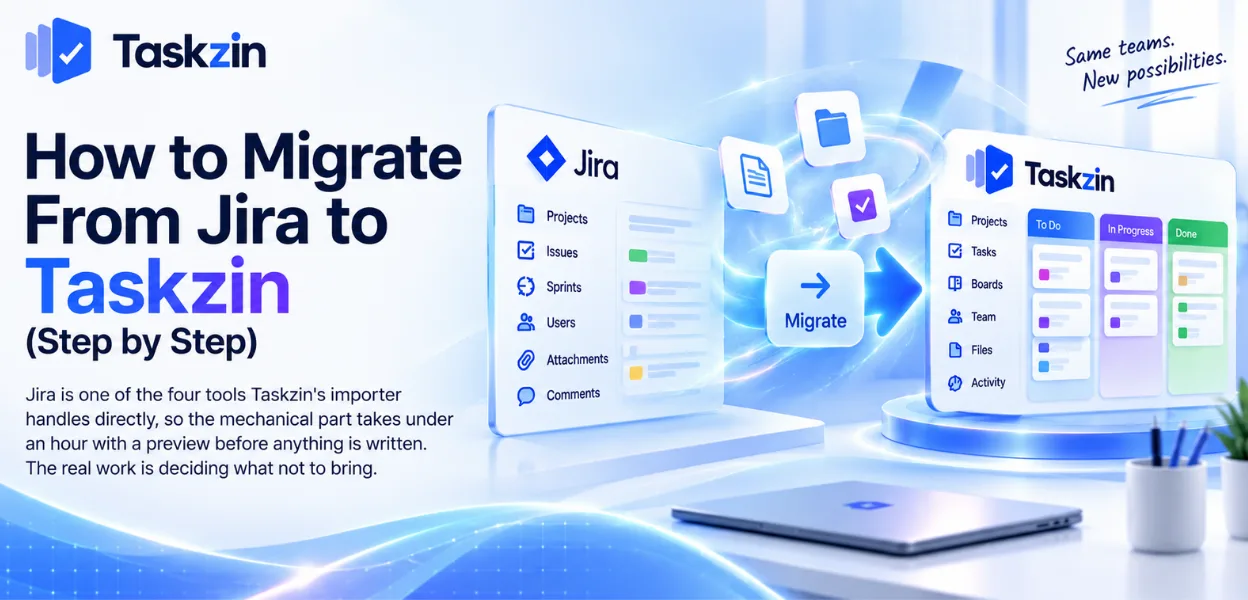
How to Migrate From Jira to Taskzin
A step-by-step guide to migrating from Jira, covering the decisions to make before importing, exactly what transfers and what does not, the eight-step process, how to handle workflows and epics, and common migration mistakes.
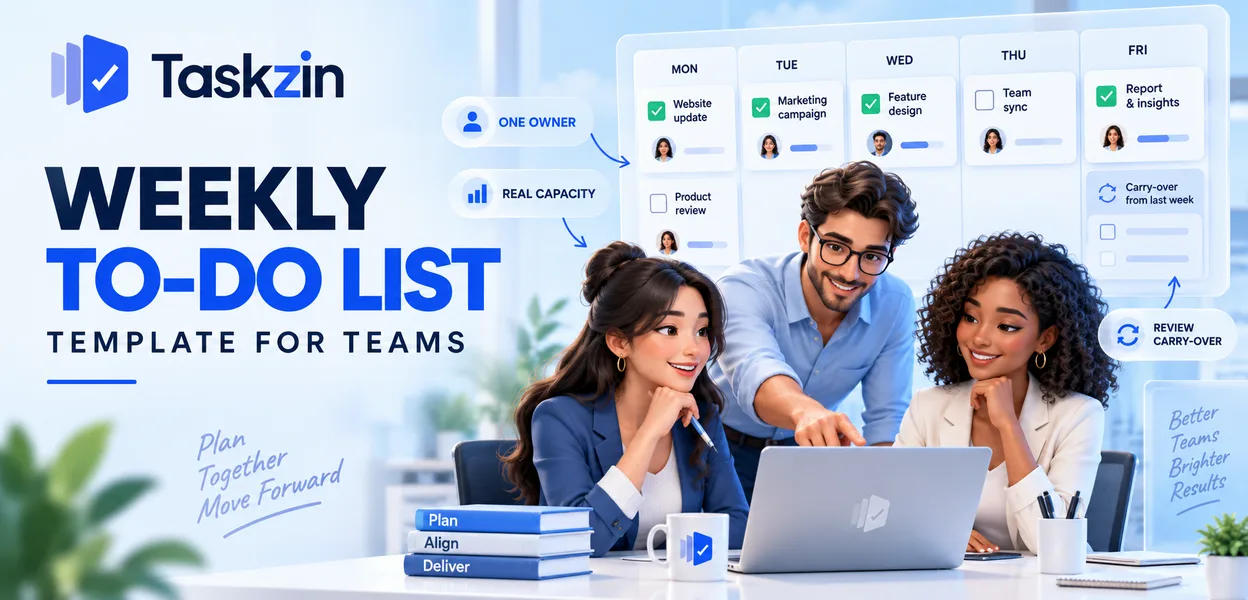
Weekly To-Do List Template for Teams
A weekly to-do list template for teams with a worked example, covering why team lists fail differently from personal ones, the weekly cycle that keeps them current, how to make commitments realistic, and common mistakes.

OKR Template With Examples
An OKR template with worked examples by function, showing what separates an objective from a key result, bad OKRs paired with their fixes, how to set and run a quarter, and the mistakes that break the framework.
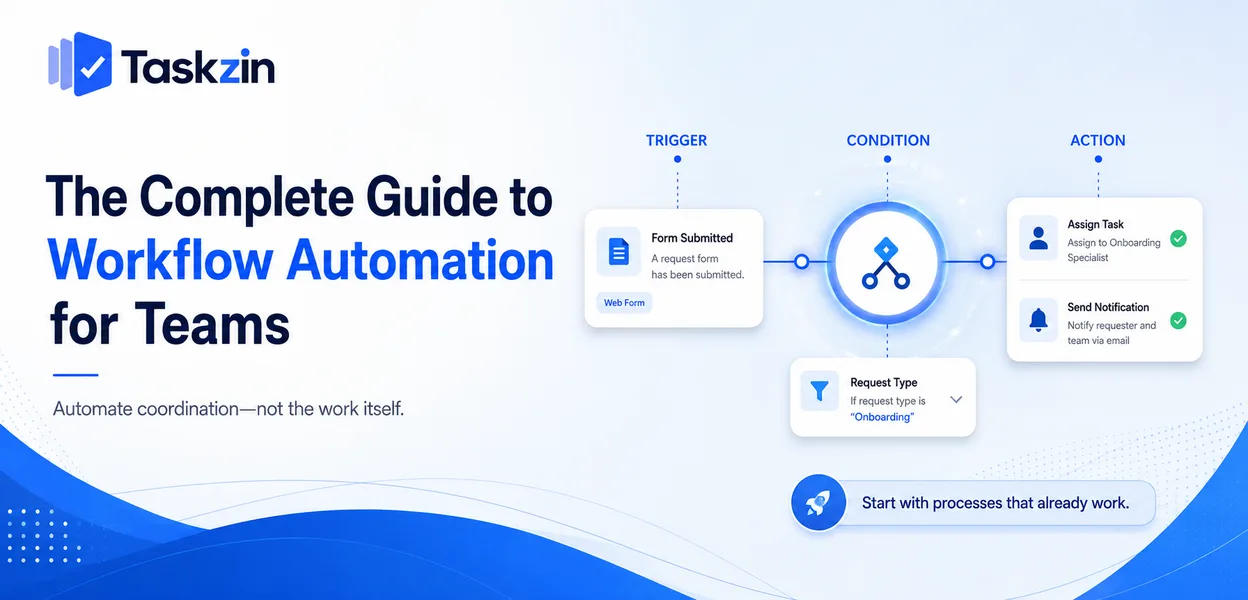
The Complete Guide to Workflow Automation for Teams
A comprehensive guide to workflow automation for teams, covering how automation works, what to automate in priority order, building your first rules, designing automations that survive, governing them as they grow, and common mistakes.
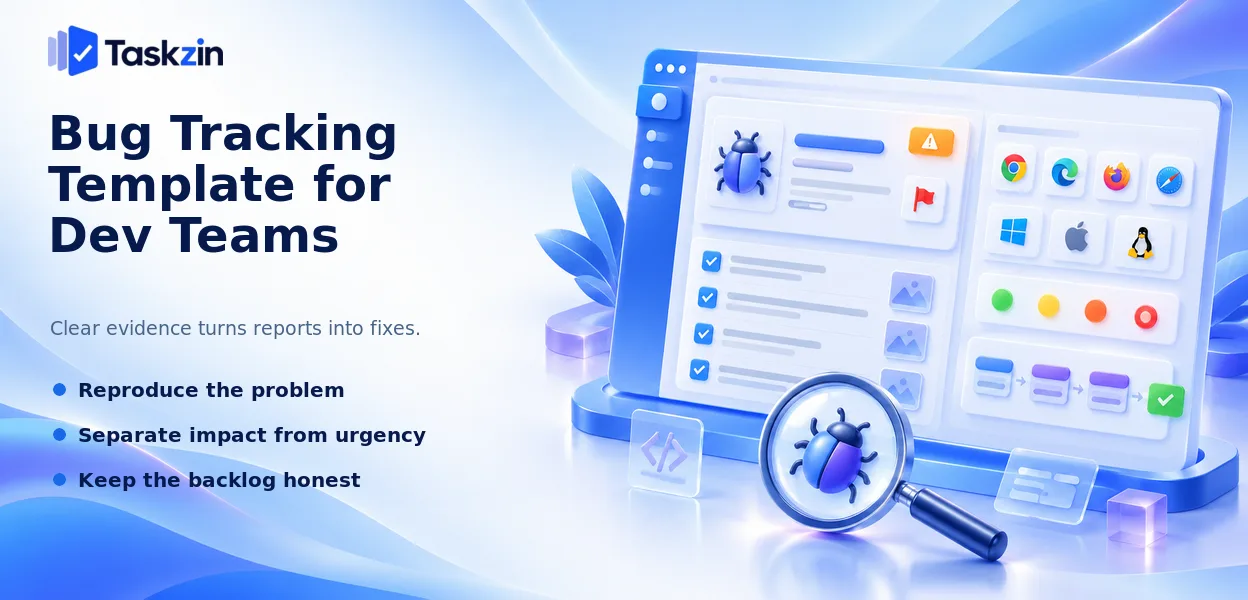
Bug Tracking Template for Dev Teams
A bug tracking template for development teams with a worked example, covering what makes a report actionable, the difference between severity and priority, a triage workflow, and how to keep a bug backlog honest.
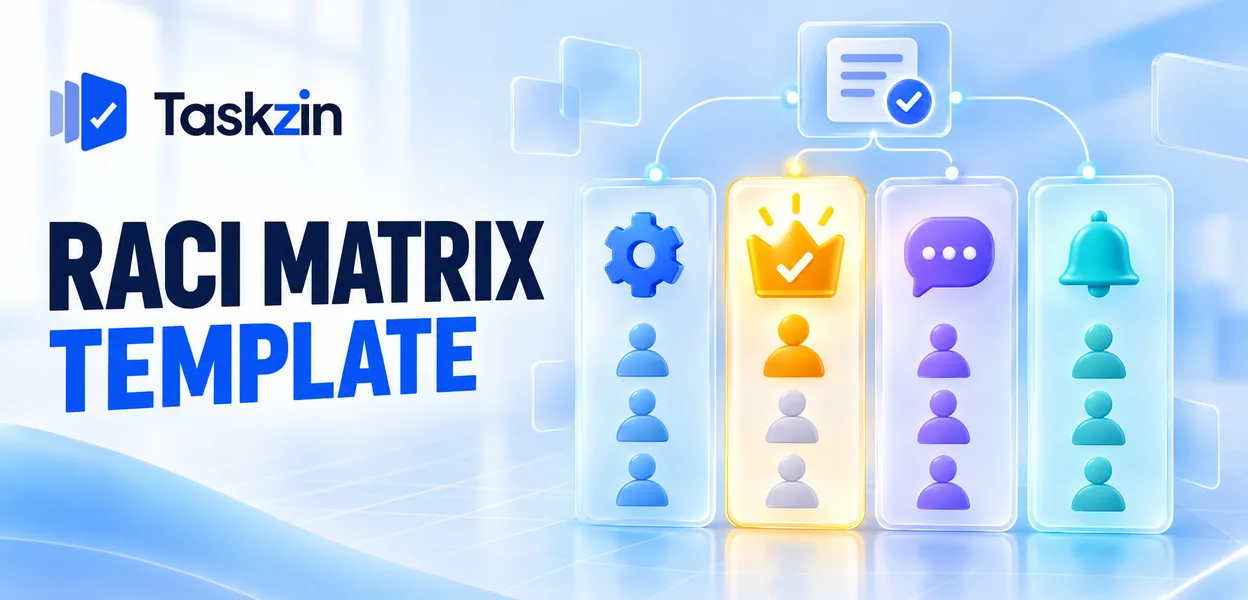
RACI Matrix Template
A RACI matrix template with a filled worked example, covering the precise meaning of each letter, the rules that make it work including one Accountable per row, how to build one quickly, and the mistakes that make matrices useless.
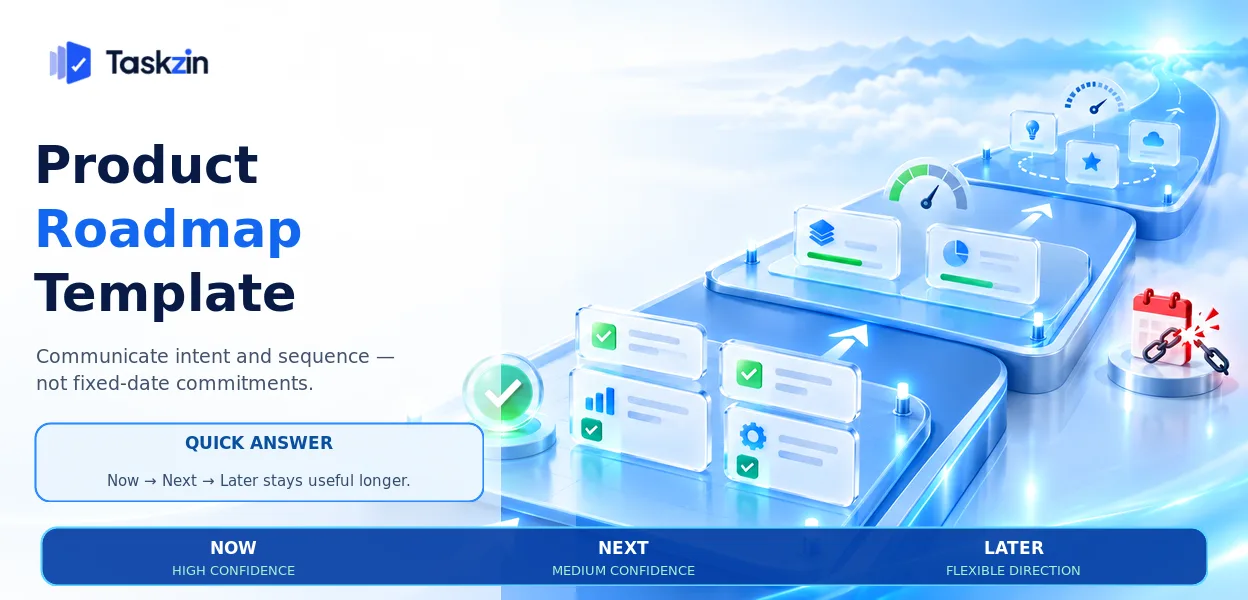
Product Roadmap Template
A product roadmap template using the now-next-later format with a worked example, covering what a roadmap is actually for, four format options, how to present it to executives, sales and the team, and common mistakes.
Taskzin vs Google Sheets: When Spreadsheets Stop Scaling
An honest look at when Google Sheets stops working for project tracking, covering why spreadsheets work at first, the seven signals you have outgrown one, what sheets structurally cannot do, what you lose by moving, and when to stay.
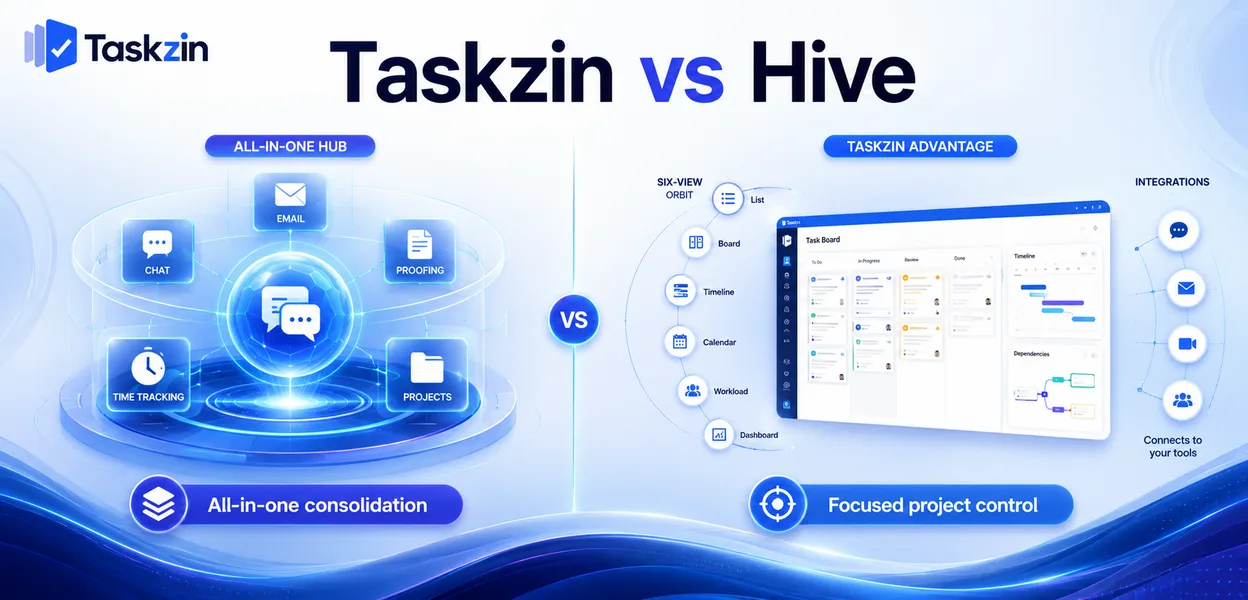
Taskzin vs Hive
An honest comparison of Taskzin and Hive, covering Hive's bundled communication and proofing strengths, Taskzin's pricing simplicity and flow control, and an honest examination of whether tool consolidation actually delivers.
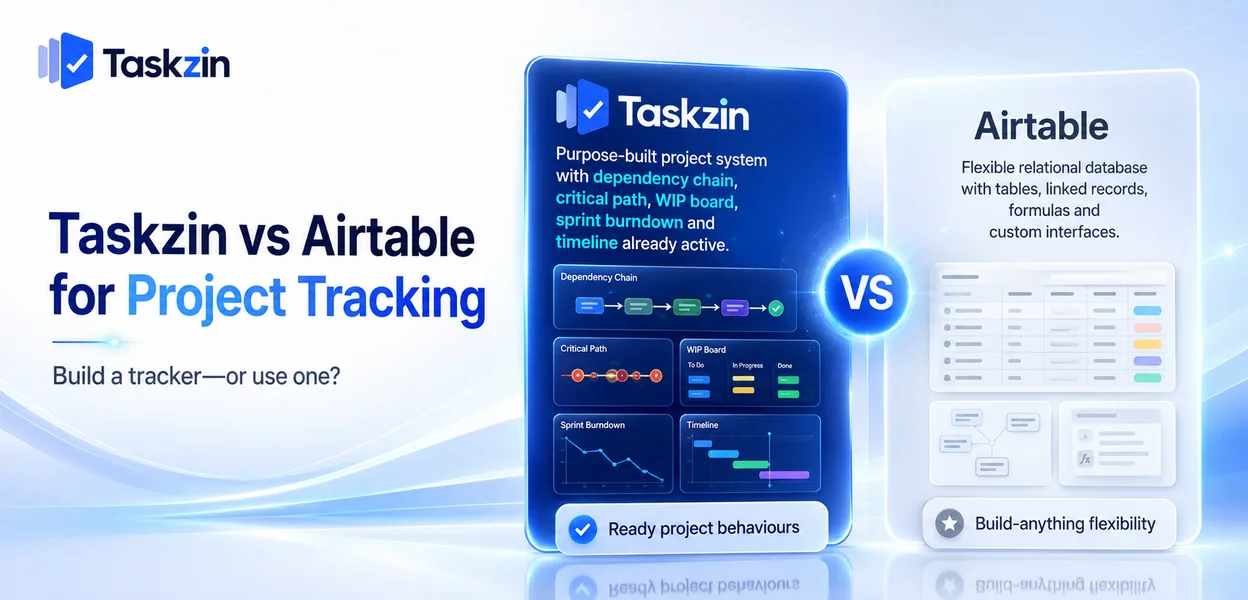
Taskzin vs Airtable for Project Tracking
An honest comparison of Taskzin and Airtable for project tracking, covering the difference between a database and a purpose-built tool, where Airtable's flexibility wins, the real cost of building it yourself, and when to use each.
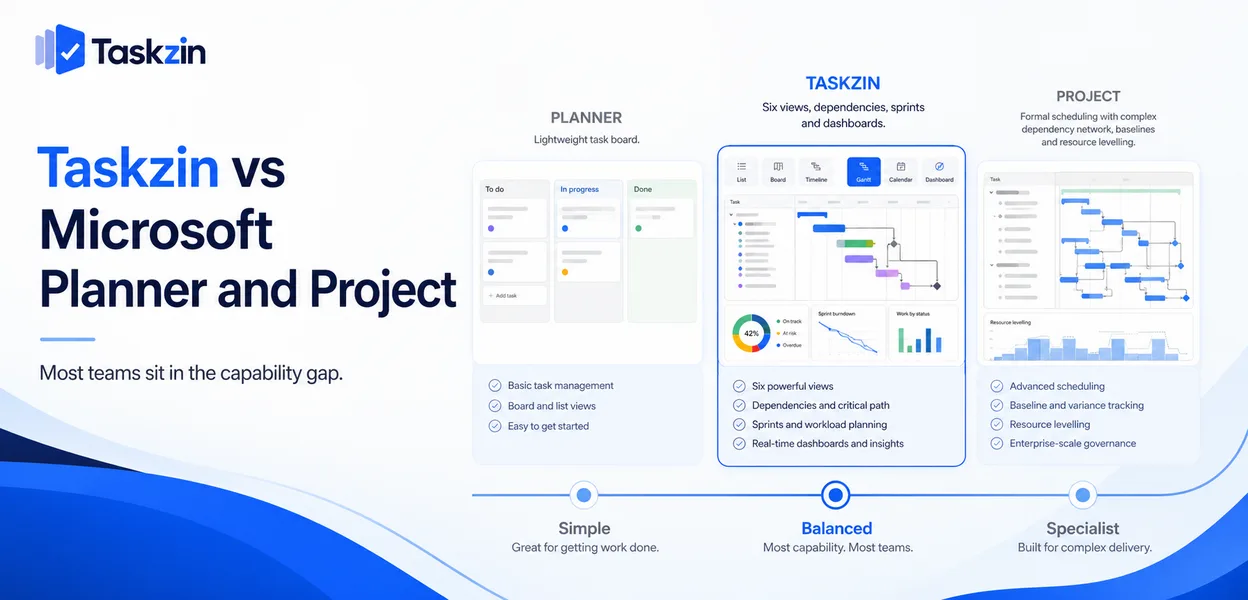
Taskzin vs Microsoft Planner and Project
An honest comparison of Taskzin with Microsoft Planner and Microsoft Project, covering why they are three different products, where Planner runs out, where Project is more than most teams need, the ecosystem argument, and migration realities.
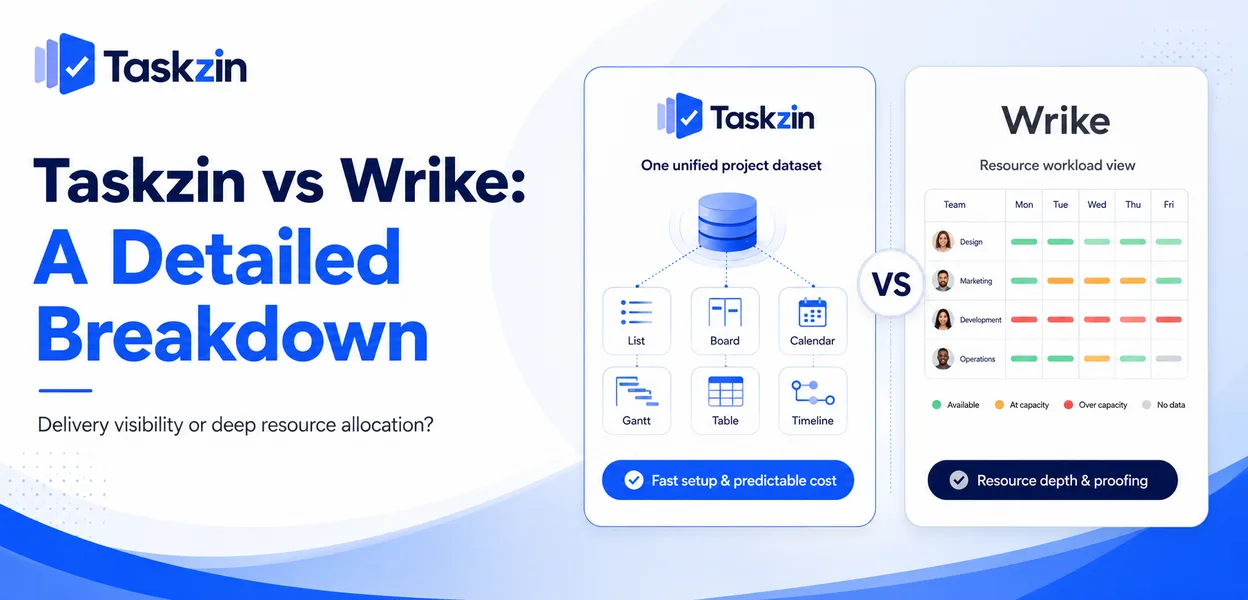
Taskzin vs Wrike: A Detailed Breakdown
An honest comparison of Taskzin and Wrike, covering what each is built around, where Wrike is genuinely stronger on resource management and proofing, where Taskzin wins on pricing and guest access, and what migration involves.
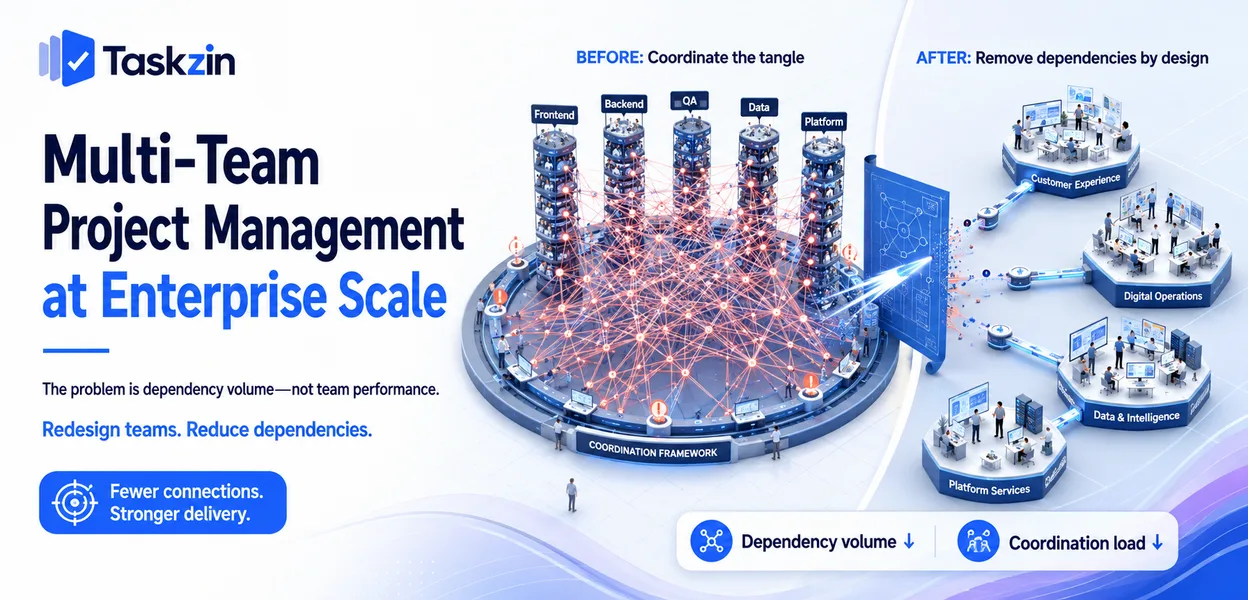
Multi-Team Project Management at Enterprise Scale
A practical guide to multi-team project management at enterprise scale, covering why dependencies rather than team performance are the constraint, reducing them through team design, making them visible and owned, and planning and reporting across teams.

How to Run Half as Many Meetings
A practical guide to reducing meeting load, covering why meetings accumulate, how to audit their real cost, what each meeting type should become instead, how to improve the ones that remain, and how to stop the load creeping back.
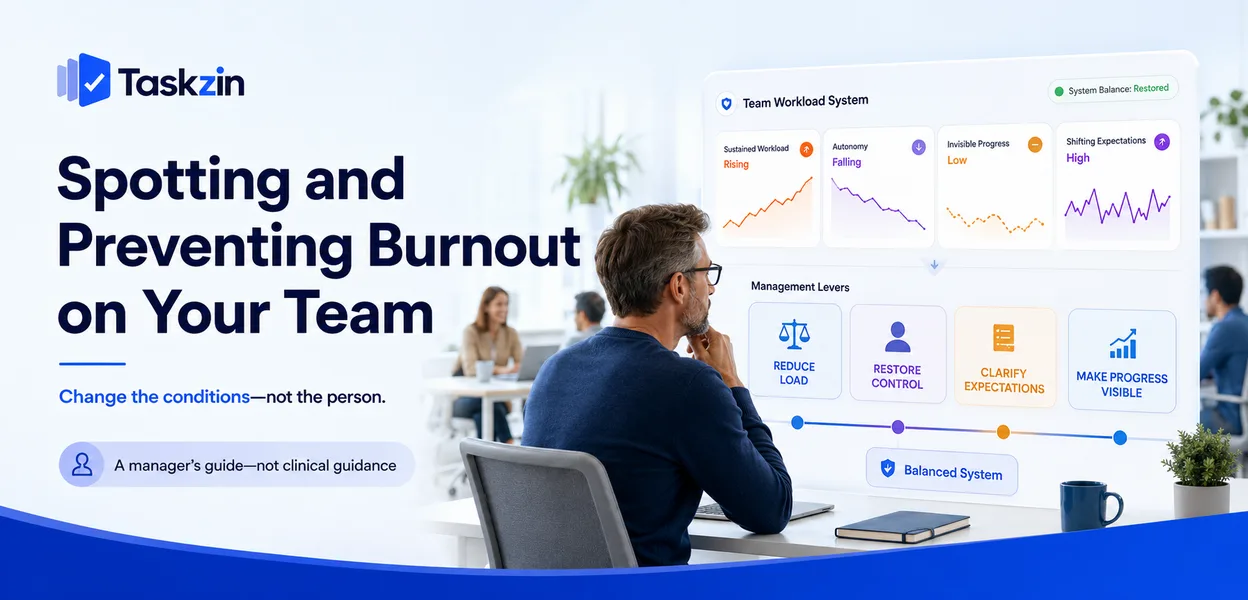
Spotting and Preventing Burnout on Your Team
A manager's guide to spotting and preventing burnout, covering what burnout is as an occupational phenomenon, early signals worth noticing, the workplace conditions that cause it, what managers can actually change, and how to have the conversation.
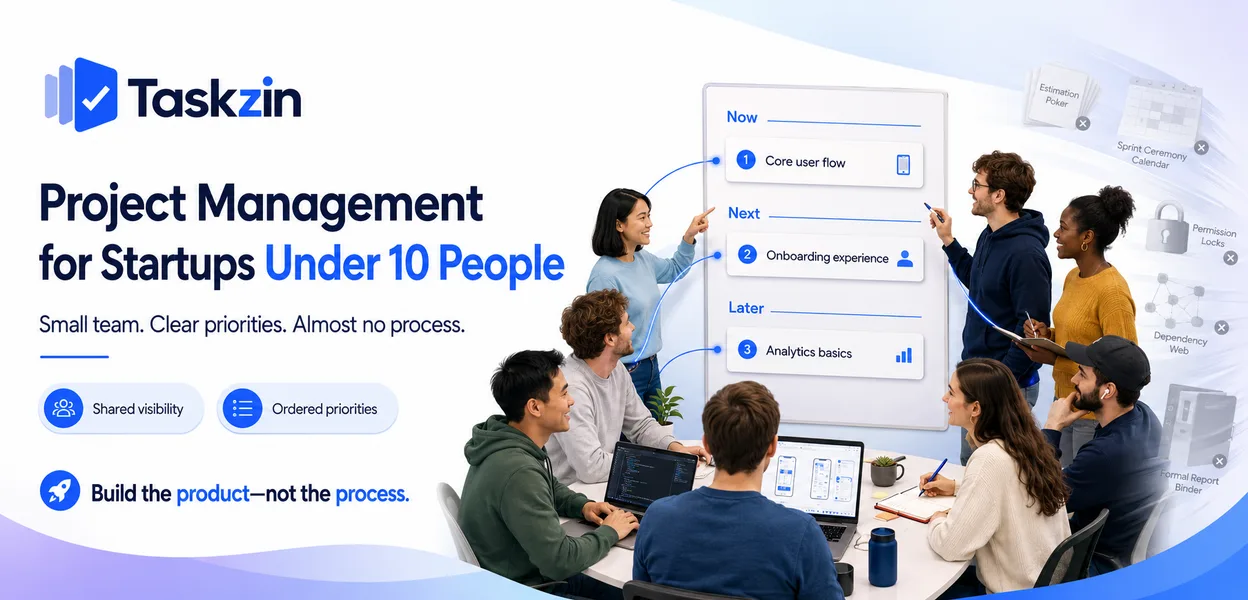
Project Management for Startups Under 10 People
A practical guide to project management for startups under ten people, covering what a team this size actually needs, the minimum viable system, running work without ceremony, handling startup-specific problems, and when to add structure.
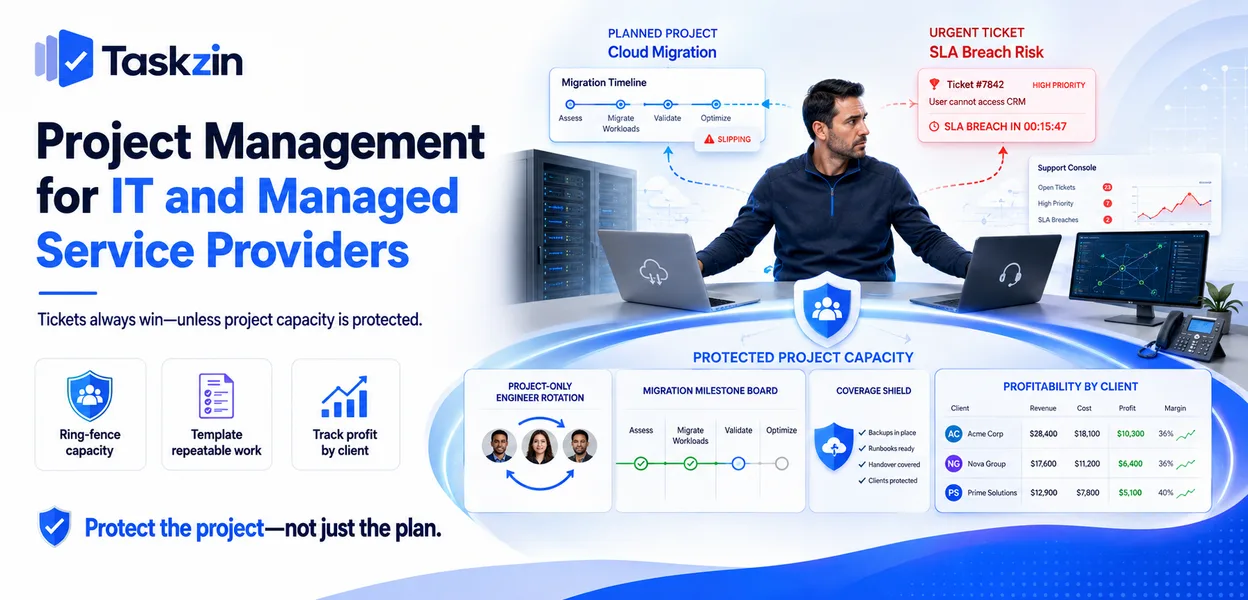
Project Management for IT and Managed Service Providers
A practical guide to project management for IT and managed service providers, covering the structural conflict between tickets and projects, ring-fencing capacity, running client onboarding as a repeatable project, and tracking client profitability.
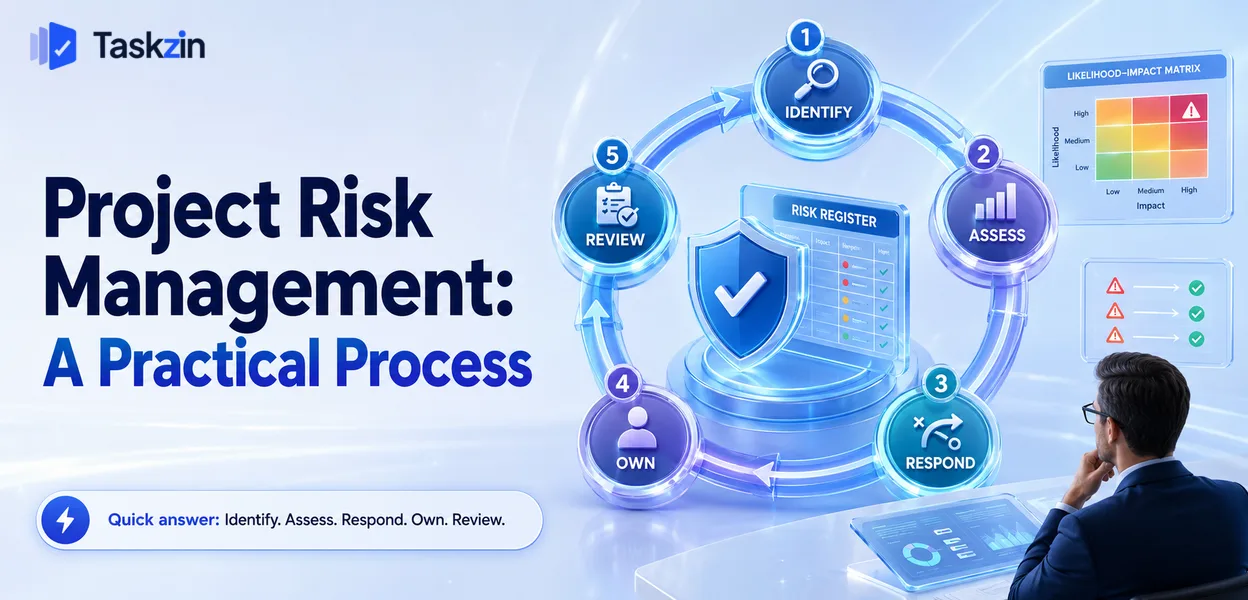
Project Risk Management: A Practical Process
A practical guide to project risk management, covering the difference between risks and issues, a five-step process, how to identify and write risks properly, assessing and responding to them, and keeping the register useful.

Agile vs Waterfall: Which One Fits Your Project?
A practical comparison of agile and waterfall, covering the real difference between predictive and adaptive delivery, four questions that decide the choice, where each approach genuinely fits, and the mistakes teams make deciding.
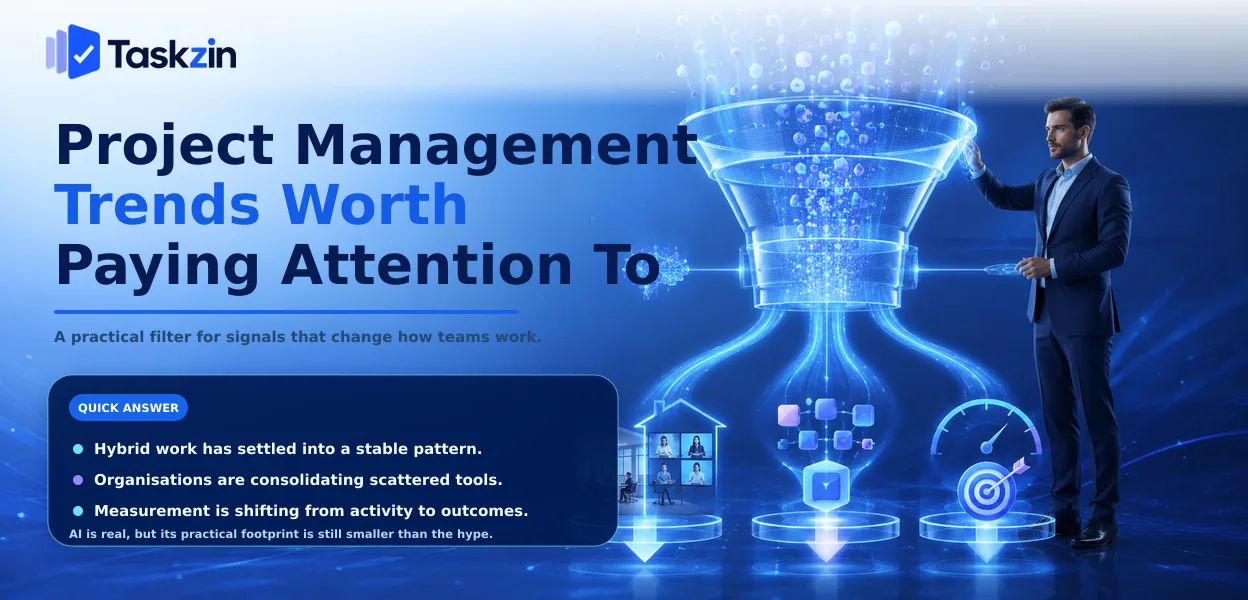
Project Management Trends Worth Paying Attention To
An evidence-filtered look at project management trends, covering how to tell a real shift from marketing, the structural and practice changes worth planning for, what AI has genuinely delivered, and which trends can safely be ignored.

AI in Project Management: What It Can and Can't Do Yet
An honest assessment of AI in project management, covering where it genuinely helps today, where it falls short and why, the practical applications worth adopting now, how to evaluate AI features, and common mistakes.
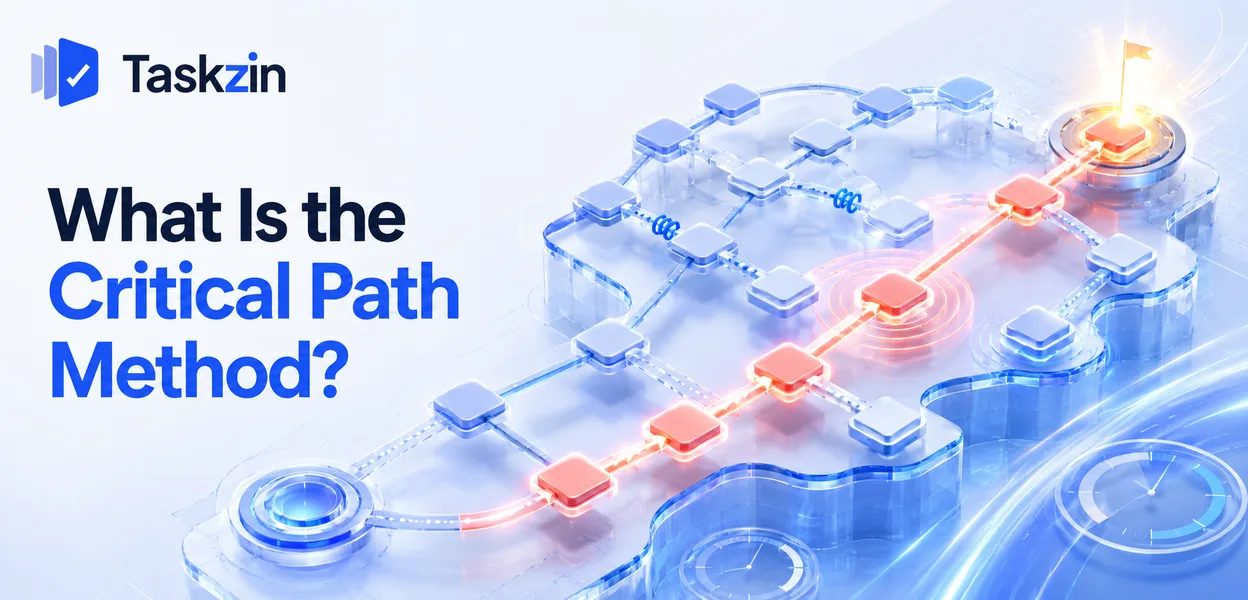
What Is the Critical Path Method?
A plain-English explanation of the critical path method, covering what the critical path is and what float means, the four-step calculation, a worked example, what the path tells you, how it compares to critical chain, and its limitations.
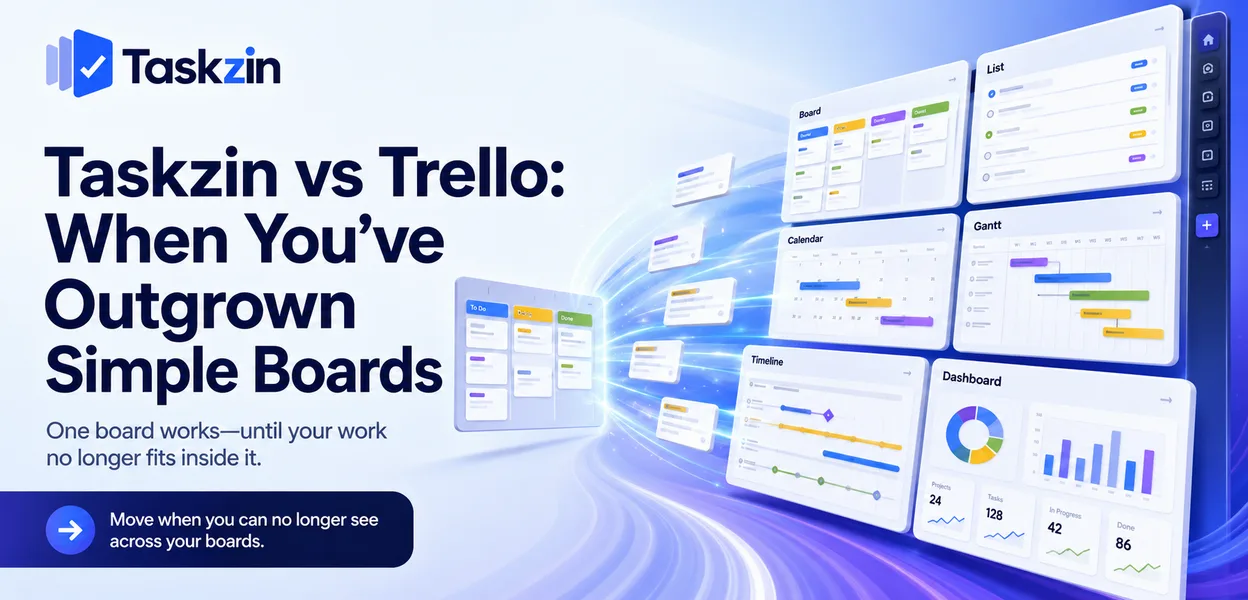
Taskzin vs Trello: When You've Outgrown Simple Boards
A comparison of Taskzin and Trello for teams considering a move, covering the signals you have outgrown a single board, what changes and what stays the same, the true cost comparison including power-ups, where Trello still wins, and migration.
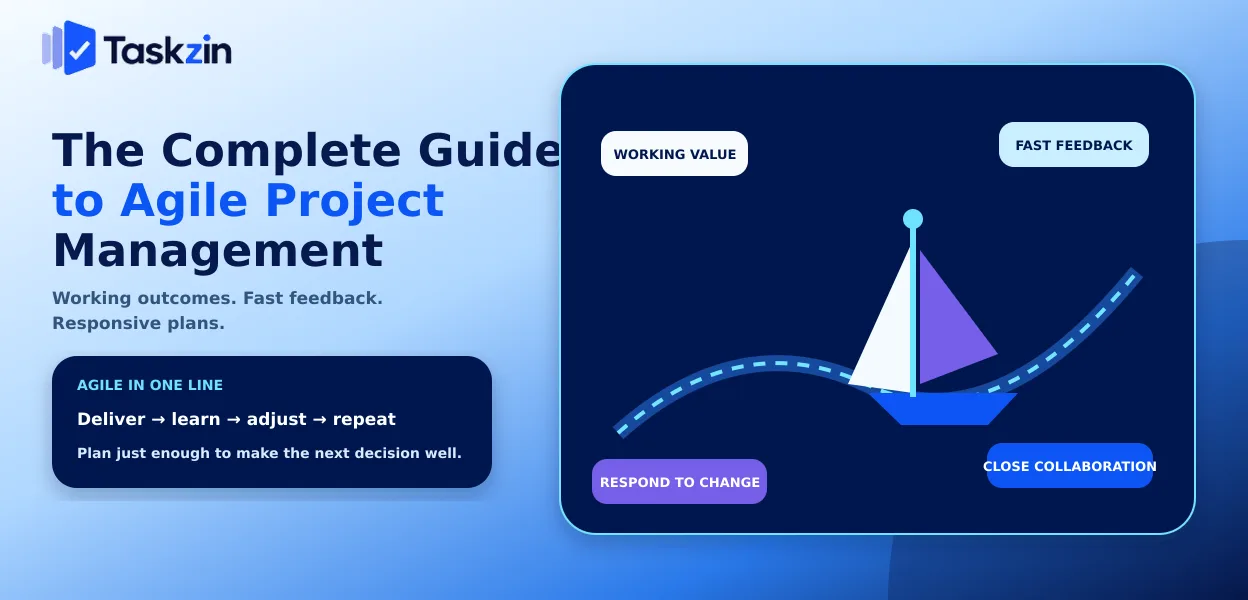
The Complete Guide to Agile Project Management
A comprehensive guide to agile project management, covering the underlying values, how Scrum, Kanban, XP and scaling frameworks differ, how delivery works in practice, honest adoption, useful metrics, and where agile genuinely does not fit.
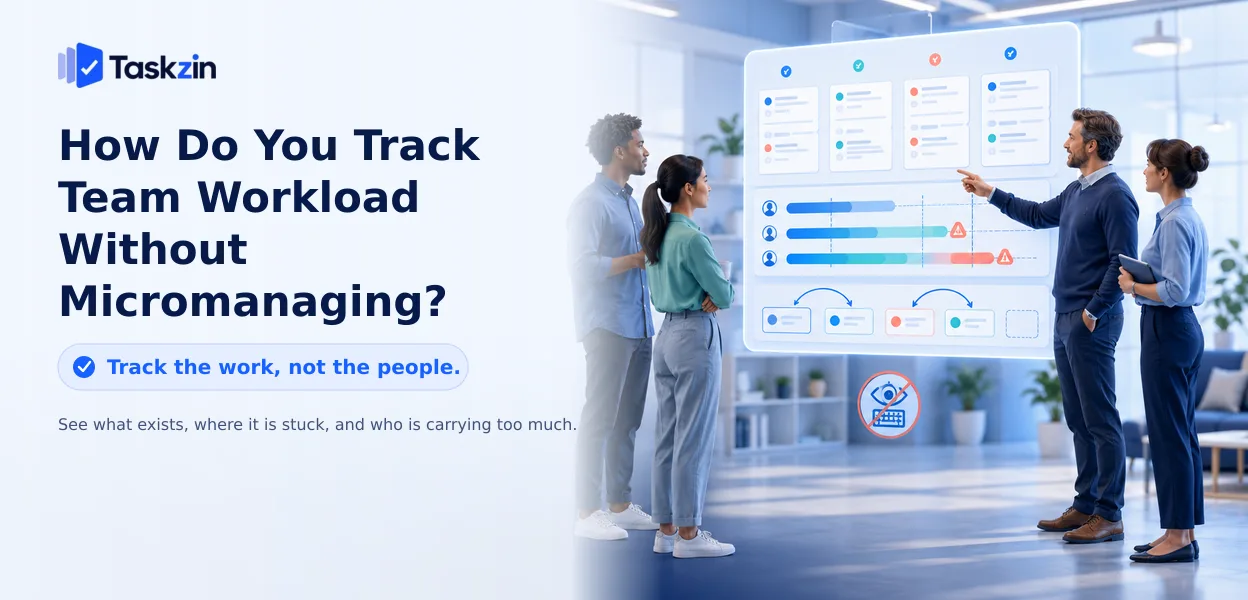
How Do You Track Team Workload Without Micromanaging?
A practical guide to tracking team workload without micromanaging, covering where the line sits between visibility and surveillance, what to measure instead of activity, setting up shared visibility, and how to respond when someone is overloaded.

What Are Story Points and How Do You Estimate Them?
A clear explanation of story points, covering what they represent, what each value on the scale means, how to estimate by comparison with reference stories, how to keep the scale stable, and when to stop using them.
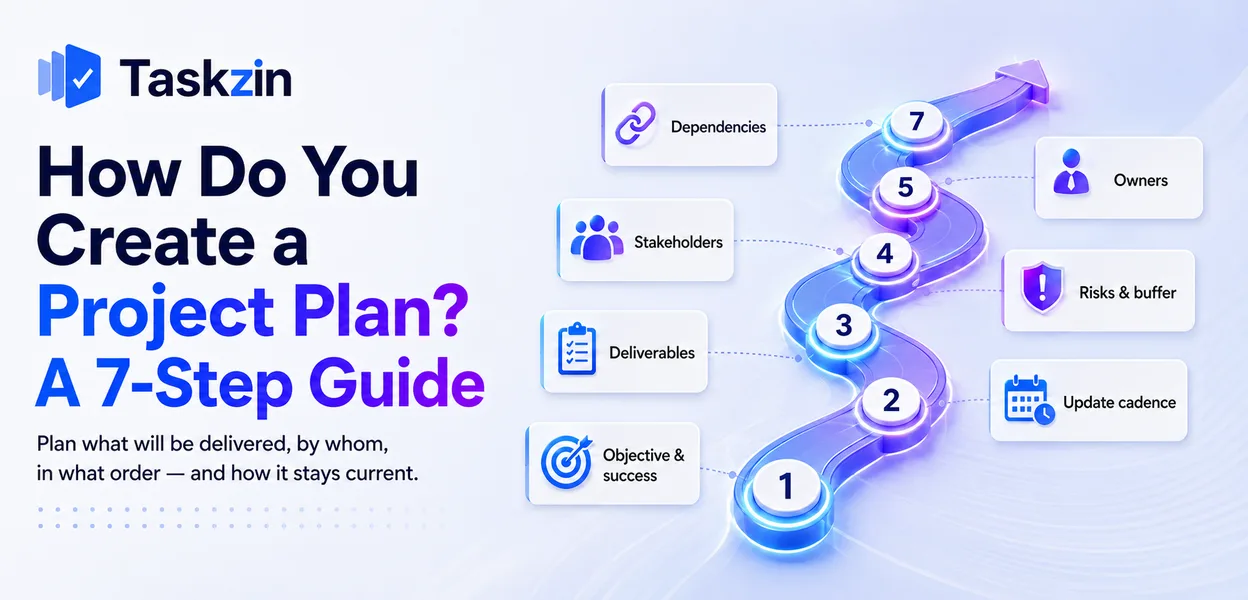
How Do You Create a Project Plan? A 7-Step Guide
A step-by-step guide to creating a project plan, covering what a plan must answer, defining the work, building the schedule with dependencies and owners, adding risk buffer correctly, and keeping the plan current.
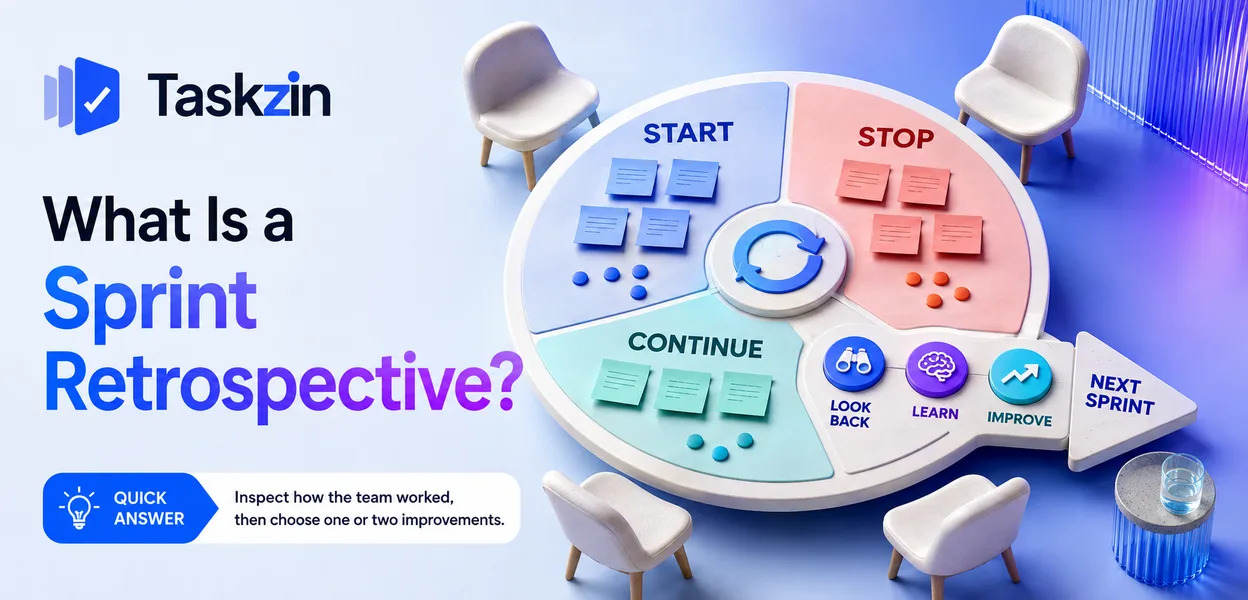
What Is a Sprint Retrospective?
A clear explanation of the sprint retrospective, covering its purpose as process inspection, the five-stage structure, how it differs from the sprint review, the conditions that make it work, and common mistakes.
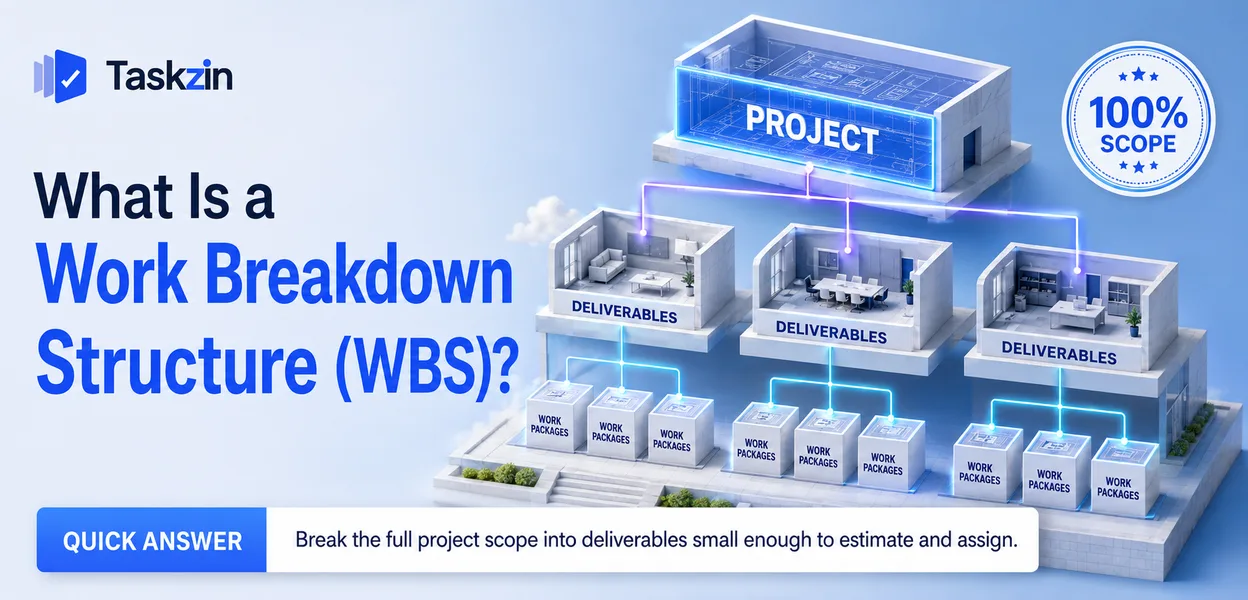
What Is a Work Breakdown Structure (WBS)?
A clear explanation of the work breakdown structure, covering why it is deliverable-based, the 100 percent rule, how to decompose a project into work packages, the available formats, and how the WBS is used after planning.
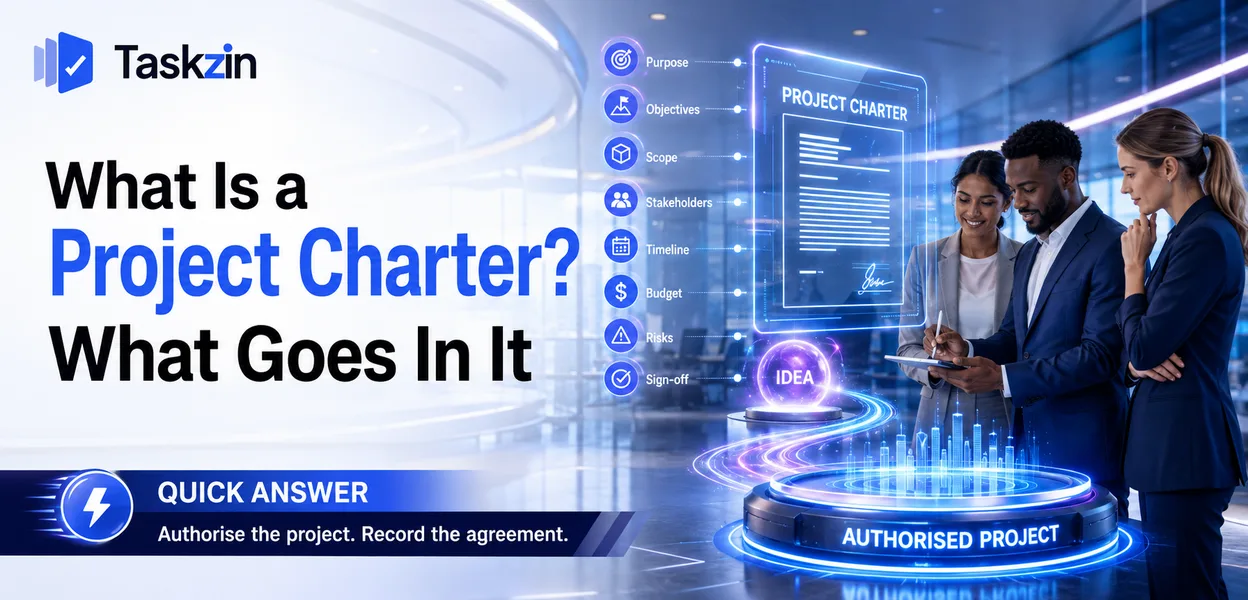
What Is a Project Charter and What Goes In It?
A clear explanation of the project charter, covering what it authorises and records, the eight sections it contains, how to write one people use, and the mistakes that make charters pointless.
Taskzin vs Jira: Which Project Management Tool Fits Your Team?
A balanced comparison of Taskzin and Jira, covering the fundamental difference between engineering depth and whole-team breadth, where each genuinely wins, how the agile features compare honestly, what migration moves and what it does not, and how to choose.
Taskzin vs Notion: Workspace vs Purpose-Built Project Tool
A comparison of Taskzin and Notion, covering the difference between a construction kit and a built system, the three structural gaps in Notion as a project tracker, what Notion does better, how Taskzin handles documentation, and when running both is right.
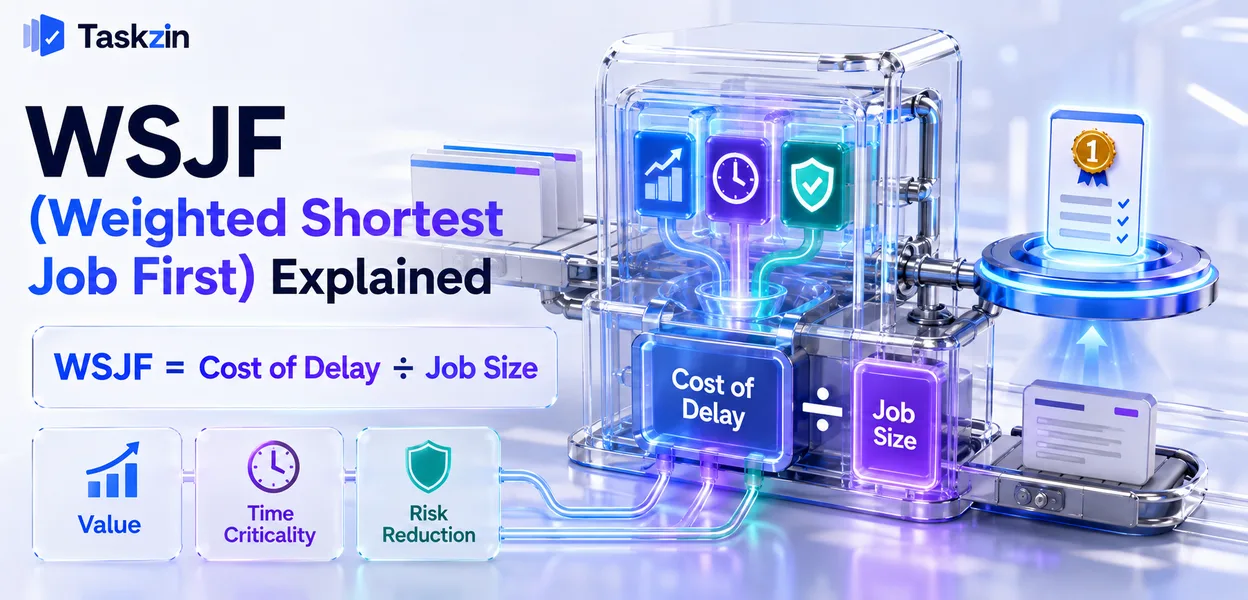
WSJF (Weighted Shortest Job First) Explained
A clear explanation of Weighted Shortest Job First, covering the economic idea behind it, the formula and its components, how to score each element, a worked example showing the ranking it produces, and common mistakes.
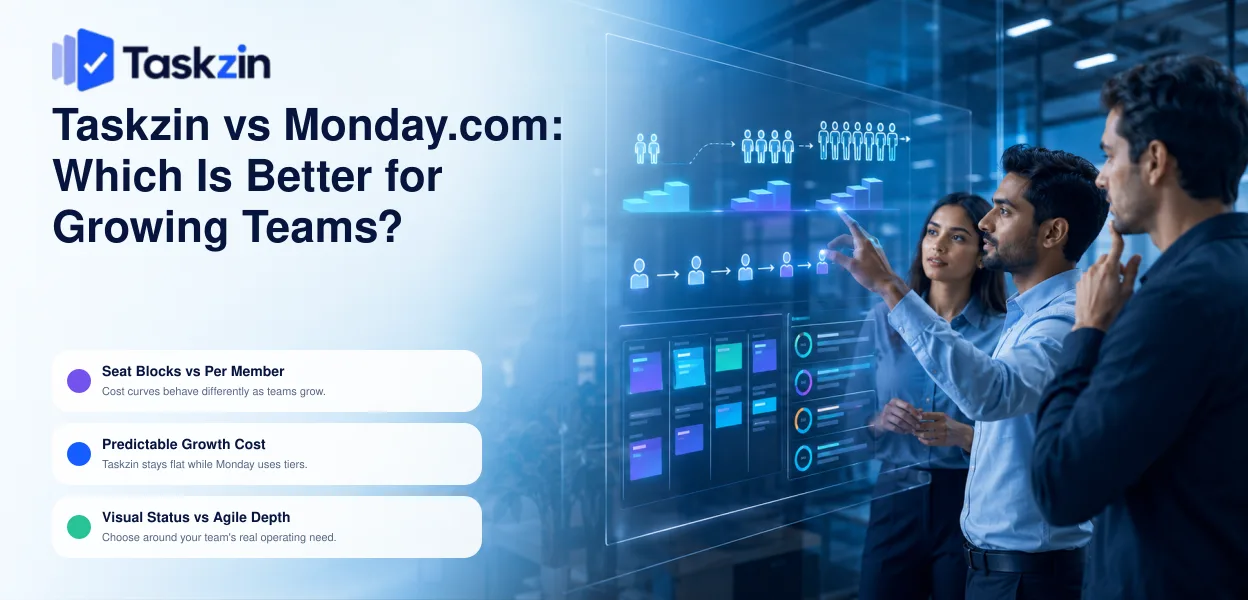
Taskzin vs Monday.com: Which Is Better for Growing Teams?
A comparison of Taskzin and Monday.com for growing teams, covering how seat-tier pricing differs from flat per-member cost, a cost table by headcount, feature differences including agile support, and which fits better at each team size.

Agile vs Waterfall vs Kanban vs Scrumban: Methodologies Compared
A comparison of Waterfall, Scrum, Kanban and Scrumban, covering why agile is a category rather than a method, a side-by-side table, where each approach genuinely fits, three questions that settle the choice, and common comparison mistakes.
Taskzin vs ClickUp: Full Feature-by-Feature Comparison
A feature-by-feature comparison of Taskzin and ClickUp, covering breadth versus maintainability, a full comparison table, how views and daily use differ, pricing including guest access, where each product wins, and migration.

Jira vs ClickUp: An Honest Comparison
An honest comparison of Jira and ClickUp, covering the fundamental difference between depth and breadth, where each product genuinely leads, the criticisms each attracts, and clear guidance on which to choose.
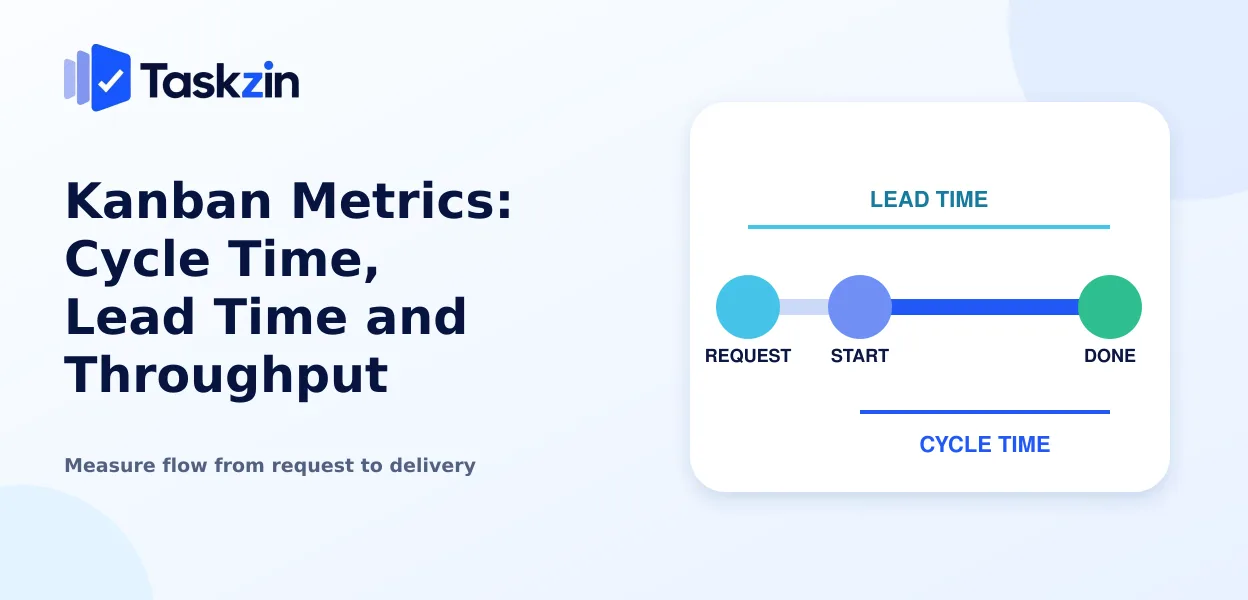
Kanban Metrics: Cycle Time, Lead Time and Throughput
A practical guide to Kanban flow metrics, covering what cycle time, lead time and throughput each measure, how Little's Law links them, how to read scatterplots and cumulative flow diagrams, probabilistic forecasting, and common mistakes.
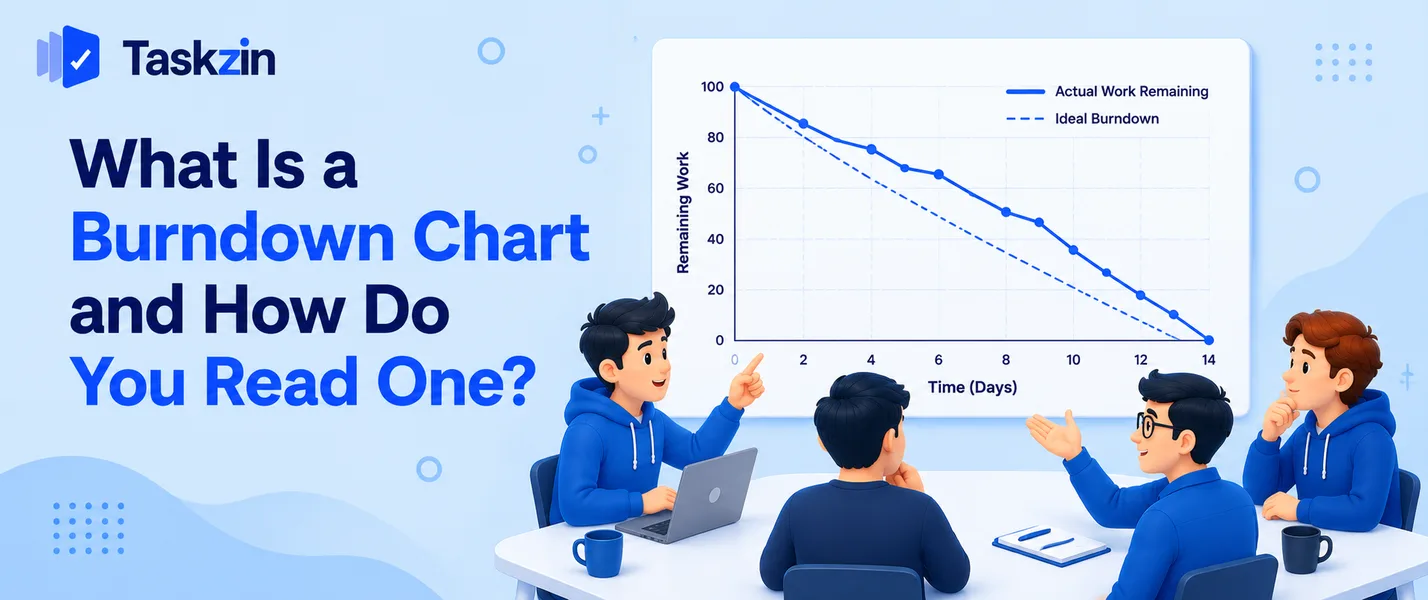
What Is a Burndown Chart and How Do You Read One?
A beginner-friendly explanation of burndown charts, covering what they show, how to read the common patterns, the difference from burnup charts, how to create and maintain one, their genuine limits, and common mistakes.
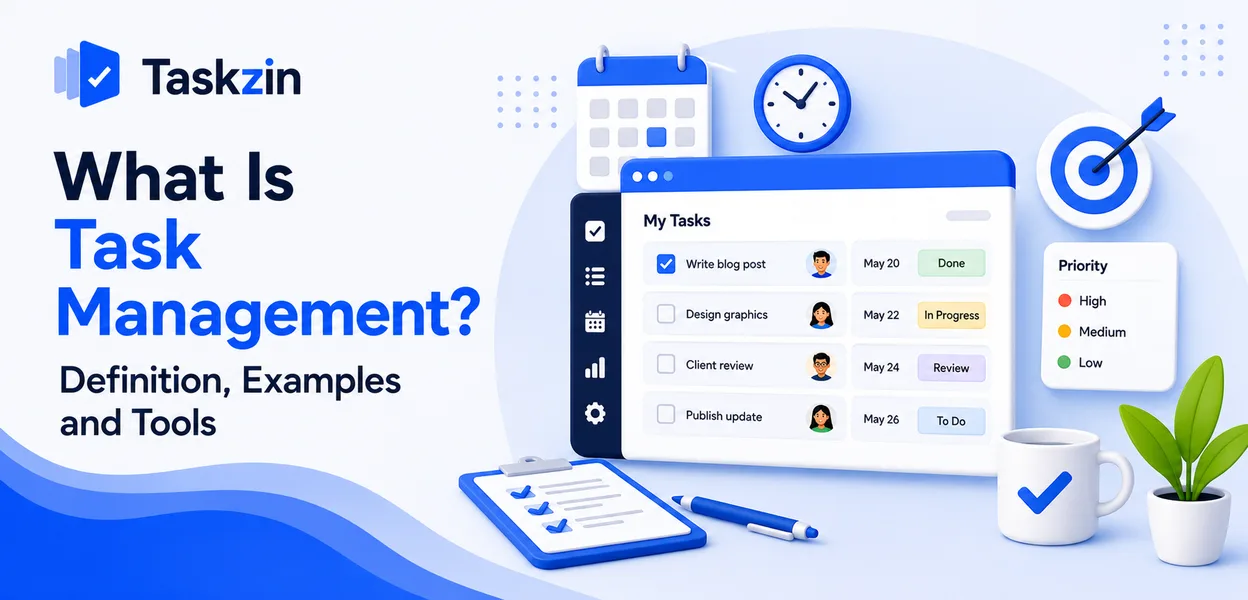
What Is Task Management? Definition, Examples and Tools
A plain-English explanation of task management, covering the definition, the five-stage lifecycle, worked examples for individuals and teams, how it differs from project management, how to write good tasks, and the main methods and tools.
Project Management in Healthcare
A practical guide to project management in healthcare settings, covering what makes healthcare projects different, planning around clinical availability, clinical engagement, governance and risk documentation, and common mistakes.
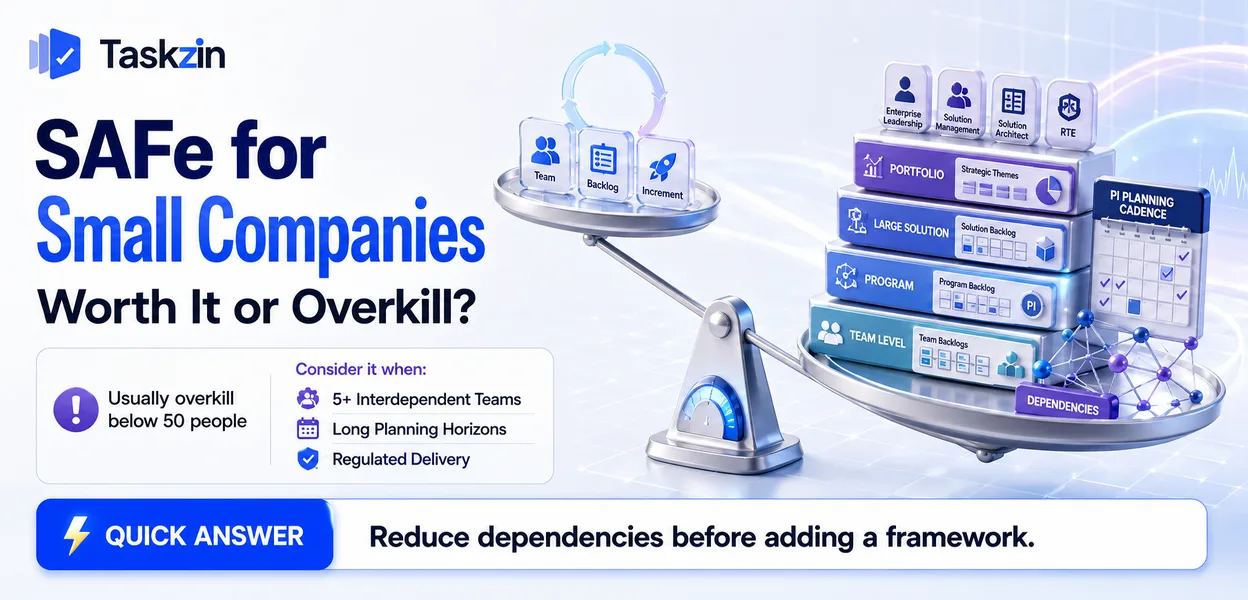
SAFe for Small Companies: Worth It or Overkill?
An honest assessment of SAFe for small companies, covering what the framework adds above Scrum, when it is disproportionate, the conditions that justify it, lighter alternatives worth trying first, and how to adopt it sensibly.
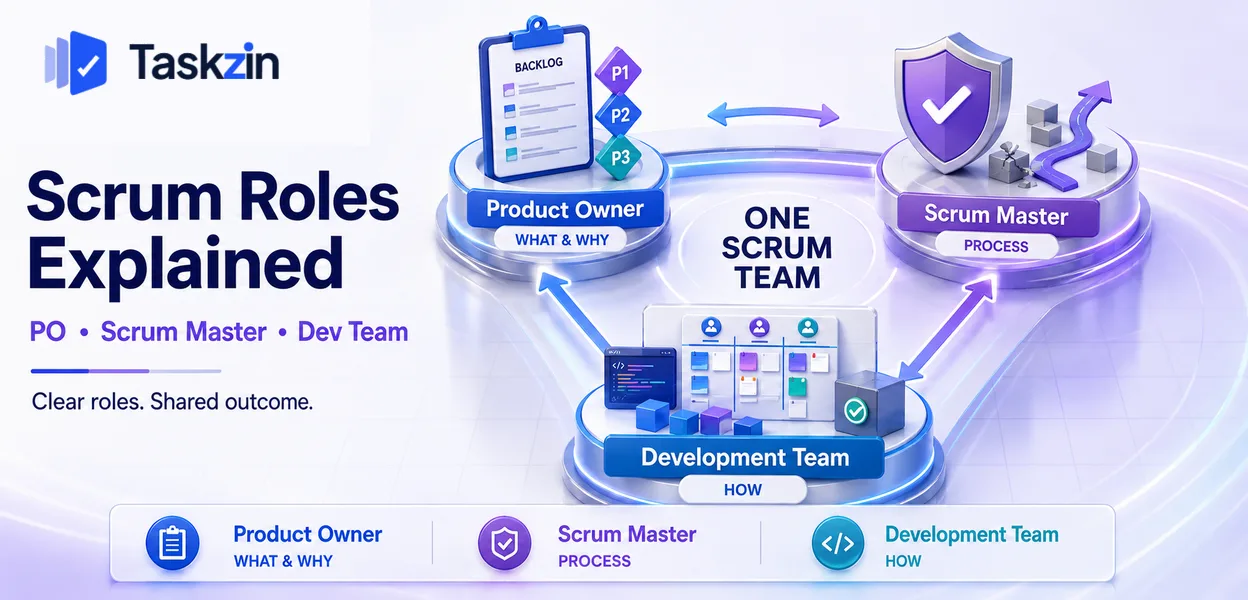
Scrum Roles Explained: PO, Scrum Master, Dev Team
A clear explanation of the three scrum roles, covering why the framework defines only three, what each one decides and does daily, where each commonly goes wrong, and the role combinations that reliably cause trouble.
Project Management for Customer Support Teams
A practical guide to project management for customer support teams, covering why support resists sprints, separating ticket work from project work, managing the knowledge base, metrics that balance speed with improvement, and common mistakes.
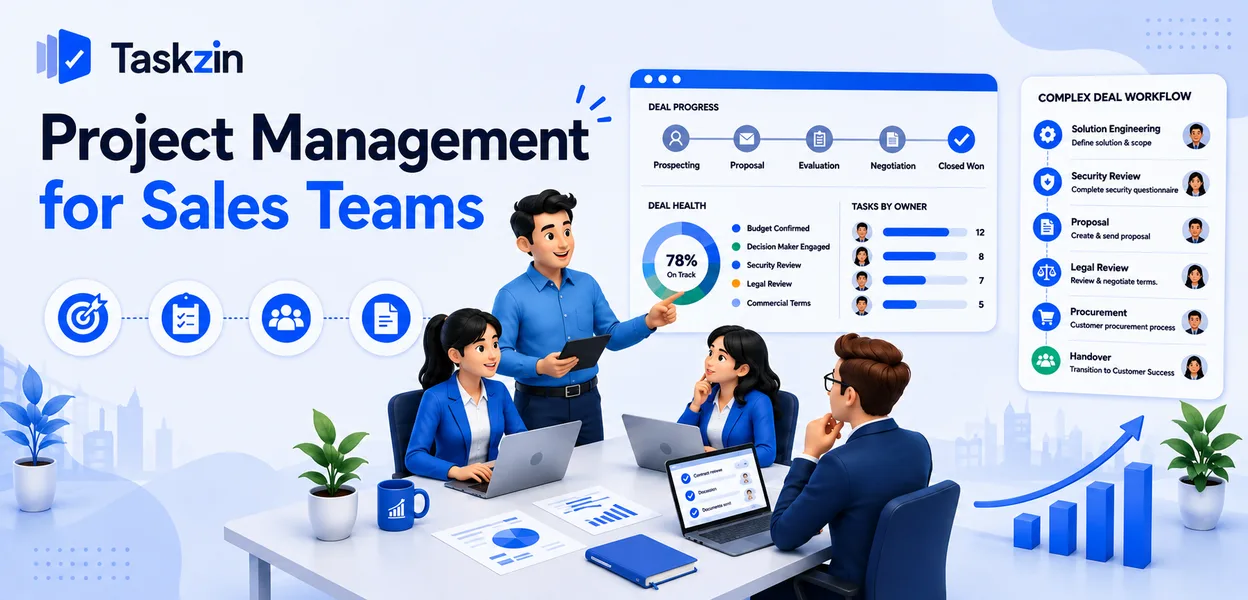
Project Management for Sales Teams
A practical guide to project management for sales teams, covering the boundary between CRM and project work, running complex deals as projects, managing RFP responses, handover to delivery, and common mistakes.
Project Management for Event Planners
A practical guide to project management for event planners, covering why fixed dates make events unforgiving, backwards planning, supplier and venue management, building a run of show, and common mistakes.
Project Management for Nonprofits and NGOs
A practical guide to project management for nonprofits and NGOs, covering how funding agreements shape projects, running a grant-funded programme, volunteer coordination, managing multiple funders, and common mistakes.

Best Project Management Software for Construction
A comparison of the best project management software for construction, covering site data capture, contractual document trails and enforced schedules, ten reviewed tools, how to choose by phase, and how to get site teams to adopt it.
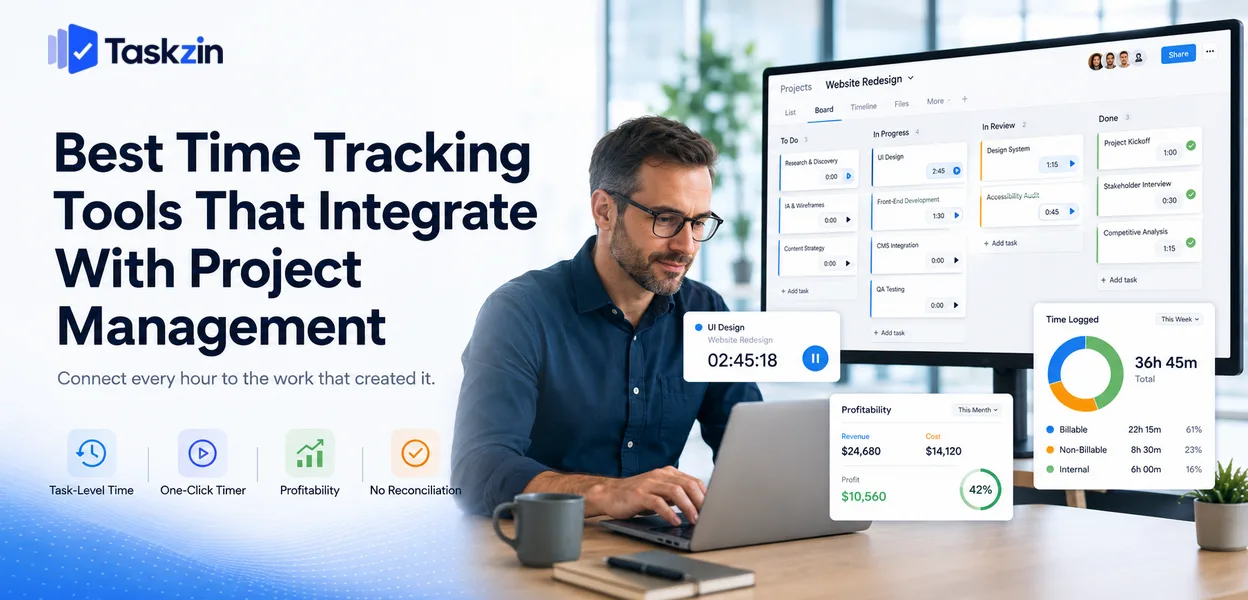
Best Time Tracking Tools That Integrate With Project Management
A comparison of the best time tracking tools that integrate with project management, covering why task-level tracking matters, ten reviewed options, how to choose between built-in and integrated, and how to make tracking stick without surveillance.
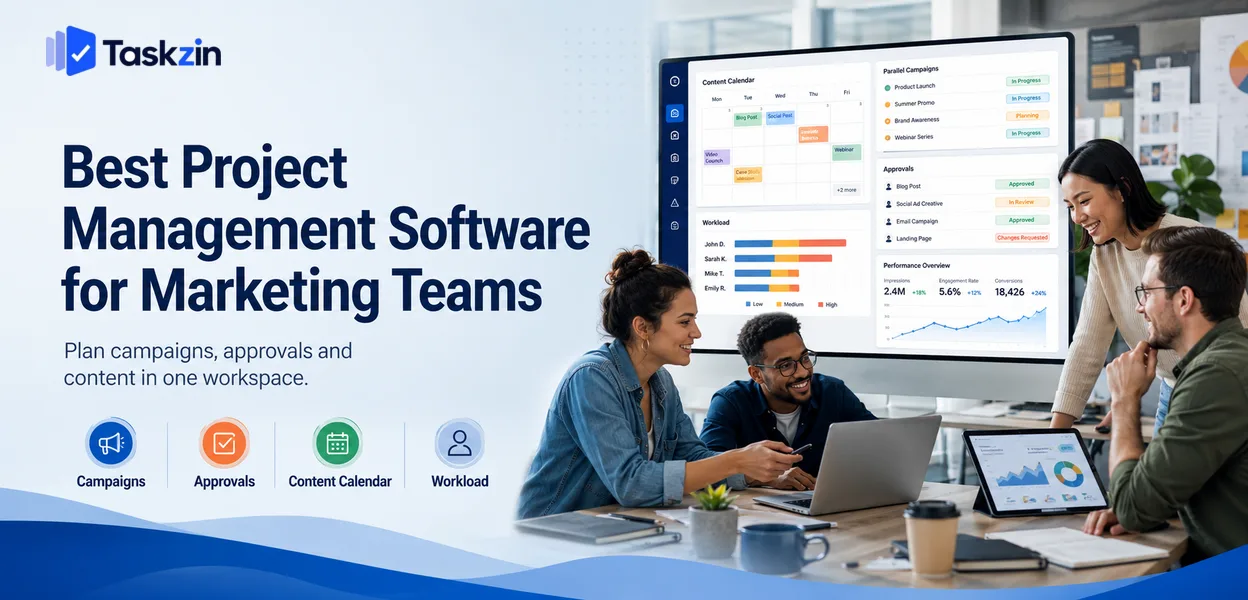
Best Project Management Software for Marketing Teams
A comparison of the best project management software for marketing teams, covering why generic tools struggle with parallel campaigns and approvals, ten reviewed options, how to set up campaign templates and approval chains, and what to measure.
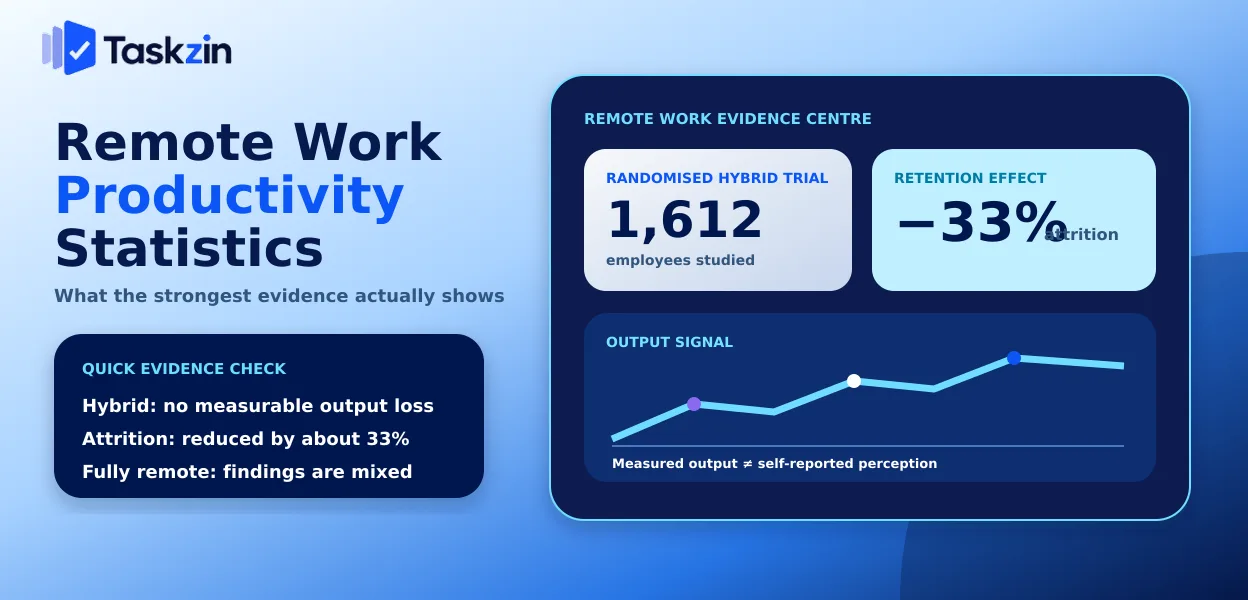
Remote Work Productivity Statistics
An evidence-led roundup of remote work productivity statistics, covering the randomised trial findings on hybrid and fully remote work, current working patterns, retention and cost effects, the perception gap, and how to use these figures responsibly.

10 Best Notion Alternatives for Project Management
A comparison of ten Notion alternatives for project management, covering where Notion falls short as a tracker, ten reviewed options, how to split documentation from delivery, migration steps, and when Notion is still right.
10 Best Trello Alternatives
A comparison of ten Trello alternatives, covering the specific limits teams hit, what power-ups really cost, ten reviewed options, how to migrate without losing momentum, and when Trello remains the right tool.
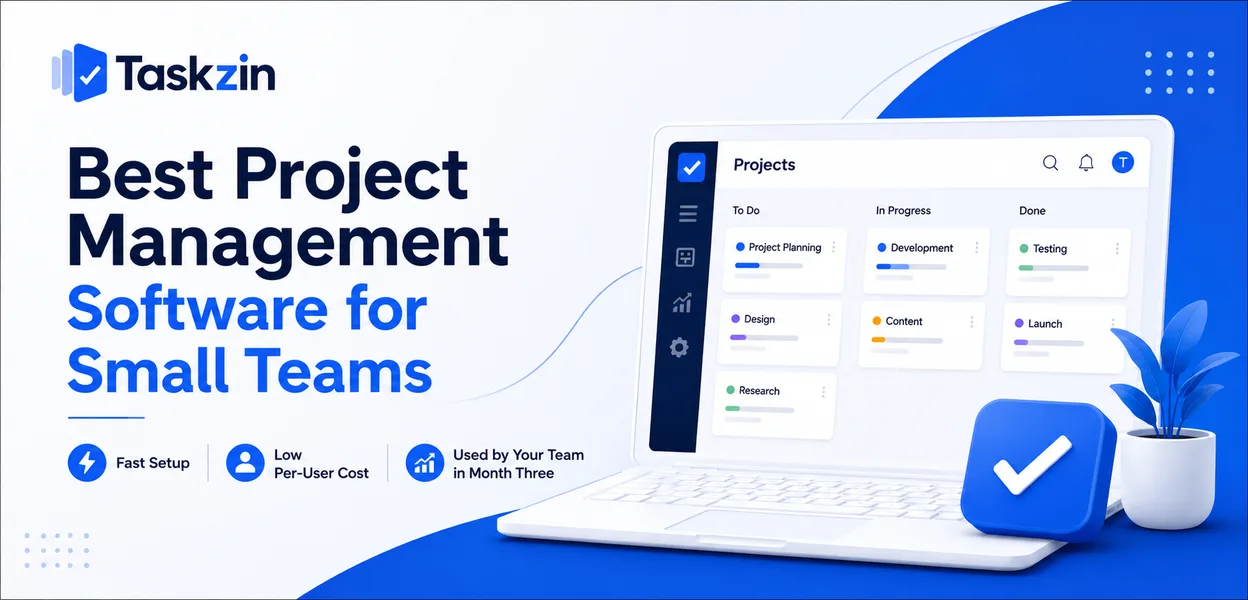
Best Project Management Software for Small Teams
A practical comparison of the best project management software for small teams, covering ten tools, realistic pricing, a selection framework based on your actual bottleneck, and the mistakes small teams make when choosing.
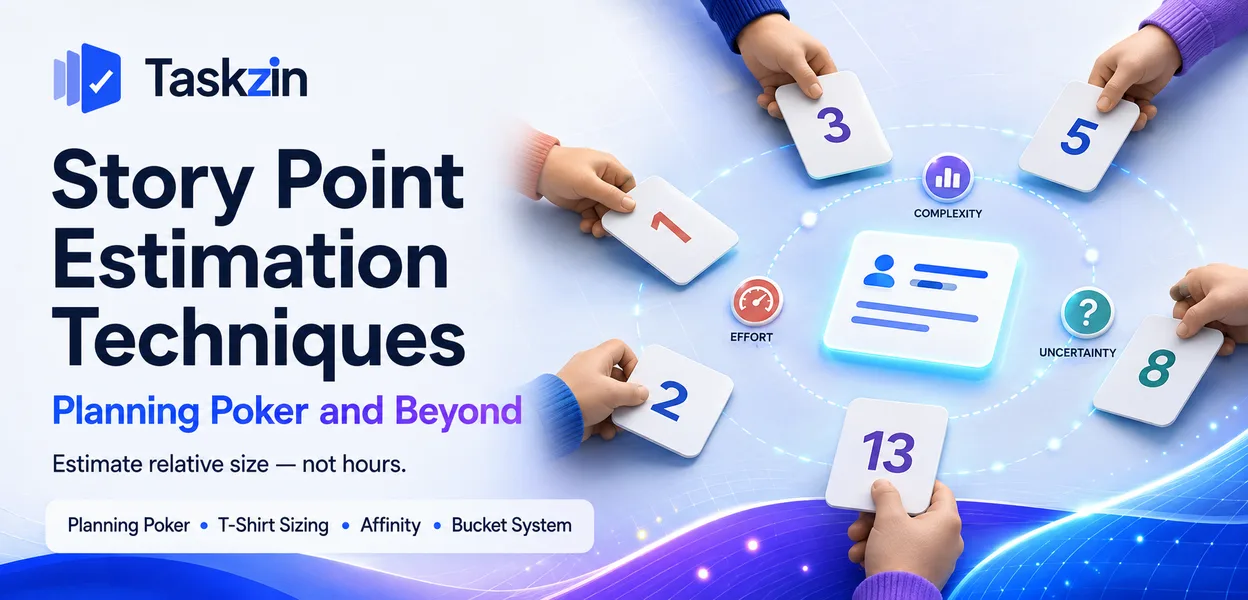
Story Point Estimation Techniques: Planning Poker and Beyond
A practical guide to story point estimation, covering what points actually measure, eight techniques compared, how to run planning poker properly, how to calibrate your team's scale, and the habits that make estimates meaningless.
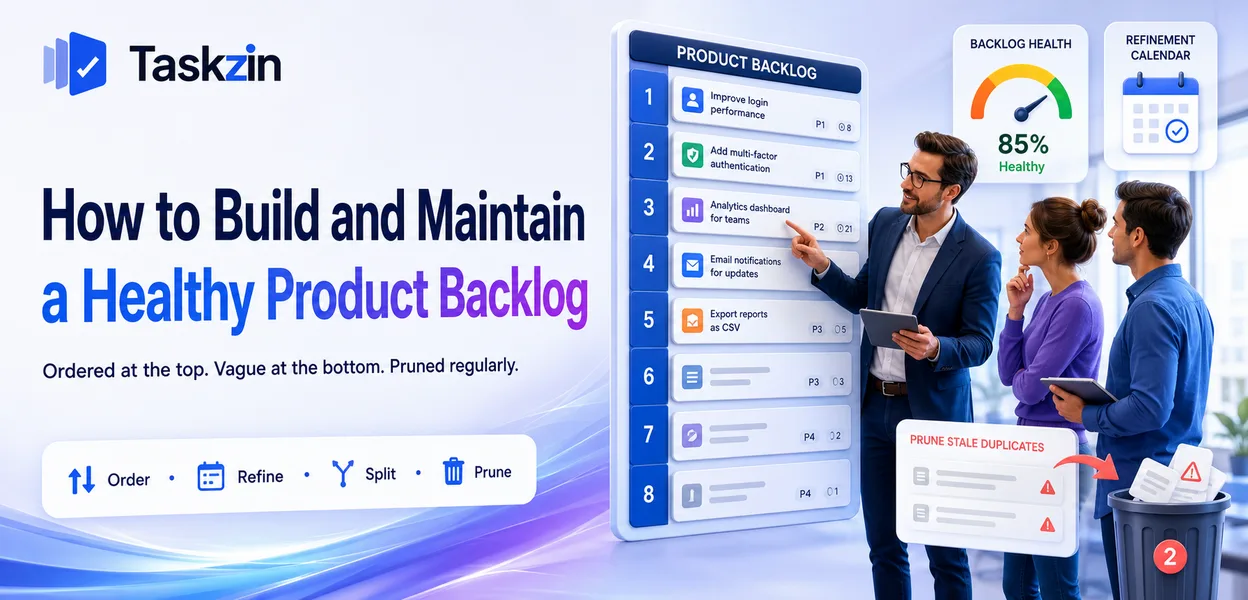
How to Build and Maintain a Healthy Product Backlog
A practical guide to product backlog management, covering what a healthy backlog looks like, how to build one from outcomes, the refinement habit that keeps it usable, prioritising without endless debate, and how to prune it.
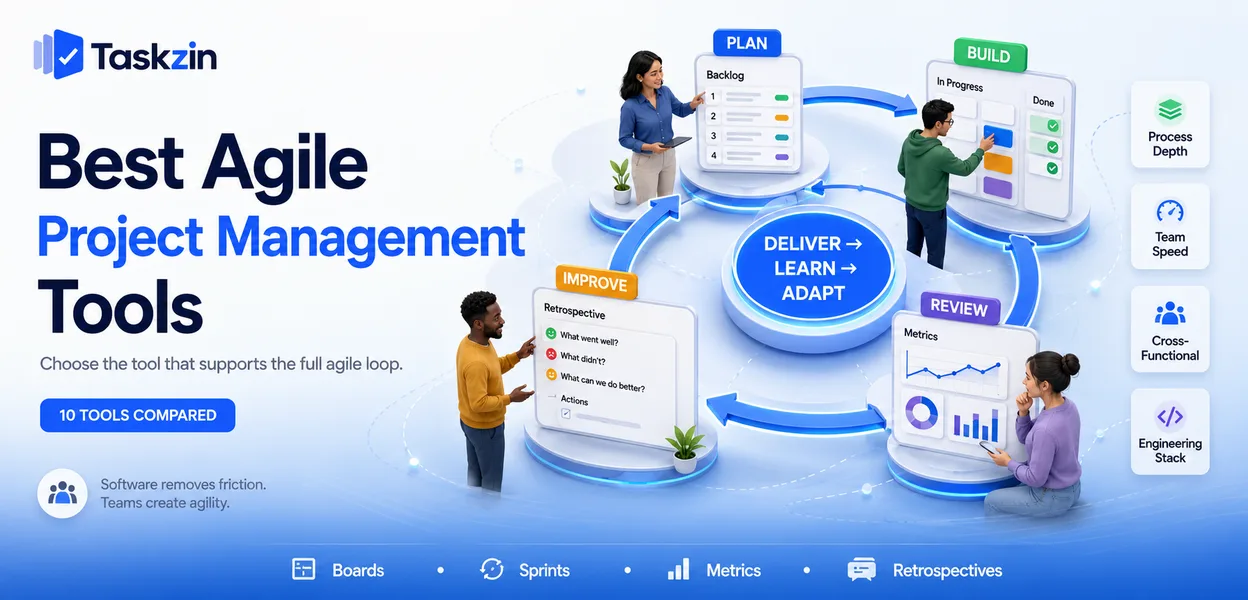
Best Agile Project Management Tools
A comparison of the best agile project management tools, covering what makes a tool genuinely agile, ten options reviewed, how to choose by framework, the metrics your tool should produce, and common adoption mistakes.
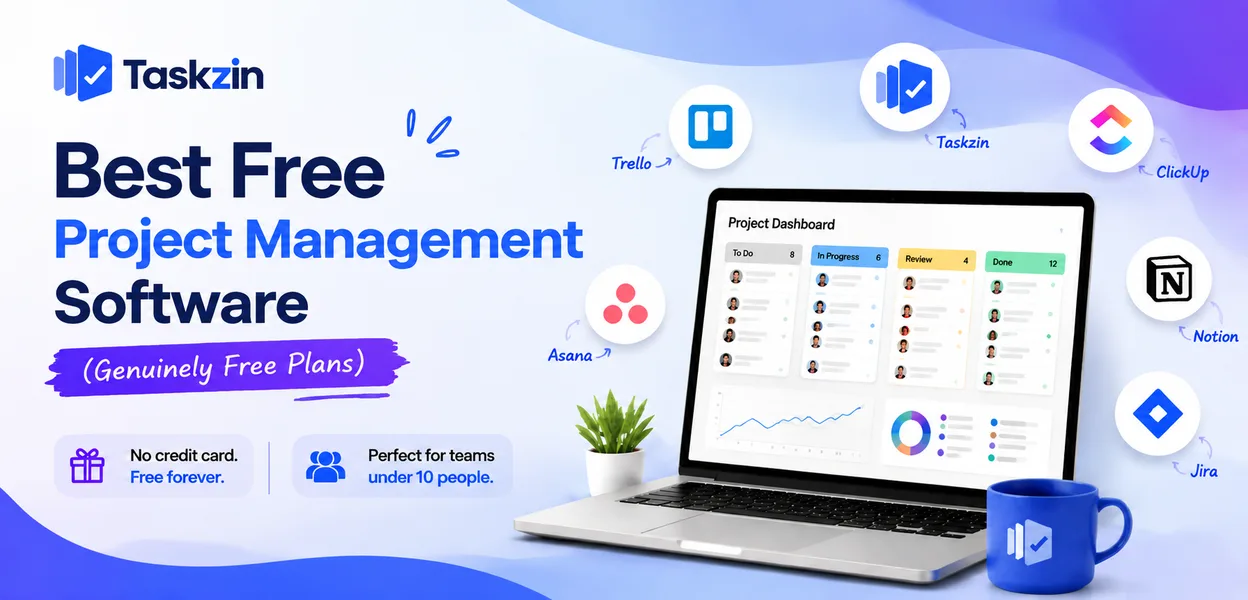
Best Free Project Management Software (Genuinely Free Plans)
A comparison of genuinely free project management software, covering free-forever plans versus trials, where each tool places its limits, which plan fits which situation, and the hidden costs behind free tiers.
Your team already has the work. Give it a home.
Set up a workspace in under two minutes. Import from ClickUp, Jira, Asana or Trello in one click.
No credit card • Free 14 days • Cancel anytime