
Sanju Shrestha
Sanju Shrestha is a SaaS content writer at Taskzin who explores smarter ways to manage work, organize priorities, and improve team performance. Her content covers productivity strategies, digital workflows, collaboration, and task management, with a focus on helping modern teams work more efficiently and stay aligned.
Asana vs Wrike
An honest comparison of Asana and Wrike, covering their different design assumptions, where Wrike's resource management and proofing win, where Asana's adoption and portfolios win, and how to diagnose which fits.
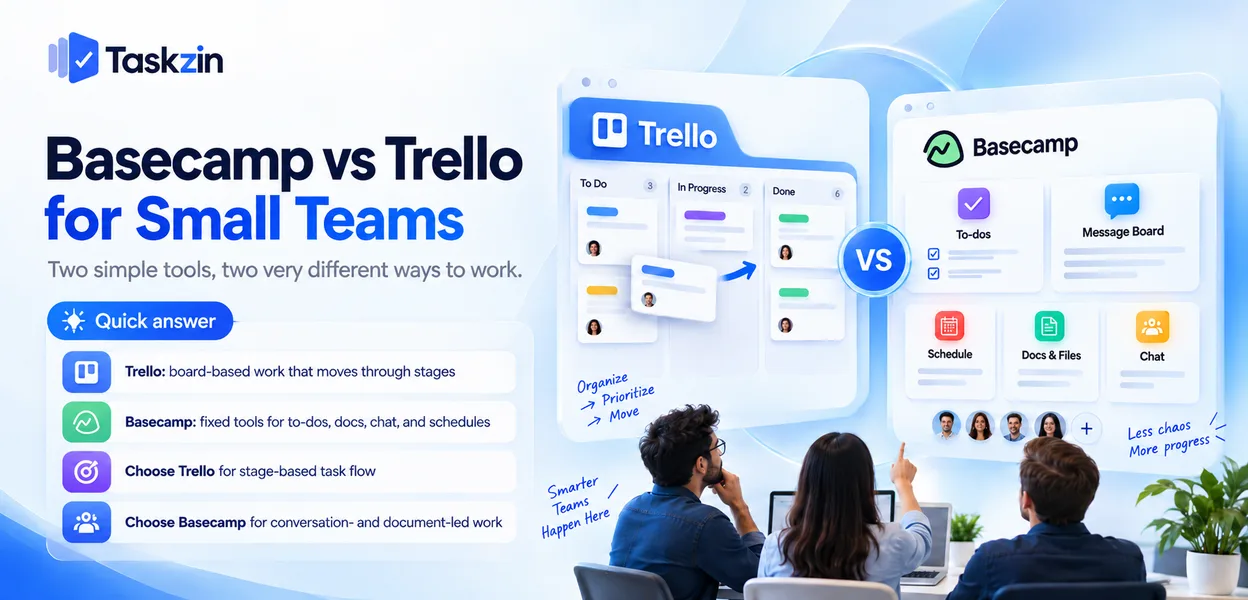
Basecamp vs Trello for Small Teams
An honest comparison of Basecamp and Trello for small teams, covering their opposite approaches to simplicity, the cost question at different team sizes, where each is genuinely stronger, and how to choose by the shape of your work.
Hive vs Monday.com
An honest comparison of Hive and Monday.com, covering Hive's consolidation bet and Monday.com's adoption bet, where each is genuinely stronger, how to test whether consolidation would actually happen, and how to choose.
Slack vs Your Project Tool: Where Should Work
A practical guide to the boundary between Slack and your project tool, covering why work drifts into chat, what belongs where, three rules that stop the drift, how to integrate the two properly, and the signs it has gone too far.

Teamwork.com vs Wrike for Agencies
An honest comparison of Teamwork.com and Wrike for agencies, covering billing-first versus resourcing-first positioning, where each is genuinely stronger, how to diagnose your actual bottleneck, and the cost comparison agencies get wrong.
Airtable vs Smartsheet
An honest comparison of Airtable and Smartsheet, covering the difference between a relational model and a sheet-based one, where each is genuinely stronger, which use cases point to which, and the limitations they share.
Basecamp vs Asana for Client Work
An honest comparison of Basecamp and Asana for client work, covering their deliberate design philosophies, where the two pricing models cross over, where each is genuinely stronger, and how to choose by the shape of your engagements.
Wrike vs Smartsheet: Which Handles Complexity Better?
An honest comparison of Wrike and Smartsheet, covering the difference between people complexity and data complexity, where each platform genuinely wins, how to diagnose which problem you have, and the implementation reality of both.
Monday.com vs ClickUp: Which Is Better Value?
An honest value comparison of Monday.com and ClickUp, covering why seat structure decides the cost question, where Monday.com's visual clarity and adoption win, where ClickUp's inclusions and depth win, and how to run the real numbers.
Asana vs ClickUp: An Honest Comparison
An honest comparison of Asana and ClickUp, covering their opposing design philosophies, where Asana's clarity and adoption win, where ClickUp's breadth and value win, and the trade-off between administration cost and capability ceiling.
Marketing Campaign Brief Template
A marketing campaign brief template with a filled worked example, covering what a brief must settle, how to write the proposition and audience sections, how to brief without a rejection cycle, and common mistakes.
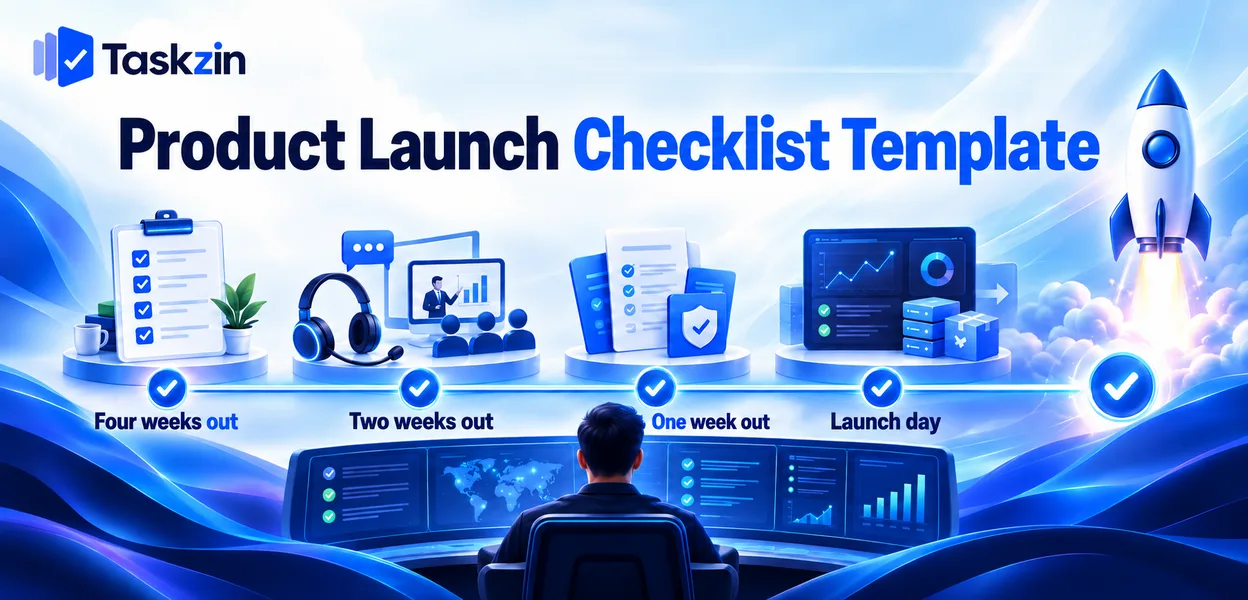
Product Launch Checklist Template
A product launch checklist template organised around what launches actually fail on, covering four weeks out to the week after launch, go/no-go criteria, rollback triggers, and how to adapt it to different launch sizes.
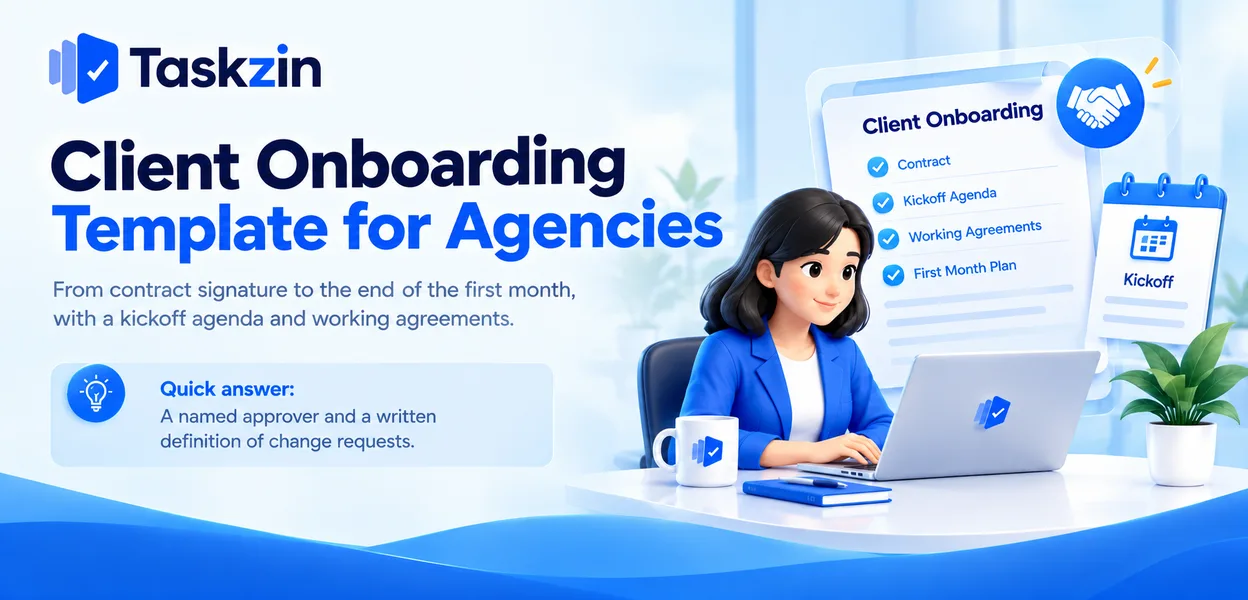
Client Onboarding Template for Agencies
A client onboarding template for agencies covering signature through the first month, with a structured kickoff agenda, the working agreements that prevent most scope disputes, how to get client inputs on time, and common mistakes.
Employee Onboarding Checklist Template
An employee onboarding checklist template covering pre-arrival through to 90 days, with named owners for each item, the three goals onboarding must achieve, how to split ownership between HR, manager and buddy, and common mistakes.
Risk Register Template
A risk register template with a filled worked example, covering what a register is actually for, the fields that matter, how to score without false precision, the four response options, and how to keep it maintained.
Meeting Agenda Template That Actually Gets Used
A meeting agenda template that people actually read, covering why most agendas are ignored, the six elements that matter, a worked example, the single line that transforms a meeting, and how to handle recurring meetings.
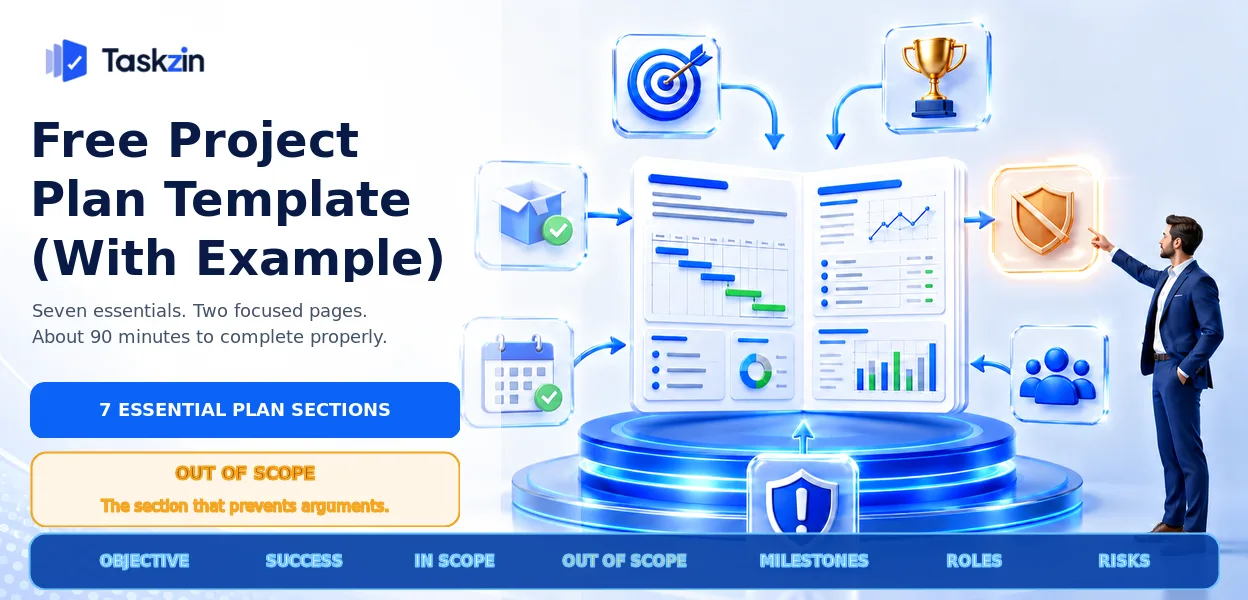
Free Project Plan Template (With Example)
A free project plan template with a filled worked example, covering the seven sections a plan actually needs, how to complete it in ninety minutes, how to keep it current, and the mistakes that make plans unreadable.

Taskzin vs Nifty
An honest comparison of Taskzin and Nifty, acknowledging their substantial overlap, covering Nifty's milestone-driven progress and built-in discussions, Taskzin's flow control and pricing, and a method for choosing between close competitors.
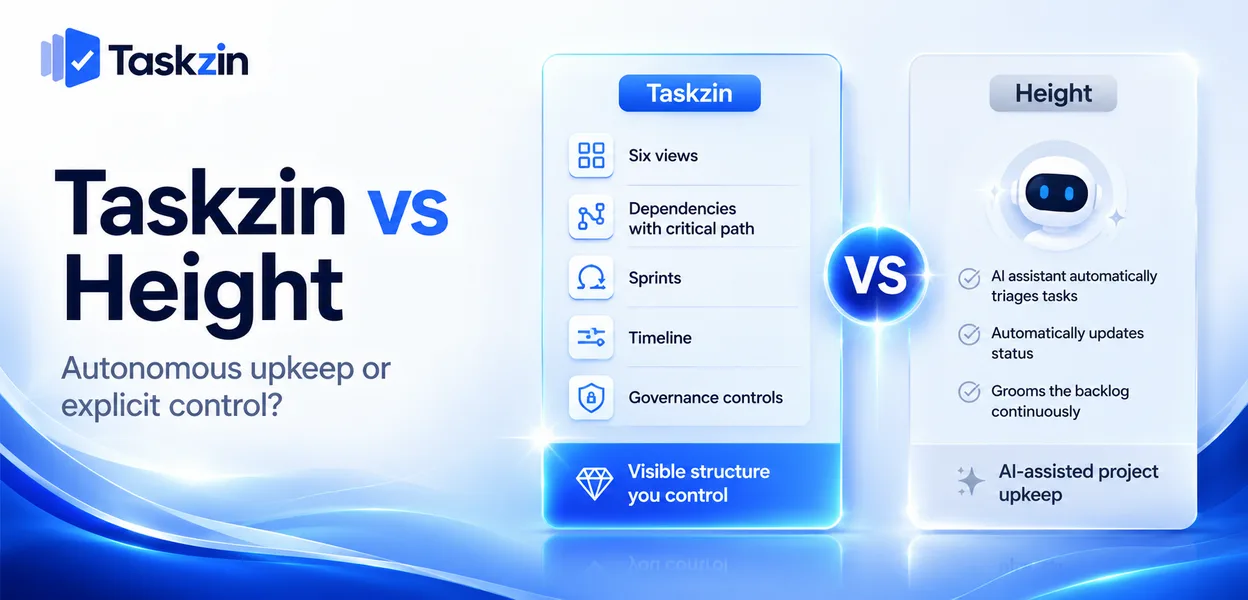
Taskzin vs Height
An honest comparison of Taskzin and Height, covering their opposing bets on AI-led upkeep versus explicit structure, where each is genuinely stronger, an honest assessment of what AI does in project tools today, and how to choose.
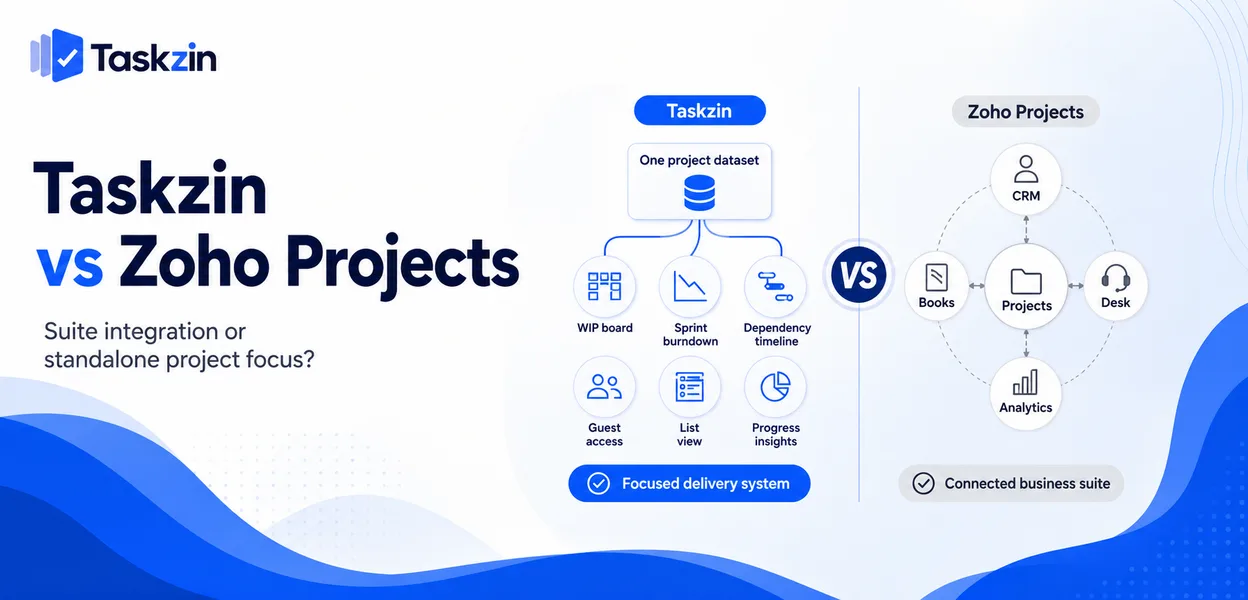
Taskzin vs Zoho Projects
An honest comparison of Taskzin and Zoho Projects, covering suite membership versus standalone focus, where Zoho's integration and built-in modules win, where Taskzin's unified views and guest access win, and what migration involves.
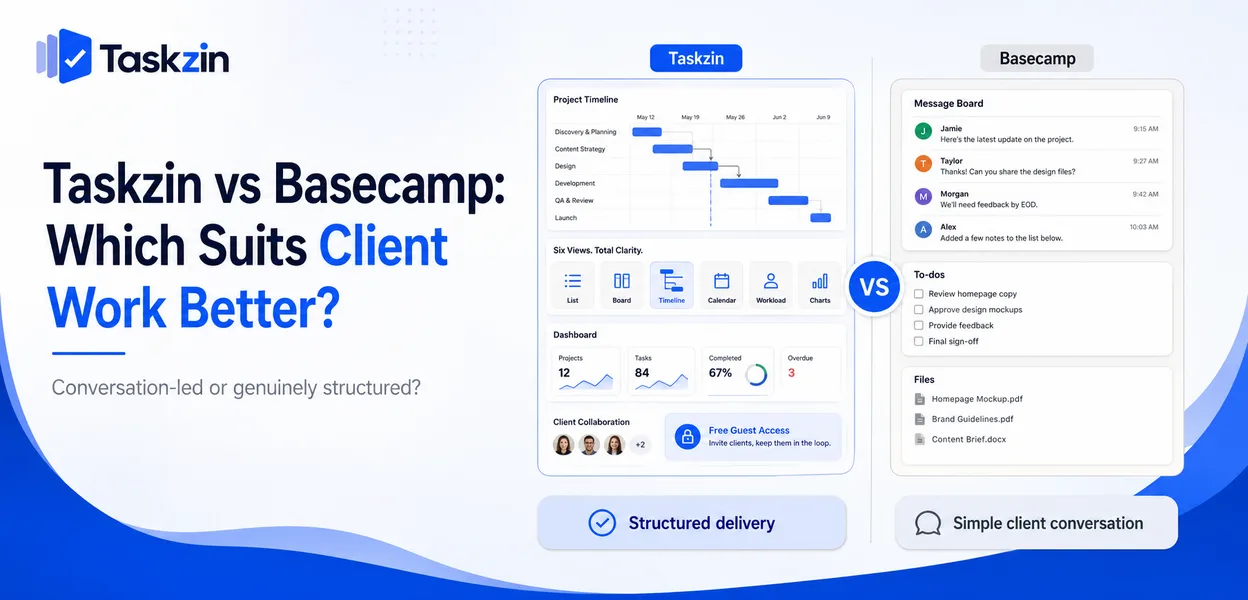
Taskzin vs Basecamp: Which Suits Client Work Better?
An honest comparison of Taskzin and Basecamp for client work, covering their opposing philosophies, how the pricing models actually compare, where Basecamp's deliberate constraints are a strength, and where structure and reporting matter more.

Time Blocking: How It Works and Who It's For
A practical assessment of time blocking, covering what the method actually does, its variants, how to start realistically, who it suits and who it does not, how to keep it working through bad weeks, and common mistakes.
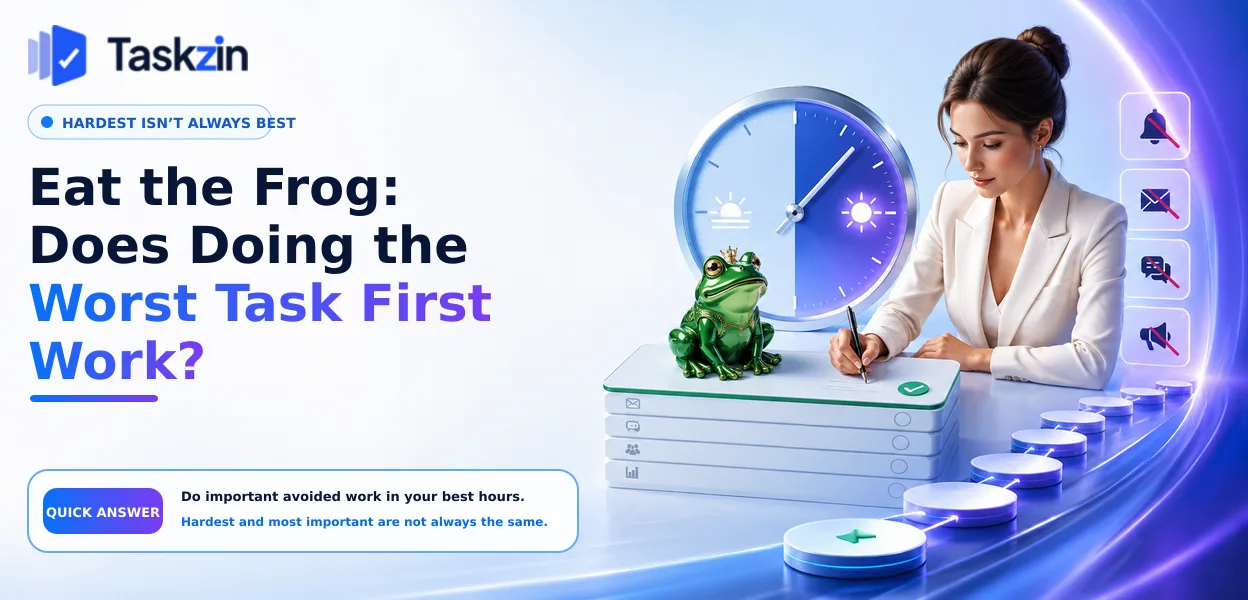
Eat the Frog: Does Doing the Worst Task First Work?
An honest assessment of the eat the frog method, covering what it prescribes, why it works when it works, where the advice breaks down, a more useful version of the rule, and the mistakes people make applying it.
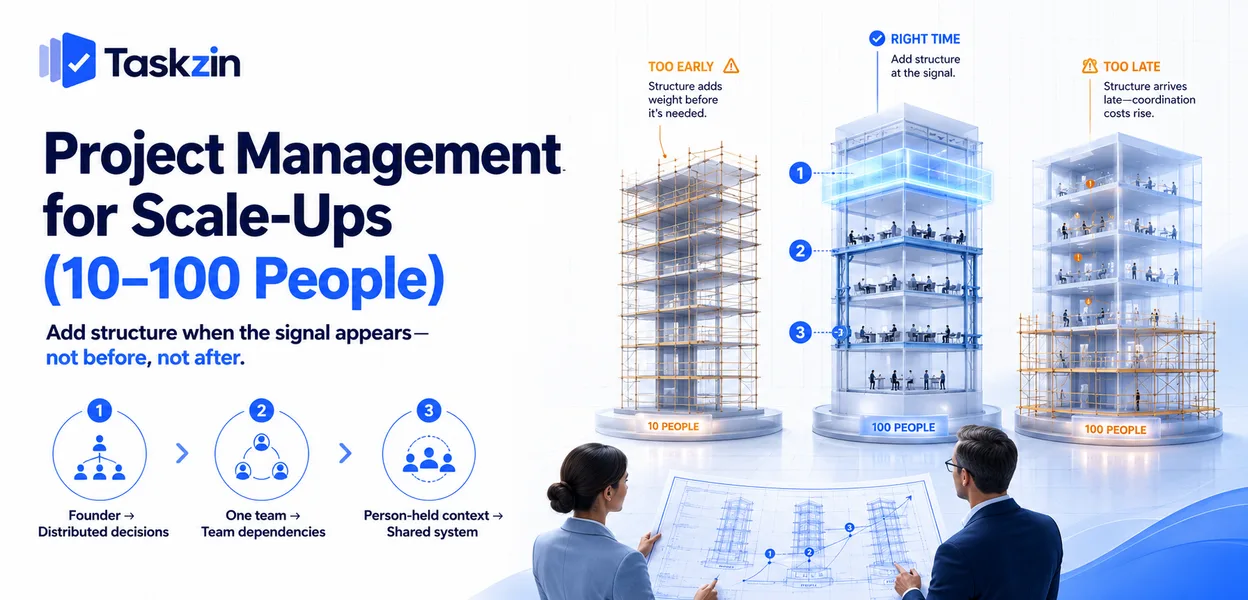
Project Management for Scale-Ups (10-100 People)
A practical guide to project management for scale-ups between ten and a hundred people, covering what breaks as you grow, the three transitions to manage in order, and the mistakes that come from adding process too early or copying big-company models.
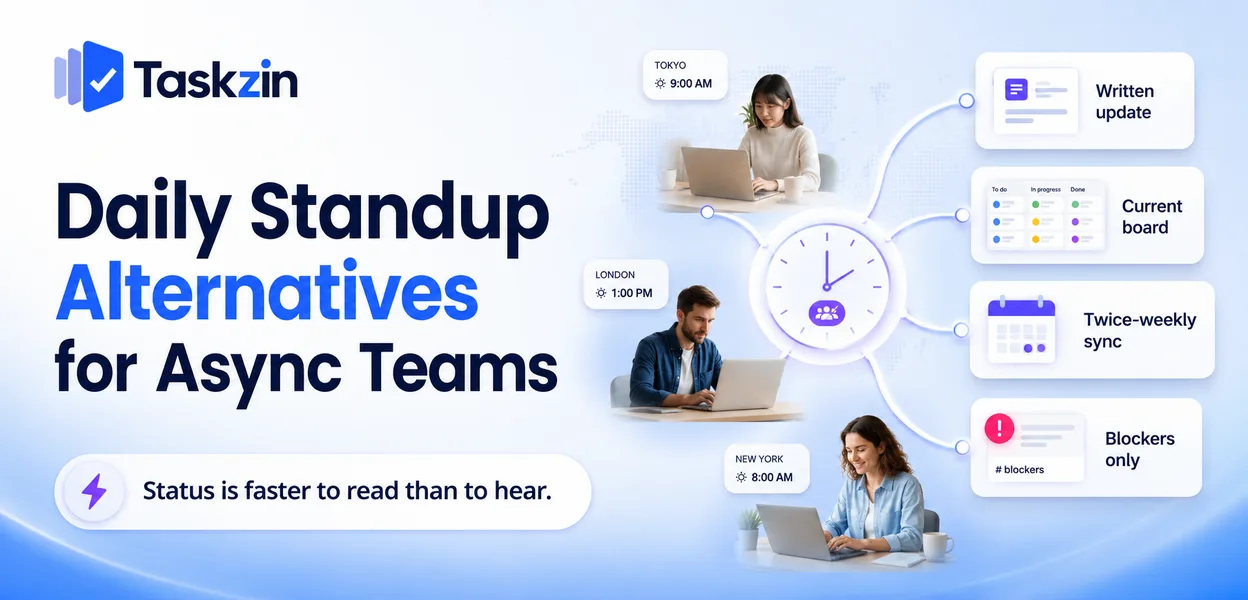
Daily Standup Alternatives for Async Teams
A practical guide to replacing the daily standup on async teams, covering why live standups break down across time zones, six alternatives compared, how to run a written standup properly, and how to choose and introduce the right one.
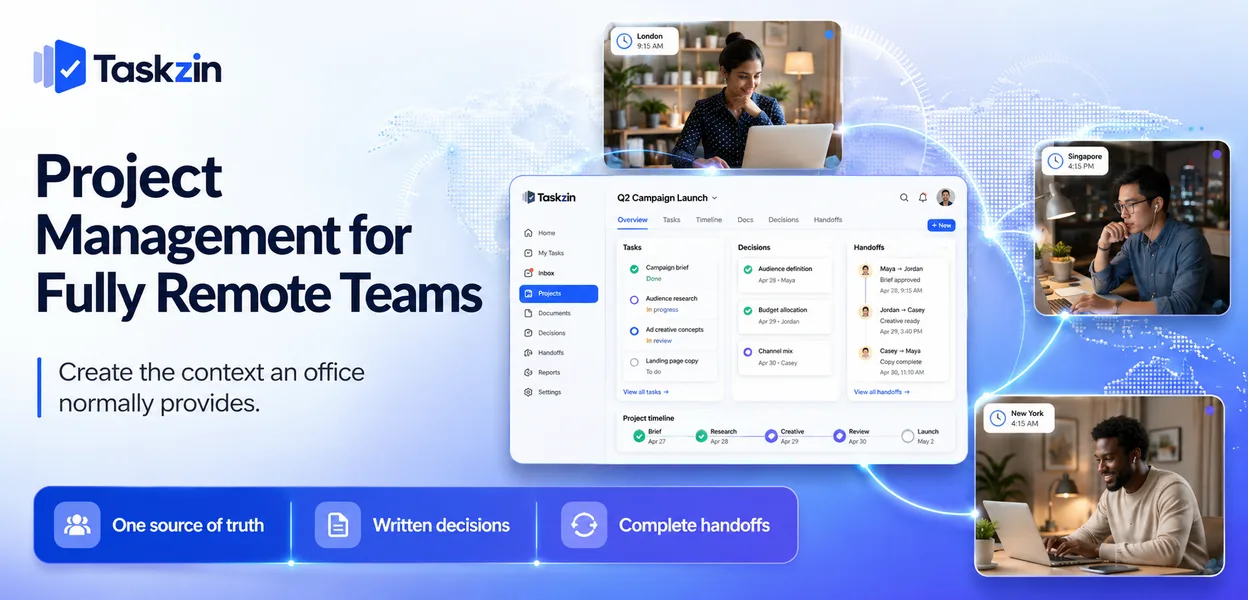
Project Management for Fully Remote Teams
A practical guide to project management for fully remote teams, covering what changes structurally without an office, the practices that matter most, designing around time zones, replacing informal office mechanisms, and common mistakes.
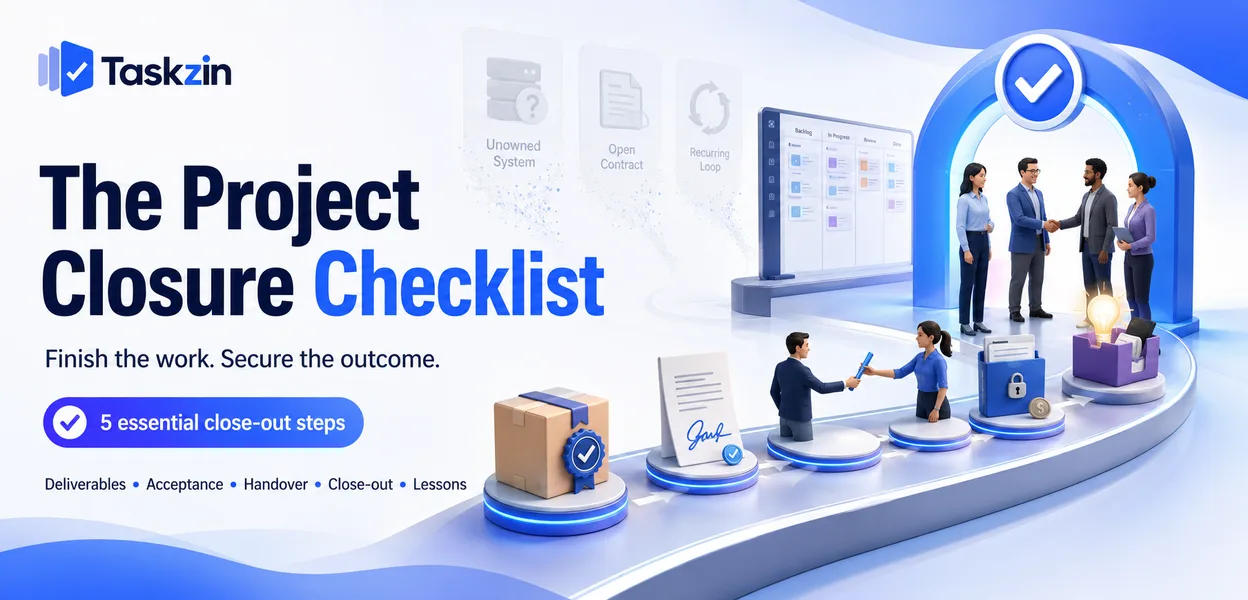
The Project Closure Checklist
A practical project closure checklist covering why closure gets skipped, confirming delivery and formal acceptance, handover to operations, commercial and administrative close-out, and running lessons learned that actually get used.
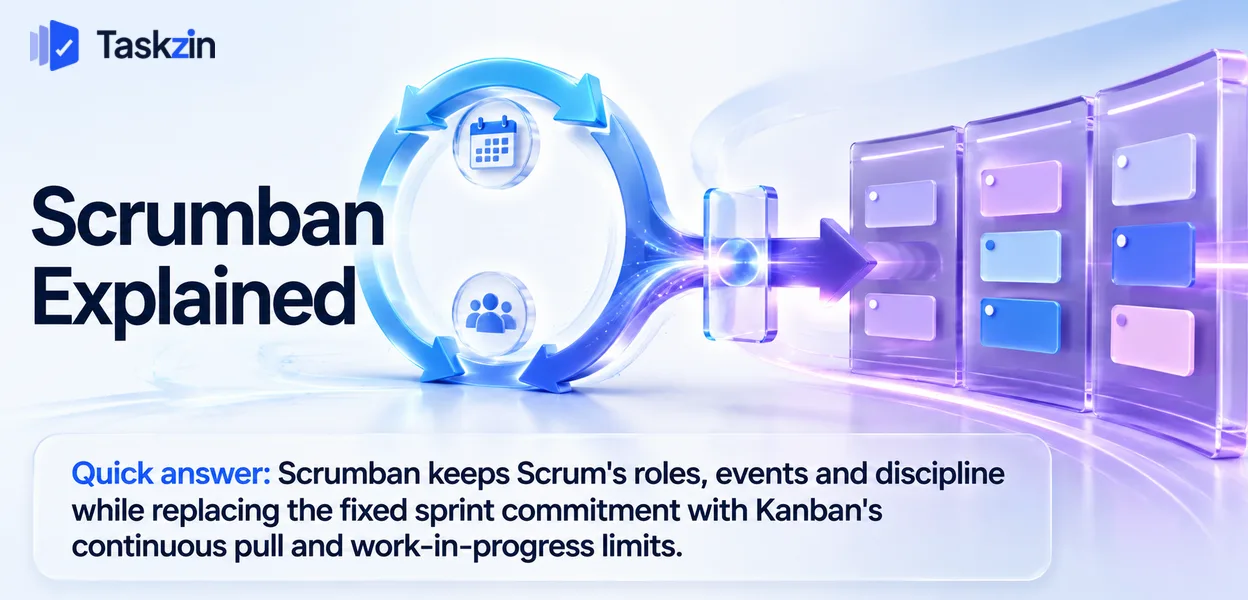
Scrumban Explained
A clear explanation of Scrumban, covering what it keeps from Scrum and Kanban, how planning and load control work in practice, who it suits, how to set it up, and the mistakes that make it a euphemism for dropping discipline.
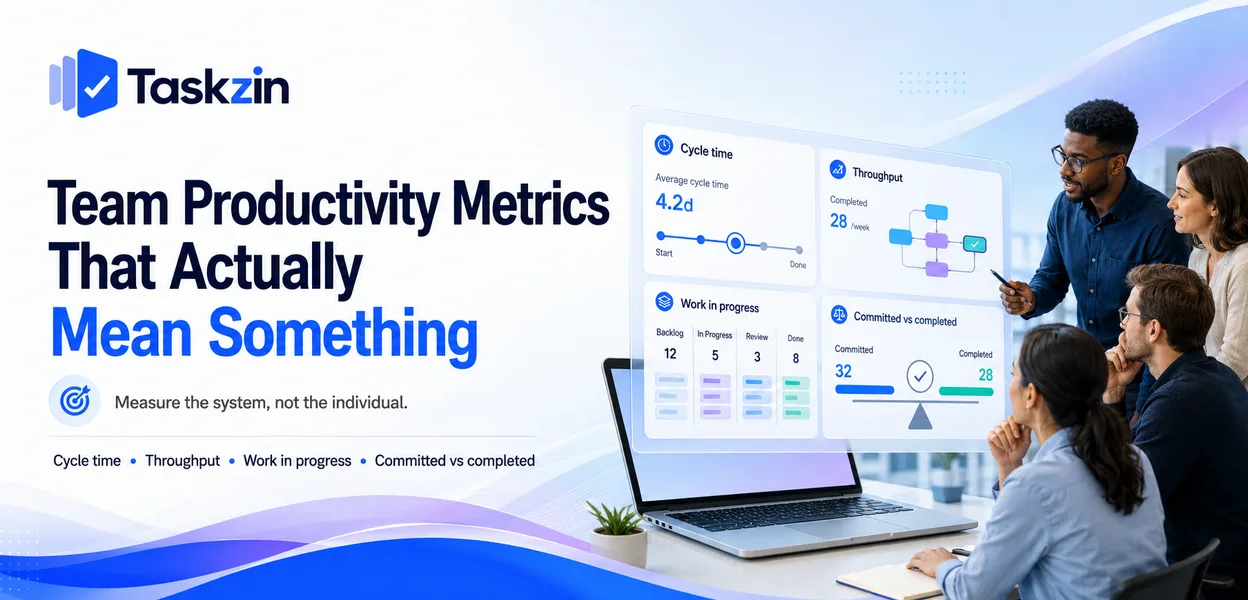
Team Productivity Metrics That Actually Mean Something
A guide to team productivity metrics, covering why most fail, the four that describe delivery honestly and resist gaming, the metrics to avoid, how to collect data safely, and common measurement mistakes.
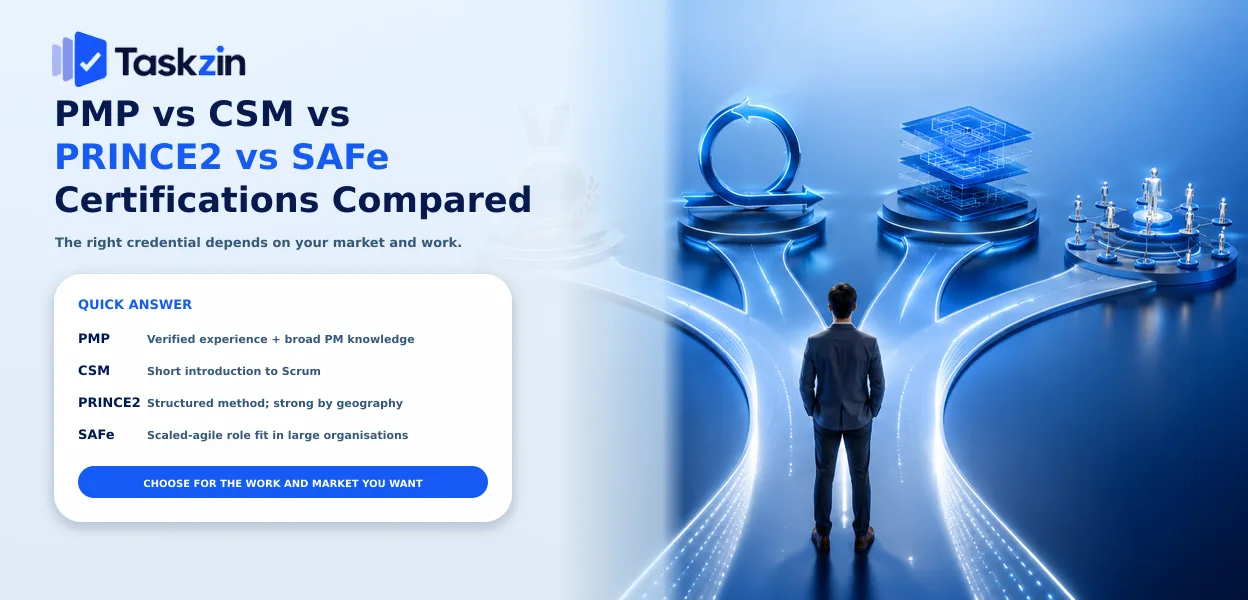
PMP vs CSM vs PRINCE2 vs SAFe: Certifications Compared
A comparison of the major project management certifications, covering what PMP, CSM, PRINCE2 and SAFe each signal to employers, their prerequisites and geographic recognition, how to choose for your market, and common mistakes.
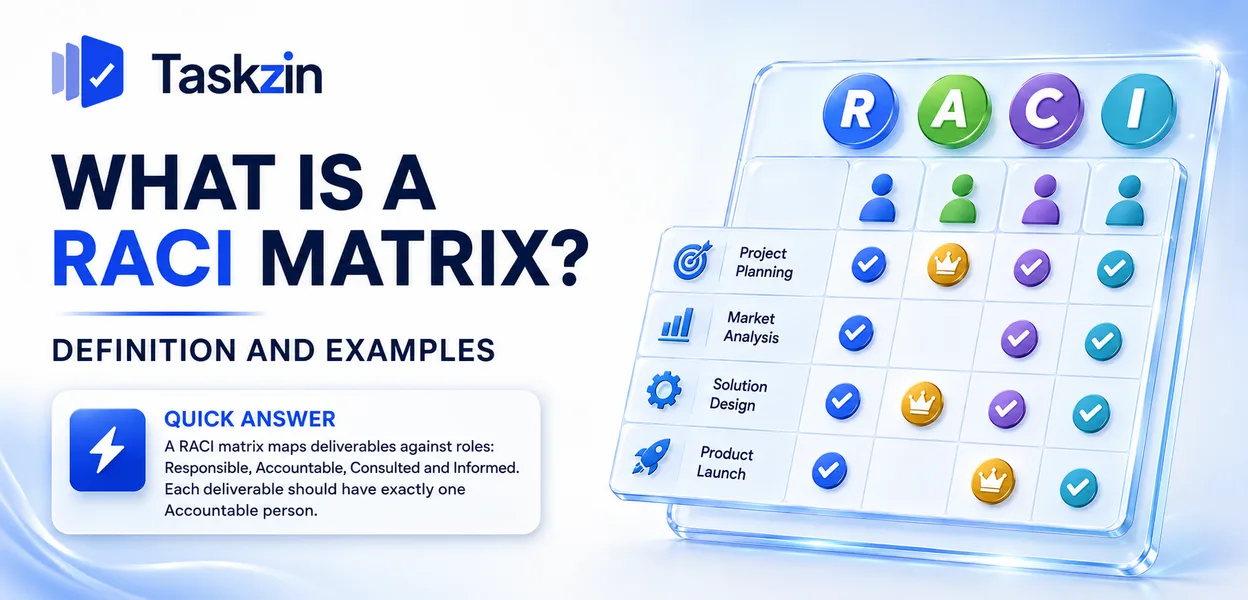
What Is a RACI Matrix? Definition and Examples
A plain-English explanation of the RACI matrix, covering what the four roles mean, a worked project example, how to build one step by step, how to read a completed matrix for organisational problems, the main variants, and when it is unnecessary.
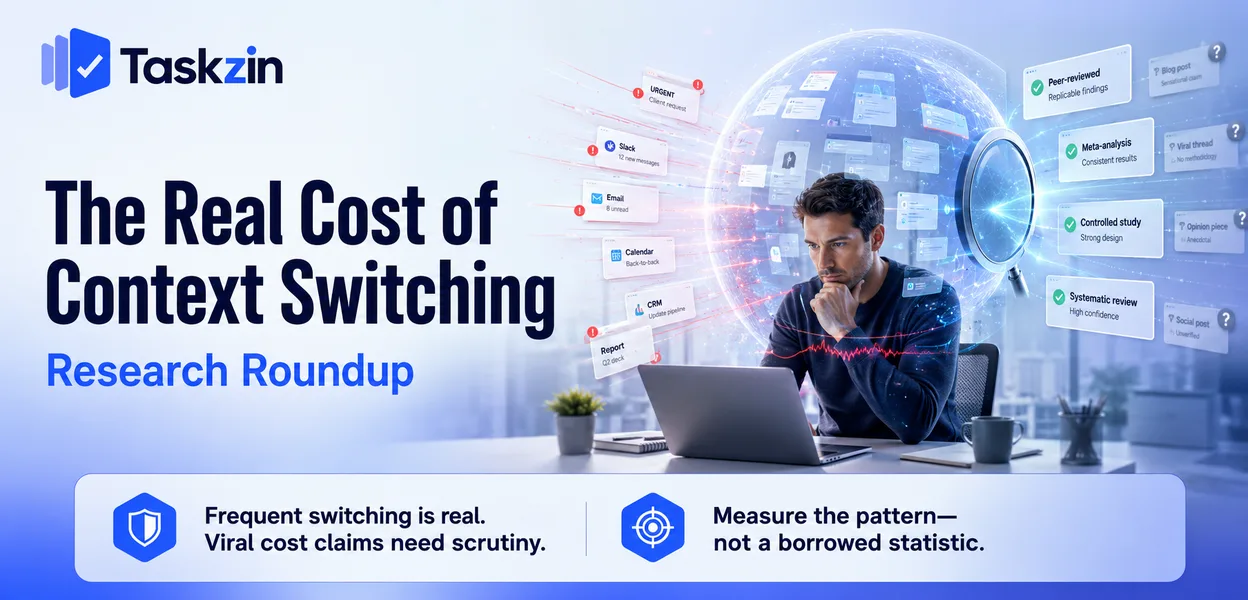
The Real Cost of Context Switching: Research Roundup
An evidence-based roundup of context switching research, covering the findings that hold up, the widely circulated figures that do not, why switching costs more than the time it appears to take, and how to measure the effect in your own team.
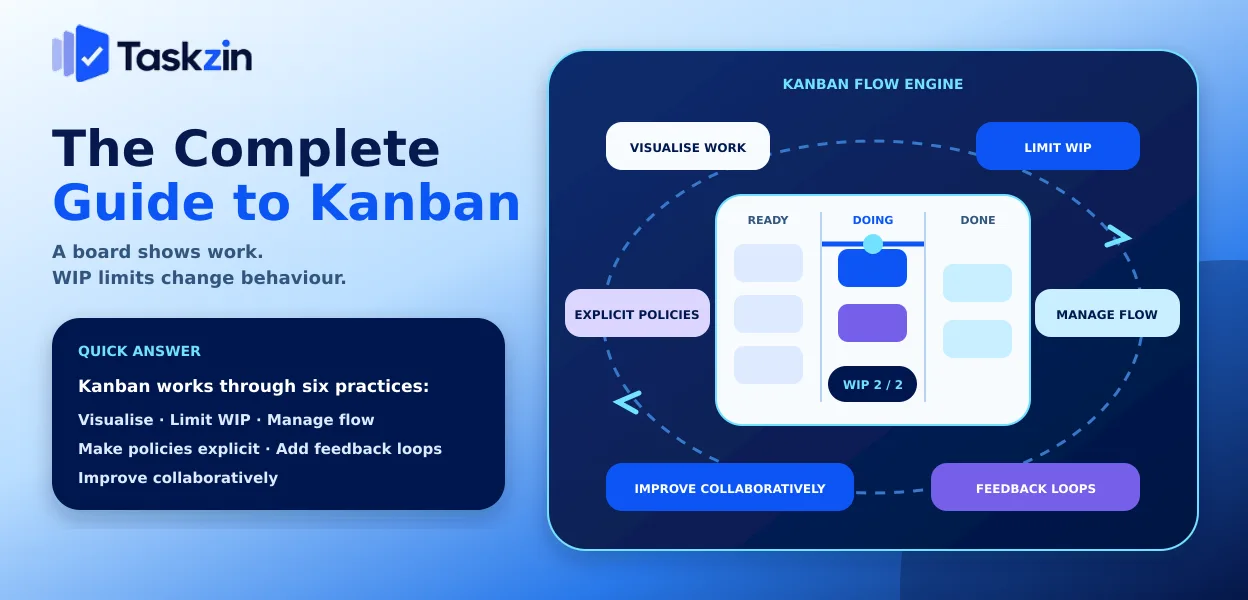
The Complete Guide to Kanban
A comprehensive guide to Kanban, covering the six core practices, how it compares to Scrum, setting up a system with real workflow mapping and WIP limits, managing flow and bottlenecks, the essential metrics, and common mistakes.
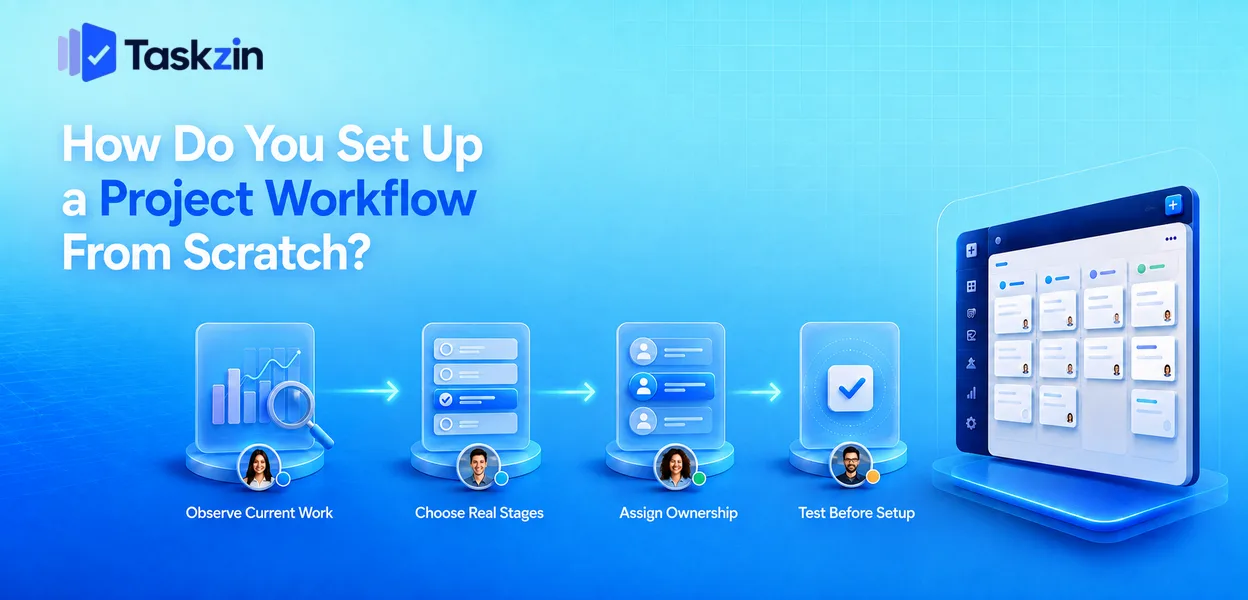
How Do You Set Up a Project Workflow From Scratch?
A practical guide to setting up a project workflow from scratch, covering how to observe existing work patterns, choose and name stages, assign ownership and entry rules, test manually before configuring, and common setup mistakes.
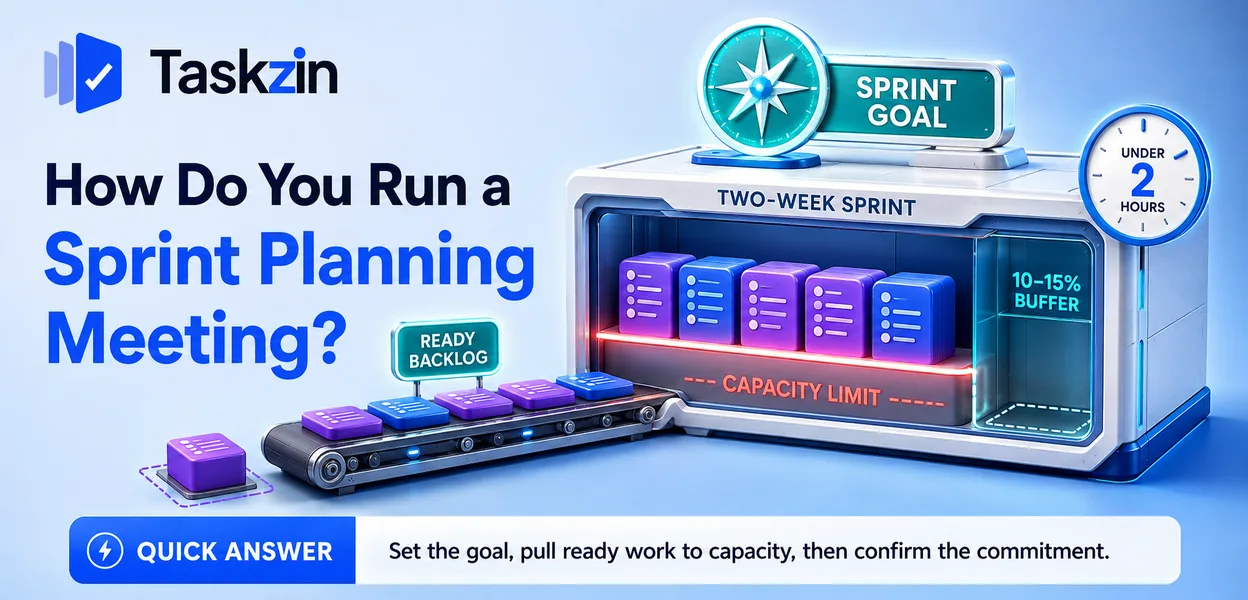
How Do You Run a Sprint Planning Meeting?
A practical guide to running sprint planning, covering what the meeting produces, the preparation that keeps it short, a working agenda, how to set the sprint goal and commit to capacity, and common mistakes.
Does a 5-Person Team Need Project Management Software?
An honest look at whether a five-person team needs project management software, covering why the threshold is work shape rather than headcount, the signals that you have outgrown informal coordination, what small teams actually need, and what they can ignore.
How Do You Write a Task Description People Actually Understand?
A practical guide to writing task descriptions people can act on, covering why most fail, the five parts of a clear task, worked before-and-after rewrites for requests, bugs and briefs, and common mistakes.
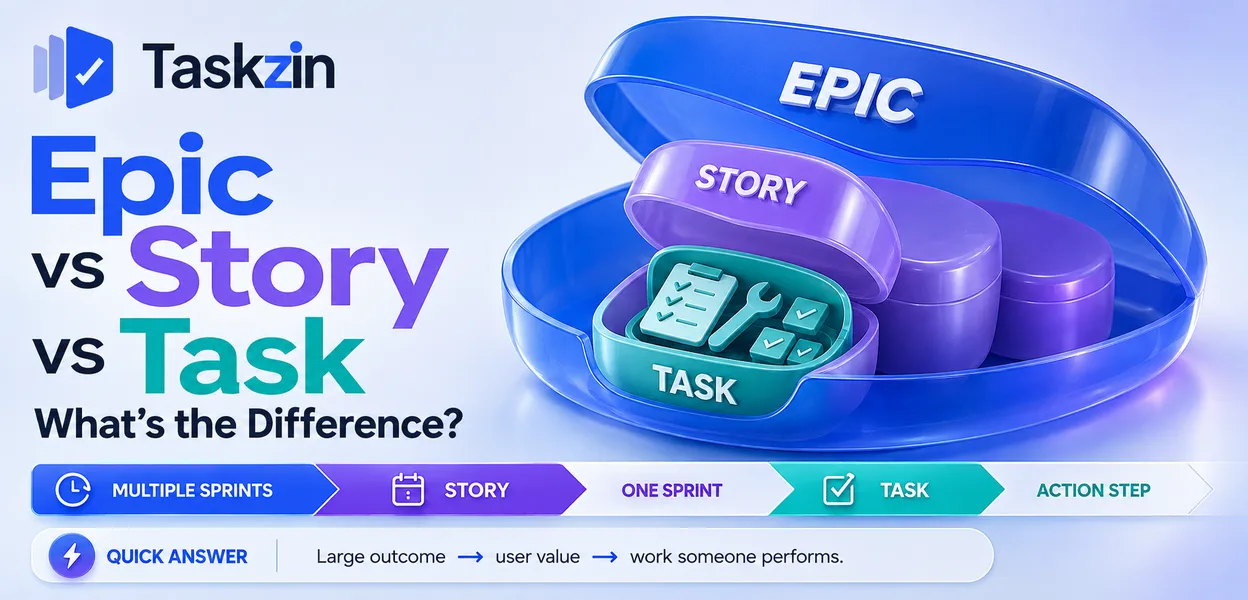
Epic vs Story vs Task: What's the Difference?
A clear explanation of the epic, story and task hierarchy, covering what each level means, three tests to classify work correctly, where themes and subtasks fit, how to split work between levels, and common mistakes.
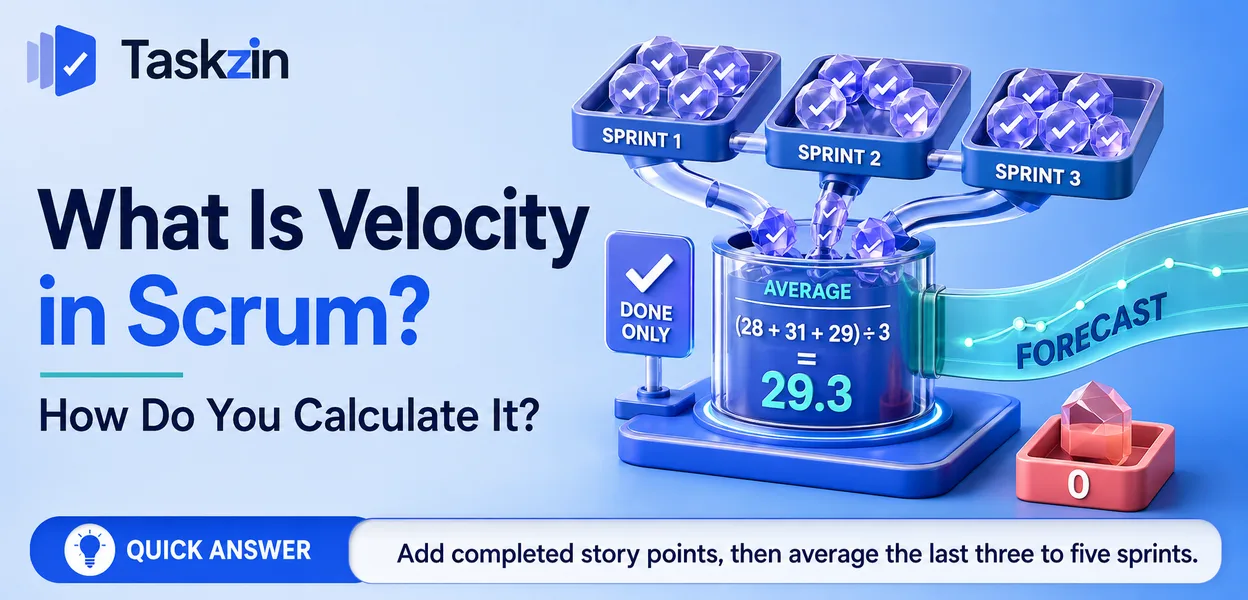
What Is Velocity in Scrum and How Do You Calculate It?
A clear explanation of velocity in Scrum, covering what it measures, how to calculate it with a worked example, how to use it for range forecasting, what makes it unstable, and why it is so often misused.
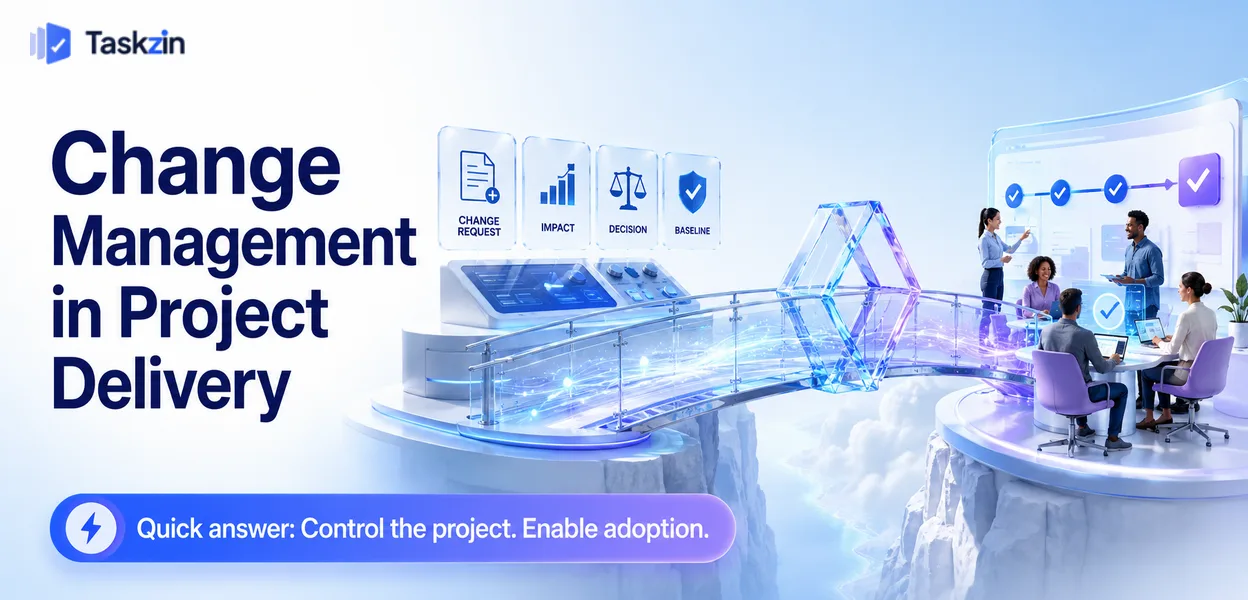
Change Management in Project Delivery
A practical guide to change management in project delivery, covering the difference between change control and organisational change, a workable change control process, helping people adopt the change, and how to measure whether it landed.
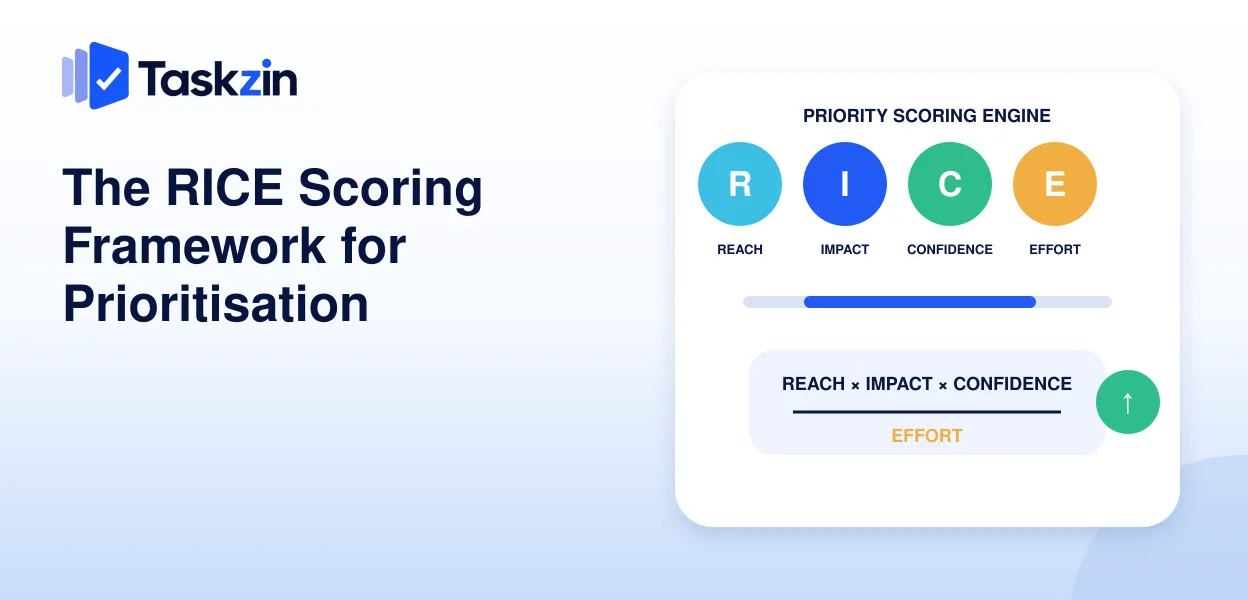
The RICE Scoring Framework for Prioritisation
A practical explanation of the RICE scoring framework, covering what each factor measures, the formula with a worked numeric example, how to score consistently across a team, how to read the results, and where the framework breaks down.
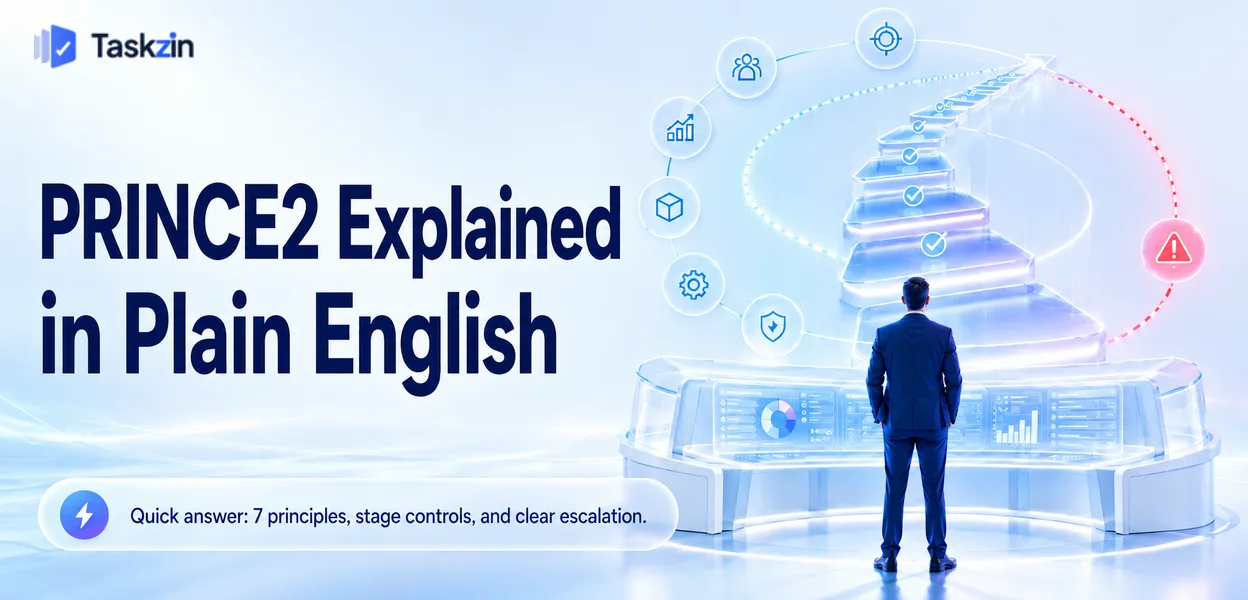
PRINCE2 Explained in Plain English
A plain-English explanation of PRINCE2, covering what the method is and excludes, its seven principles, themes and processes, how a project runs stage by stage, management by exception, and common mistakes.
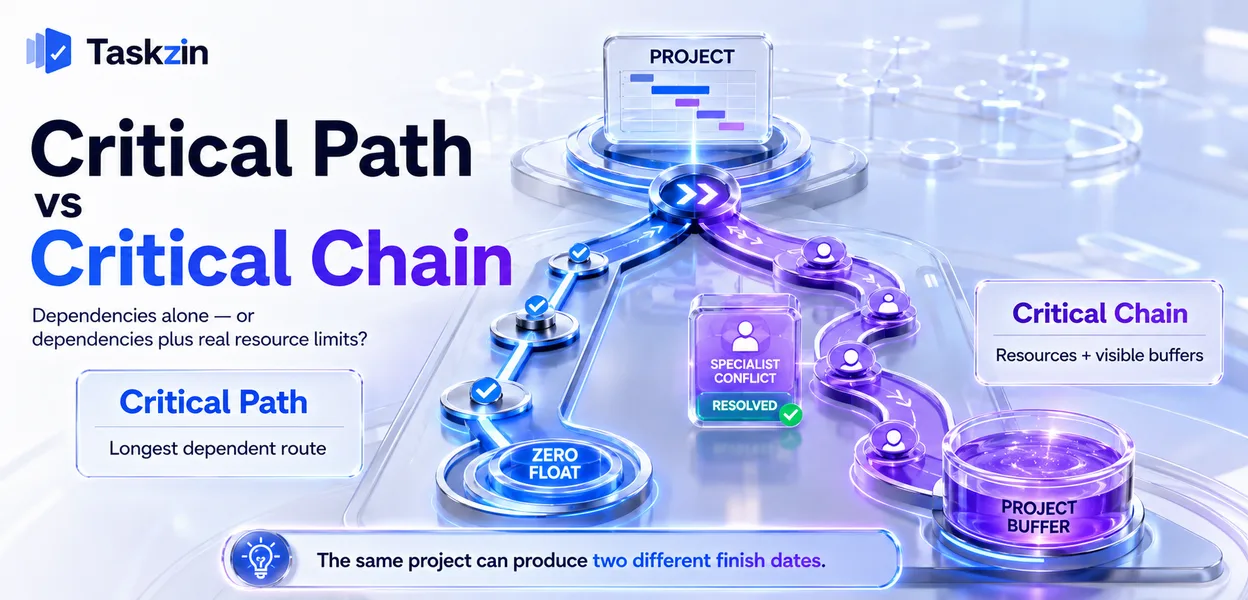
Critical Path vs Critical Chain
A clear comparison of critical path and critical chain methods, covering how each identifies the project constraint, why resource contention changes the answer, how buffers work in critical chain, and which method fits which project.

Scrum vs Kanban: A Practical Comparison
A practical comparison of Scrum and Kanban, covering the single structural difference between them, a side-by-side table, where each fits best, the signals that you chose wrong, how to switch, and common comparison mistakes.

Taskzin vs Asana: Pricing, Features and Ease of Use Compared
A balanced comparison of Taskzin and Asana, covering how each prices and tiers its features, the agile capability gap, ease of use and ownership models, where Asana's maturity wins, and where Taskzin's included depth wins.
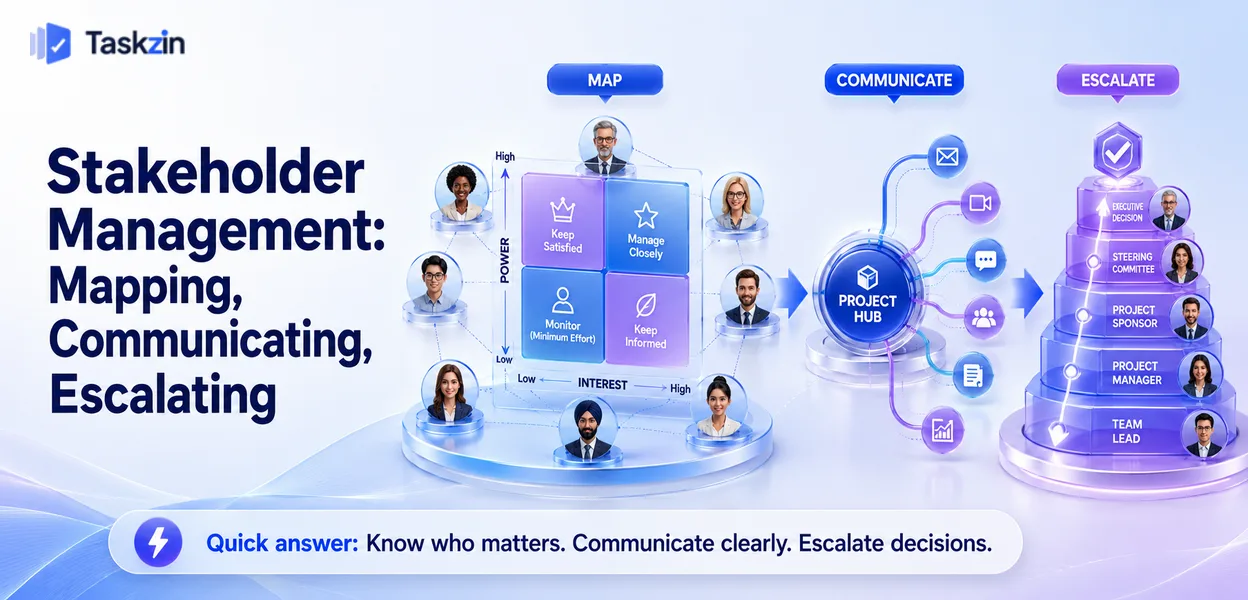
Stakeholder Management: Mapping, Communicating, Escalating
A practical guide to stakeholder management, covering how to identify who genuinely matters, mapping by power and interest, building a communication plan that people read, handling difficult stakeholders, and escalating cleanly.
Asana vs Monday.com vs Trello: Which One Should You Pick?
A practical three-way comparison of Asana, Monday.com and Trello, covering what each product is actually for, a head-to-head table, how their pricing models differ as teams grow, choosing by the problem you have, and where each one runs out.
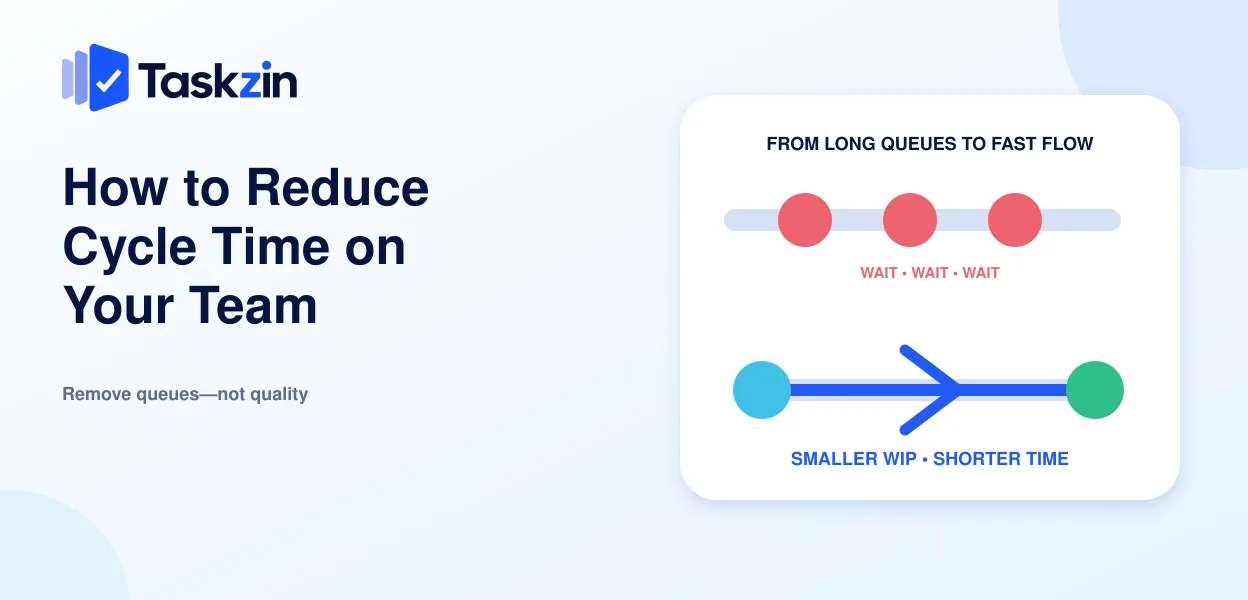
How to Reduce Cycle Time on Your Team
A practical guide to reducing cycle time, covering how to find where elapsed time is actually lost, where teams commonly lose it, the five changes that reliably help, how to run an improvement properly, and what makes it worse.
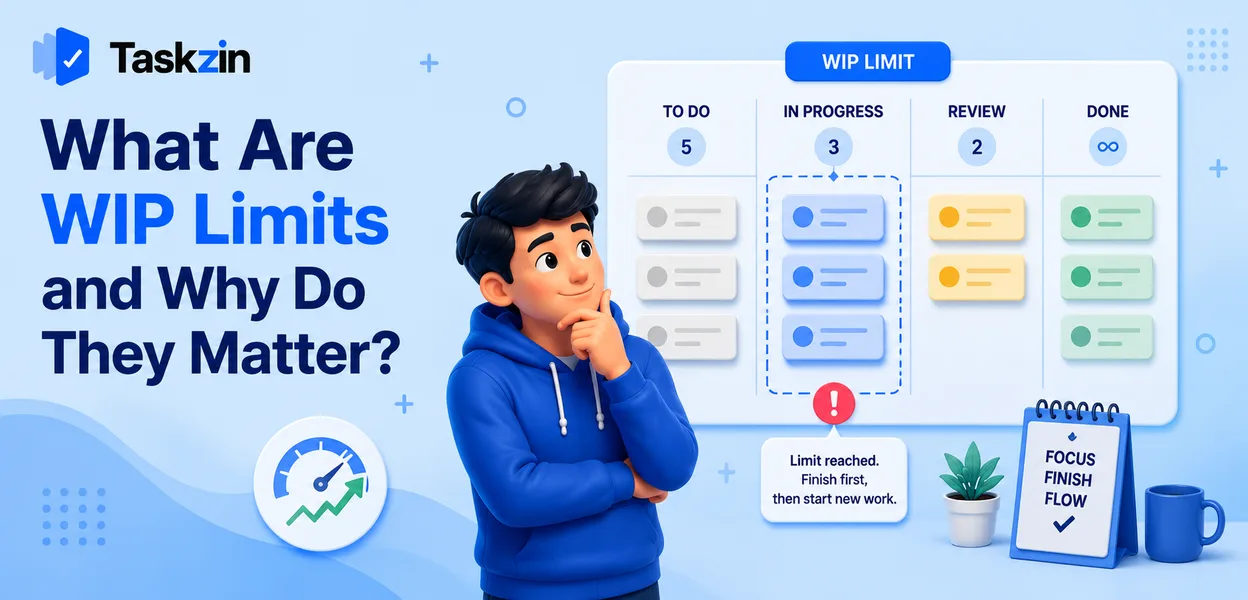
What Are WIP Limits and Why Do They Matter?
A plain-English explanation of WIP limits, covering what they are, why constraining concurrent work reduces cycle time, how to set and adjust the number, examples by team type, what to do when you hit the limit, and common mistakes.
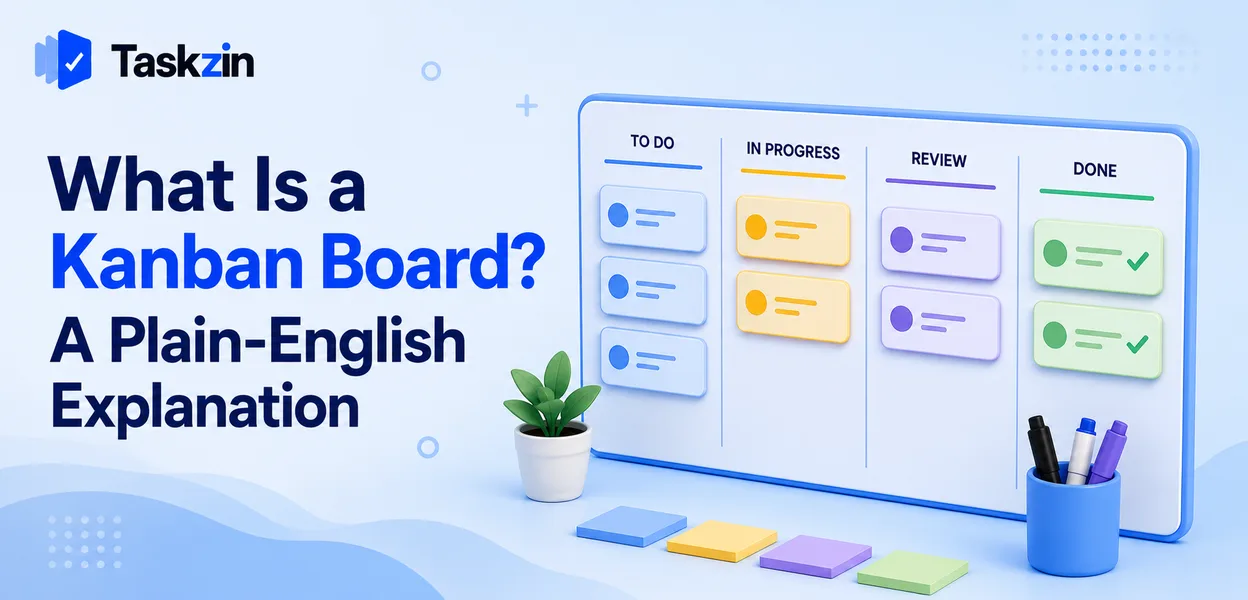
What Is a Kanban Board? A Plain-English Explanation
A beginner-friendly explanation of Kanban boards, covering what they are, how the pull system and WIP limits work, examples across different teams, how to set one up, how Kanban differs from Scrum, and common mistakes.
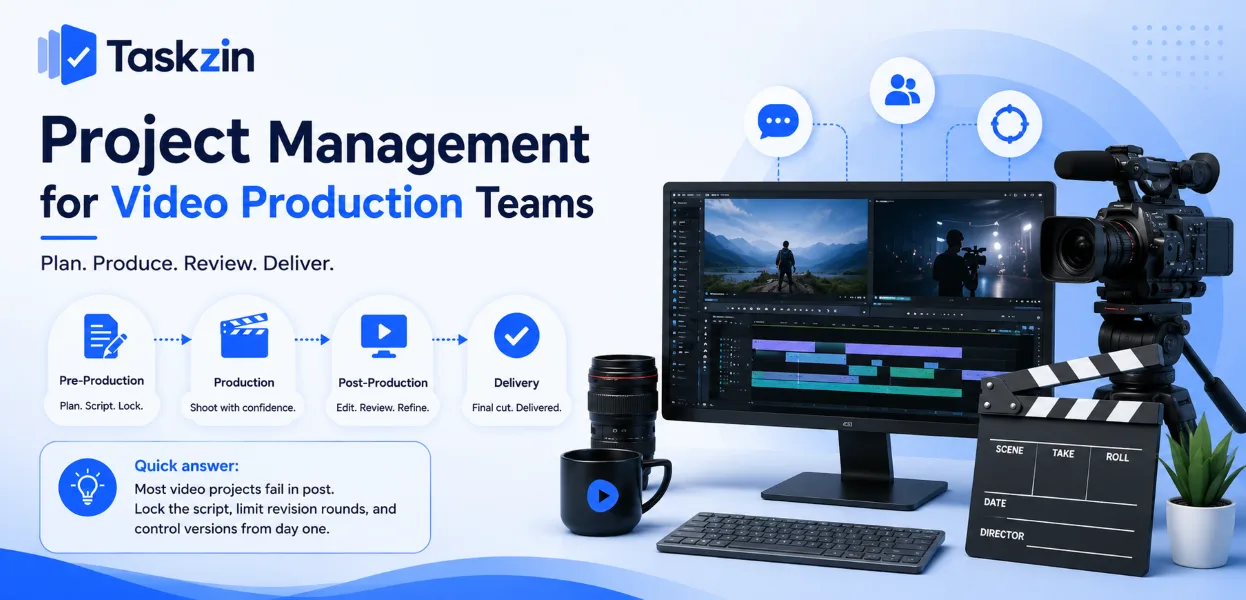
Project Management for Video Production Teams
A practical guide to project management for video production teams, covering why projects fail in post rather than production, planning pre-production, managing review cycles, asset and version control, and common mistakes.
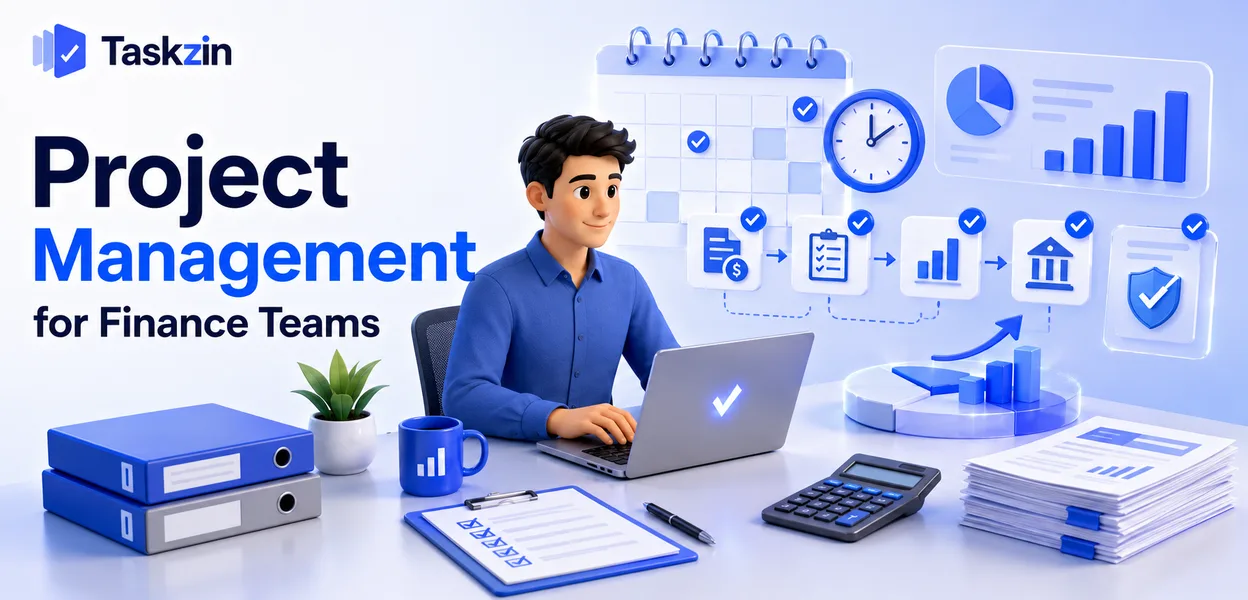
Project Management for Finance Teams
A practical guide to project management for finance teams, covering what makes finance work distinctive, running month-end close as a managed process, audit and compliance deadlines, budgeting cycles, and common mistakes.

Project Management for Ecommerce Teams
A practical guide to project management for ecommerce teams, covering the trading calendar, running product launches across four workstreams, preparing for peak, releasing site changes safely, and common mistakes.

Project Management for Law Firms
A practical guide to legal project management, covering why fixed fees made it necessary, running a matter as a project, managing critical dates and limitation periods, confidentiality and conflicts, and common mistakes.
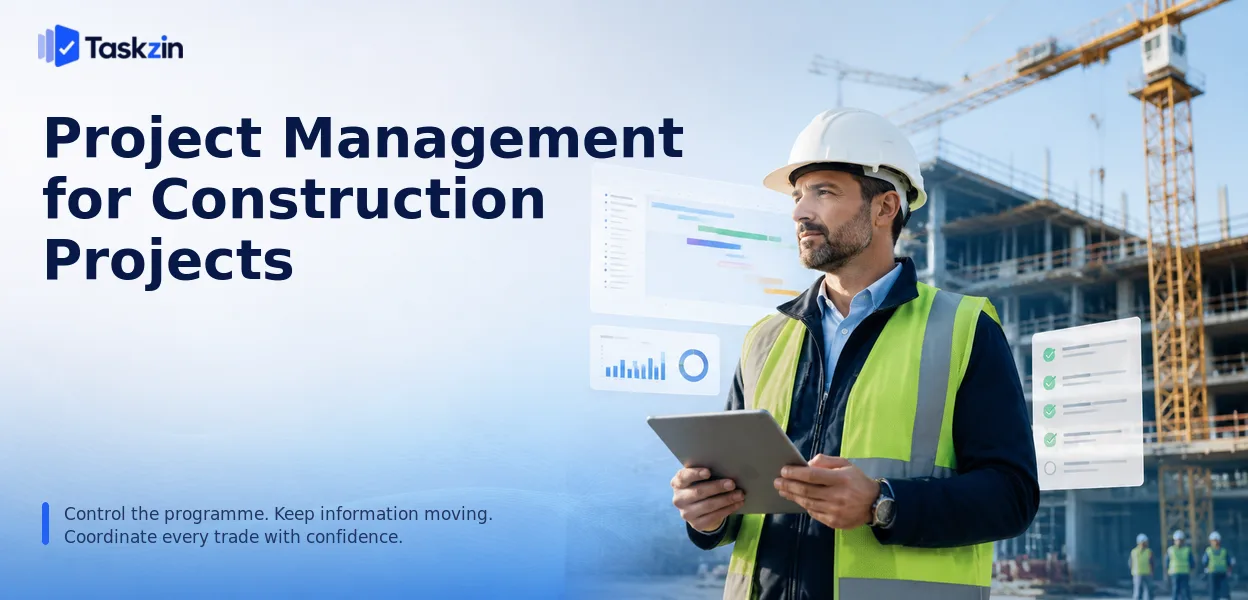
Project Management for Construction Projects
A practical guide to construction project management, covering the programme as a contractual instrument, the project lifecycle, managing RFIs and submittals, coordinating subcontractors by sequence and access, and common mistakes.
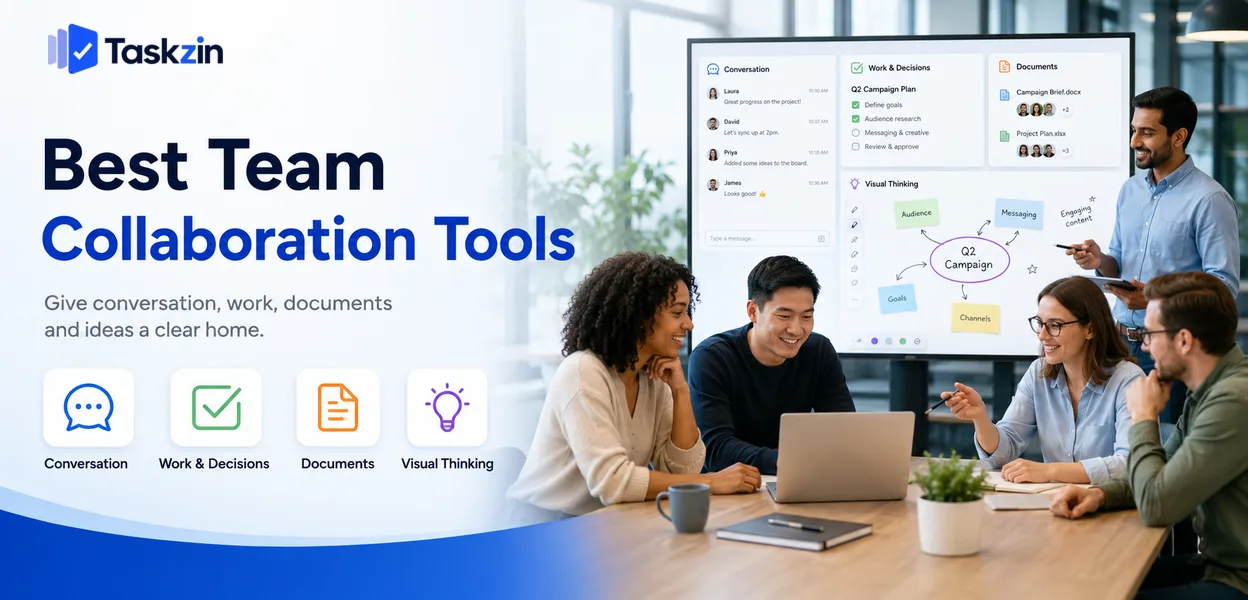
Best Team Collaboration Tools
A guide to the best team collaboration tools, covering the four jobs collaboration software does, ten reviewed tools, how to assign one tool per job, when to choose synchronous over asynchronous, and the habits that cause sprawl.
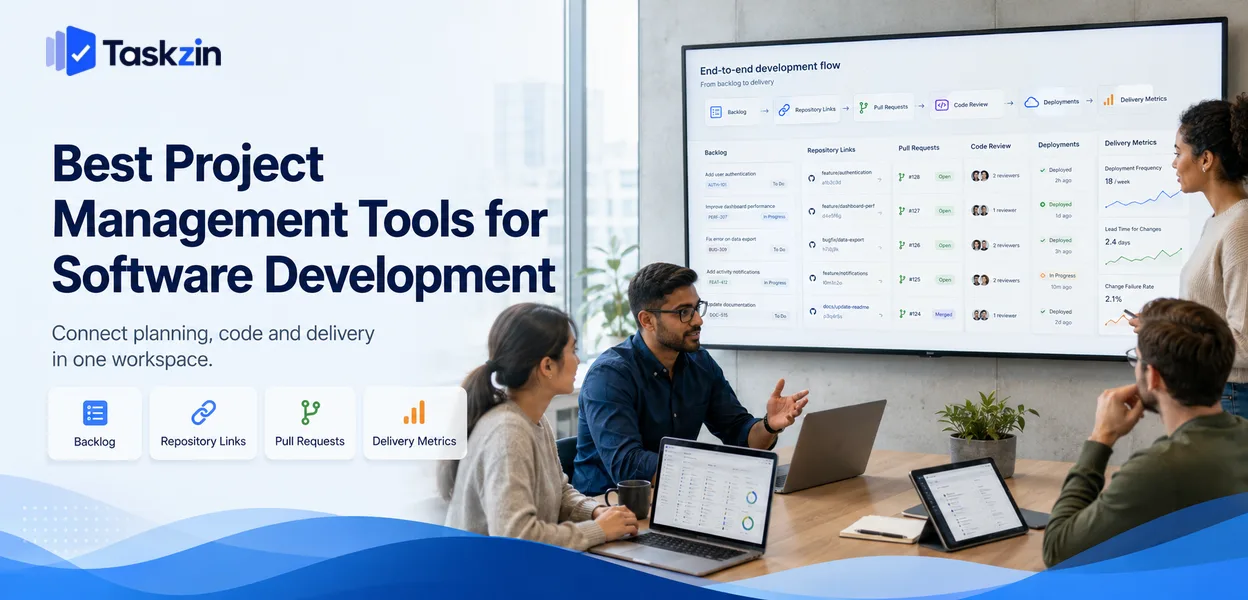
Best Project Management Tools for Software Development
A comparison of the best project management tools for software development, covering repository integration, update friction and reporting, ten reviewed tools, how the right choice changes with team size, and the engineering metrics worth tracking.
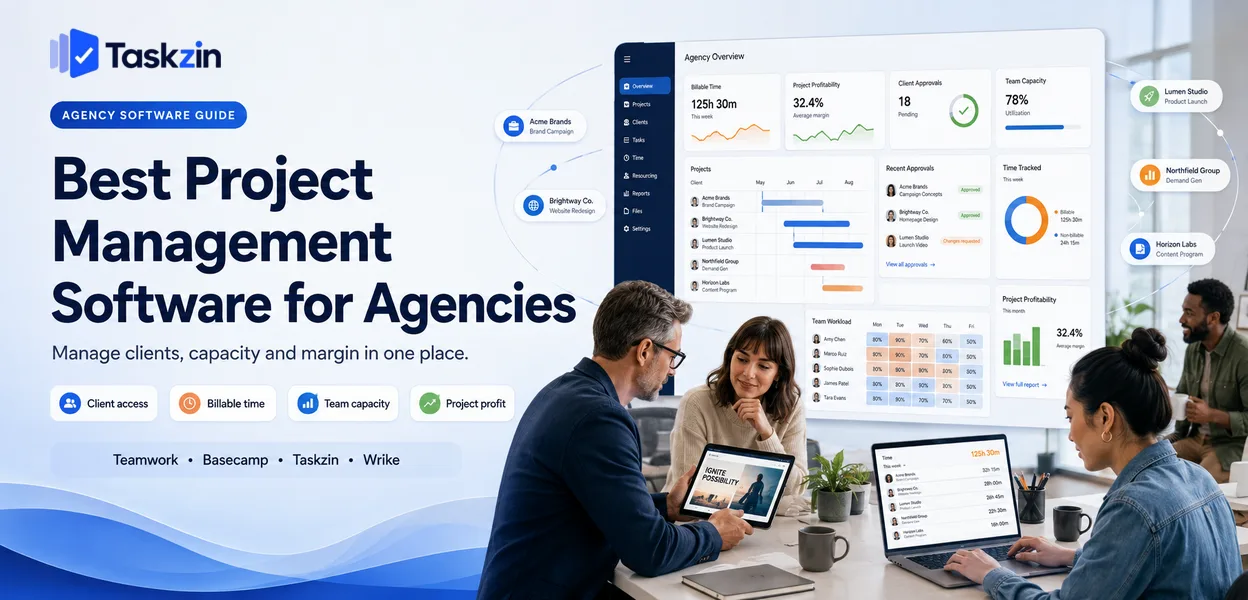
Best Project Management Software for Agencies
A comparison of the best project management software for agencies, covering client access, billable time, resourcing across accounts, ten reviewed tools, how to set up client projects, and the habits that erode margin.
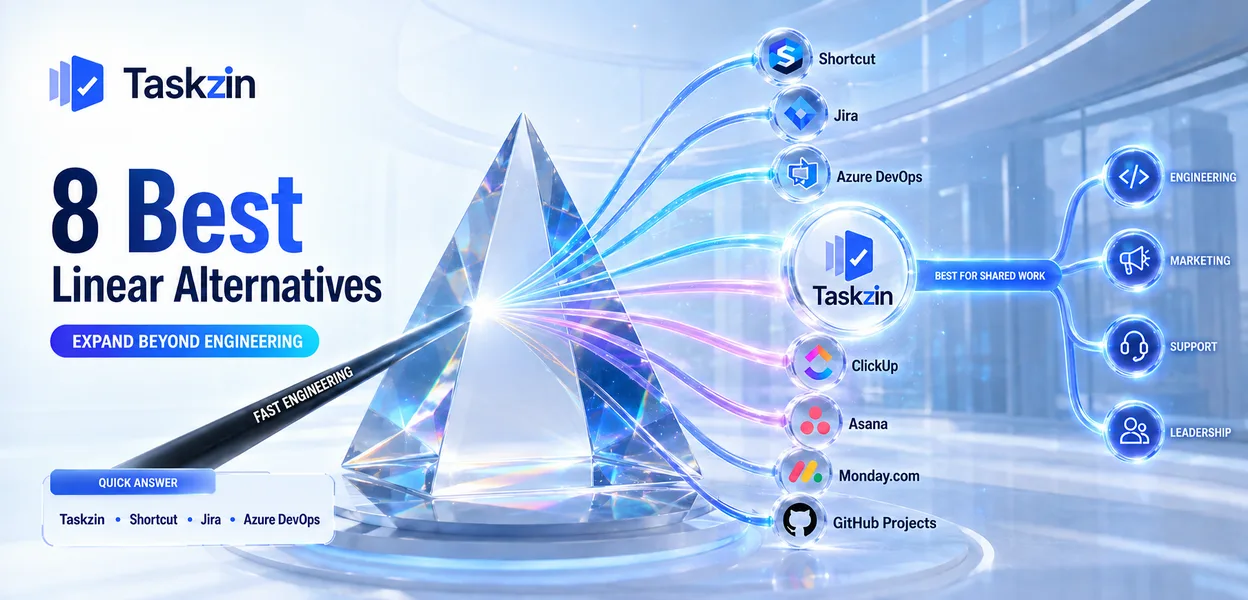
8 Best Linear Alternatives
A comparison of eight Linear alternatives, covering why teams outgrow it, eight reviewed options, how to choose without losing update speed, migration steps including identifier mapping, and when Linear remains the right tool.
10 Best Asana Alternatives
A comparison of ten Asana alternatives, covering why teams switch, how to identify the paid feature you are really buying, guest seat pricing, migration steps, and when staying on Asana is the better call.
12 Best ClickUp Alternatives for Teams That Want Less Clutter
A comparison of twelve ClickUp alternatives for teams wanting less complexity, covering why teams leave, how to tell whether the tool or the configuration is at fault, migration steps, and when staying makes more sense.
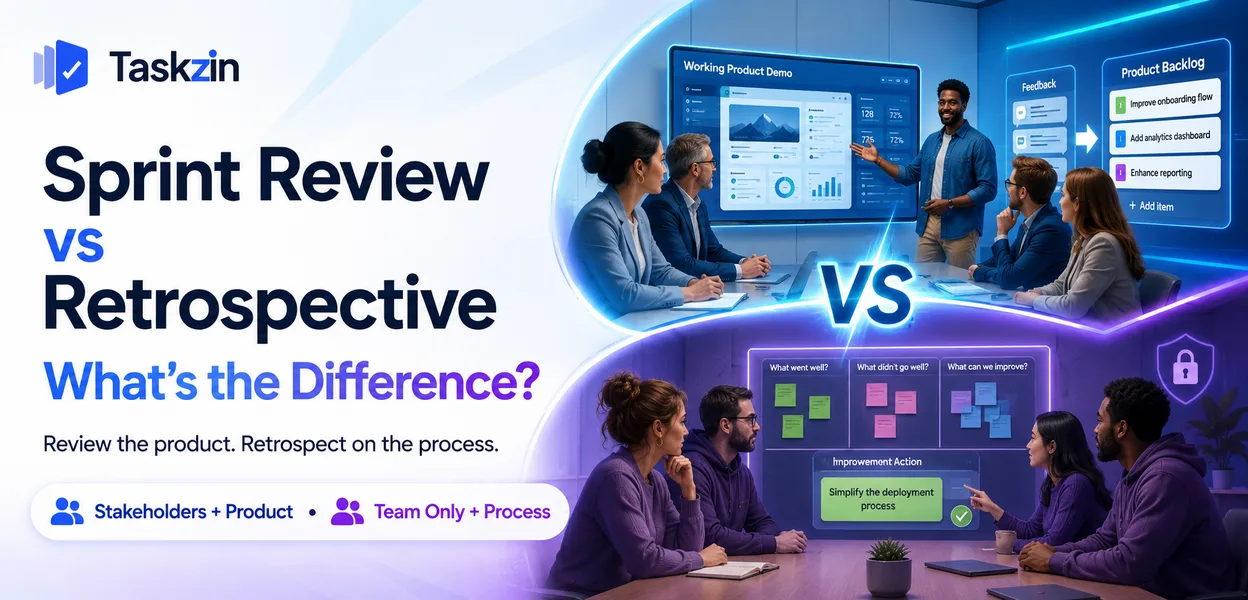
Sprint Review vs Retrospective: What's the Difference?
A clear explanation of sprint review versus retrospective, covering what each event inspects, who attends, what each produces, how to run both efficiently, and the mistakes that collapse them into one ineffective meeting.
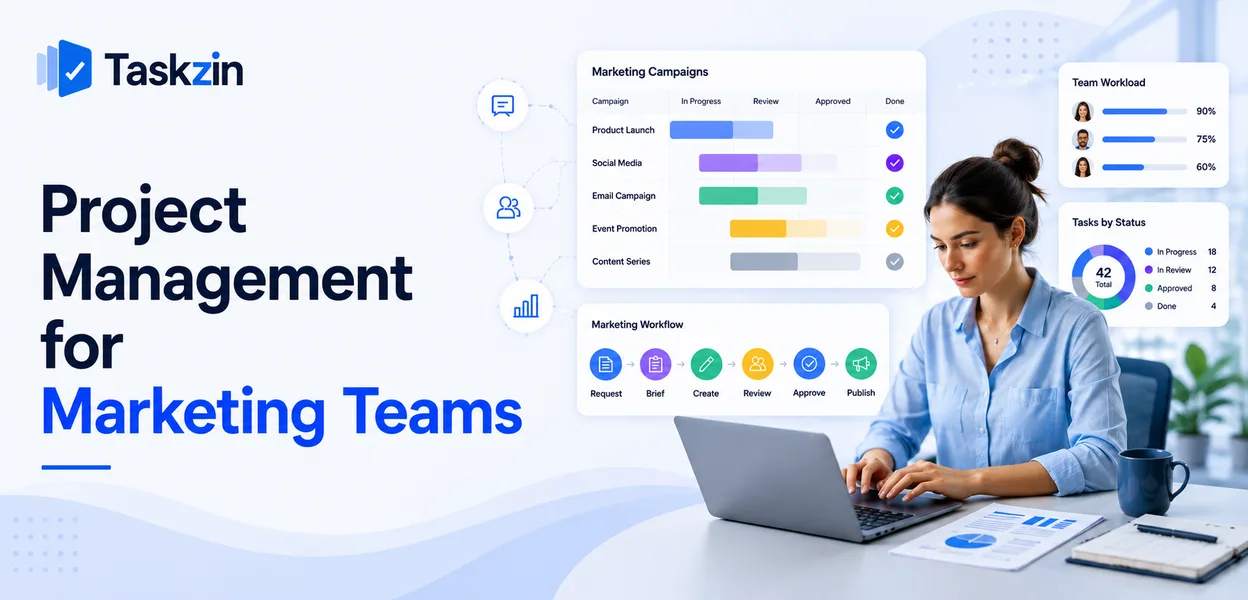
Project Management for Marketing Teams
A practical guide to project management for marketing teams, covering how marketing work actually flows, a stage-by-stage workflow, how to control intake and standardise briefs, the metrics worth tracking, and common mistakes.
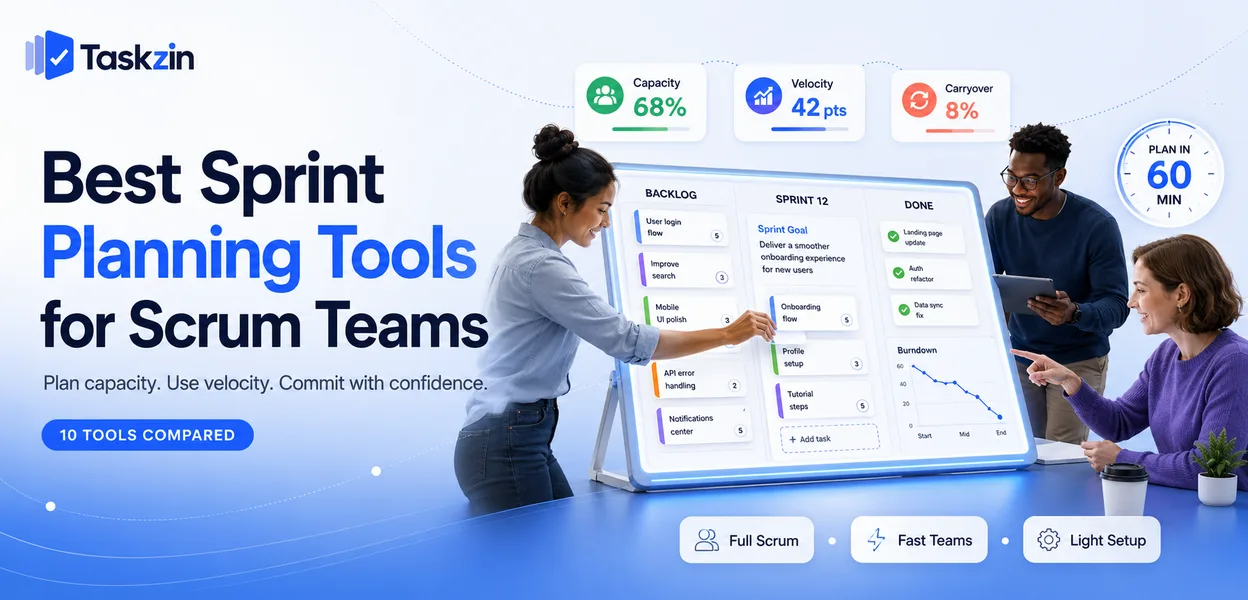
Best Sprint Planning Tools for Scrum Teams
A comparison of the best sprint planning tools for Scrum teams, covering what the software must support, ten tools reviewed on velocity and capacity, a practical planning process, estimation approaches, and common mistakes.
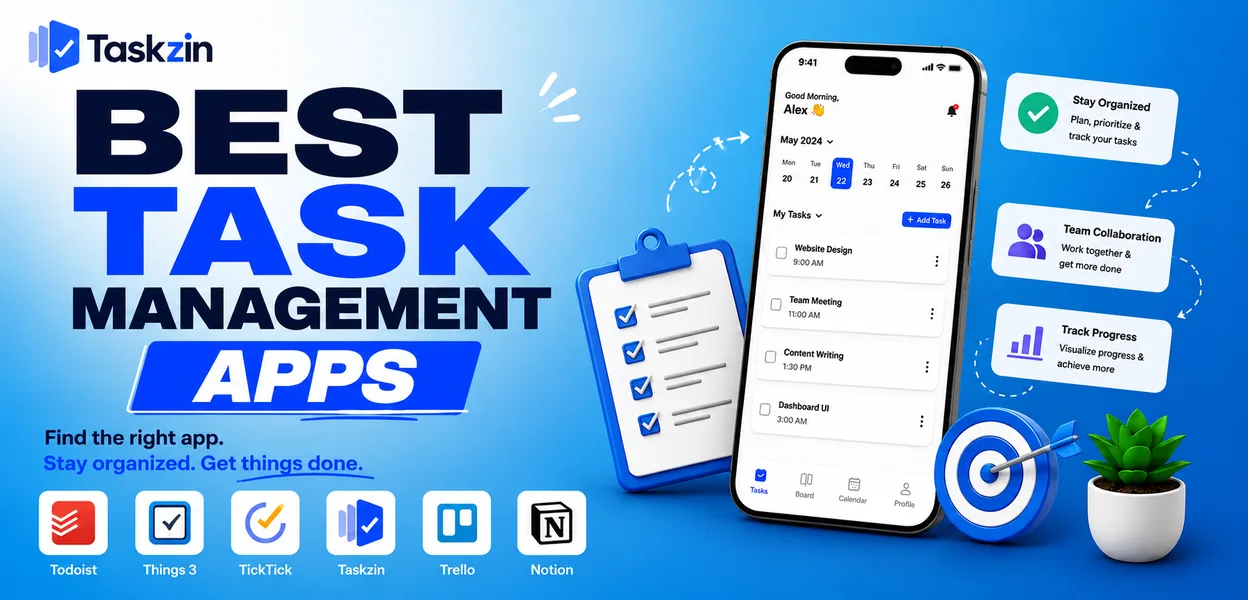
Best Task Management Apps
A comparison of the best task management apps for personal and team use, covering the difference between task and project management, ten reviewed options, selection criteria, methods that work in any app, and common mistakes.
Your team already has the work. Give it a home.
Set up a workspace in under two minutes. Import from ClickUp, Jira, Asana or Trello in one click.
No credit card • Free 14 days • Cancel anytime